What can we learn from visual comparison of the Sentinel and Minuteman III ICBM?
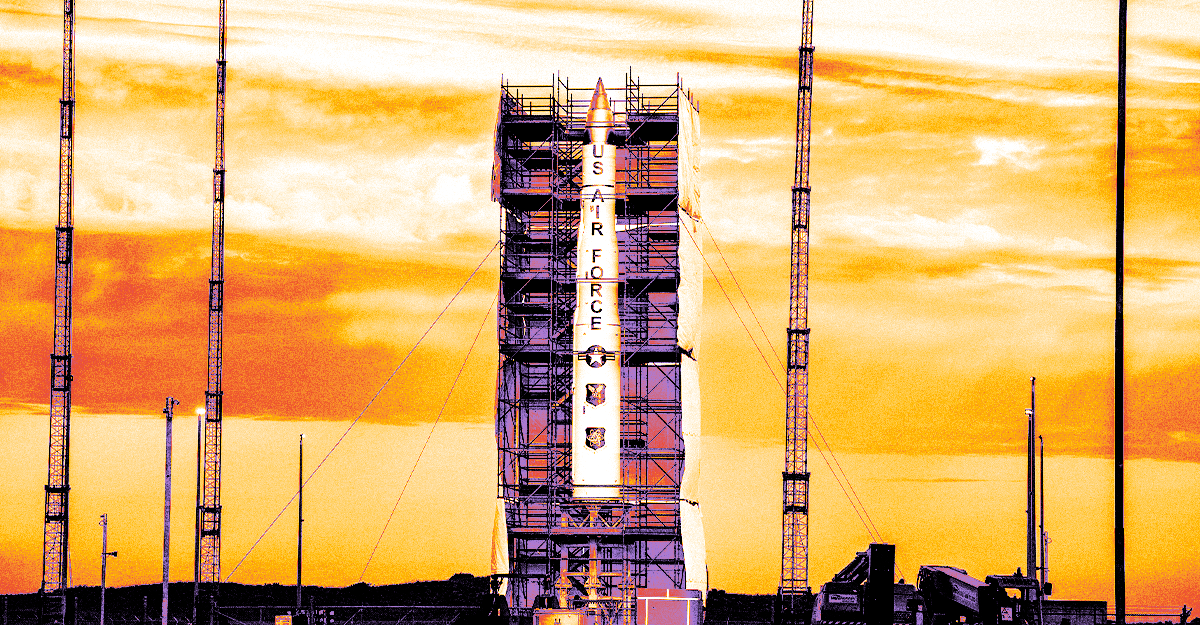
The Sentinel intercontinental ballistic missile program reached a new milestone on September 14 with the vertical assembly of an inert missile at Vandenberg Space Force Base, California. Northrop Grumman released a photo from the event, providing the first public image of the fully assembled missile.
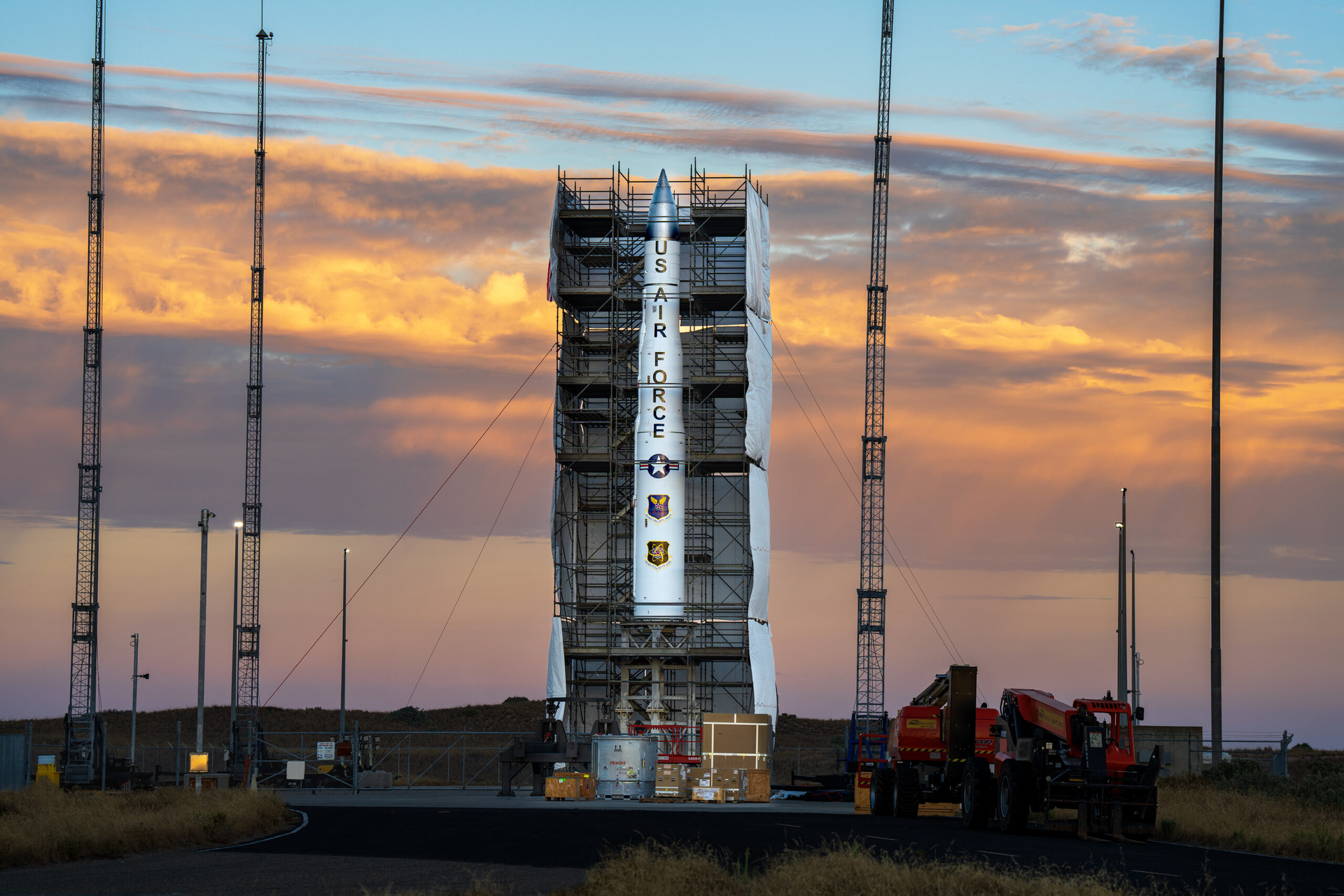
The vertical integration test, conducted by the U.S. Air Force and Northrop Grumman, included the stacking and full integration of all missile stages, propulsion elements, shroud and subcomponents. The missile’s precise dimensions and specs have not been publicly released, but a visual comparison between the new LGM-35A Sentinel ICBM and the currently-deployed LGM-30G Minuteman III appears to confirm the relatively larger size of the new missile that has been described.
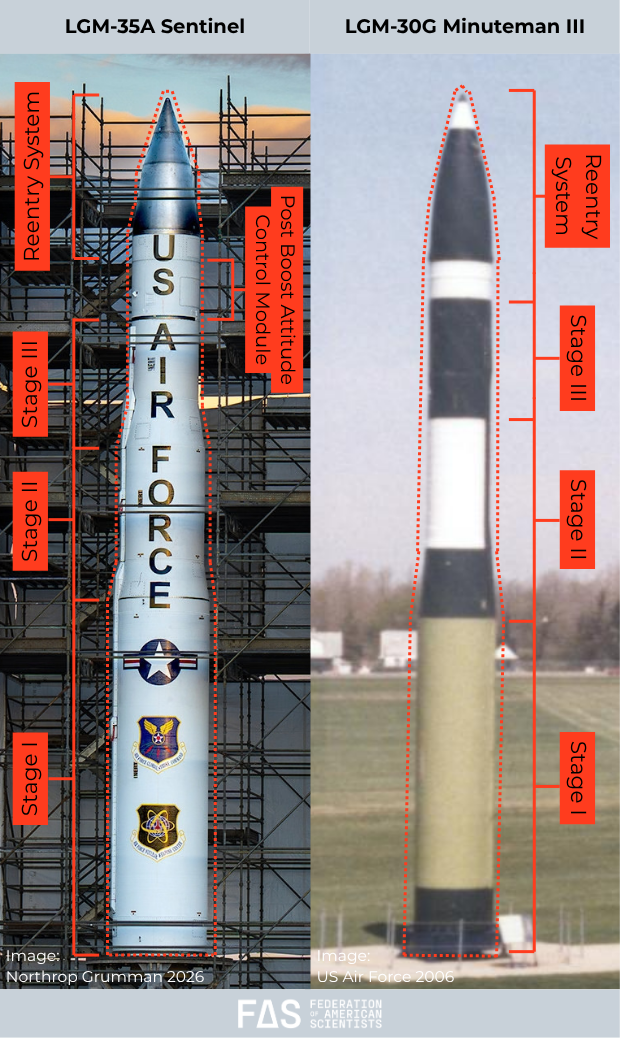
It is difficult to assess from these images whether the Sentinel missile is longer or wider overall than the Minuteman, but the Sentinel clearly has a thicker second stage, which could potentially contribute to the missile’s extended range.
The Air Force has not yet specified how many reentry vehicles the Sentinel ICBM will be capable of delivering. The Air Force’s stated plan has been to deploy Sentinel missiles with a single W87-1 warhead, but various reports and statements by Air Force officials have indicated that Sentinel will be capable of carrying multiple warheads. Minuteman III ICBMs configured for the Mk12A reentry vehicle with the W78 warhead can carry up to three reentry vehicles each, while Minuteman III ICBMs configured for the larger Mk21A reentry vehicle with the W87 warhead can carry a single warhead each (see image below). Under normal circumstances, all Minuteman III ICBMs are deployed with only one warhead each for a total of 400 warheads; if the Mk12A/W78 part of the force is uploaded to three warheads each, the 400 deployed ICBMs could carry up to 800 warheads.
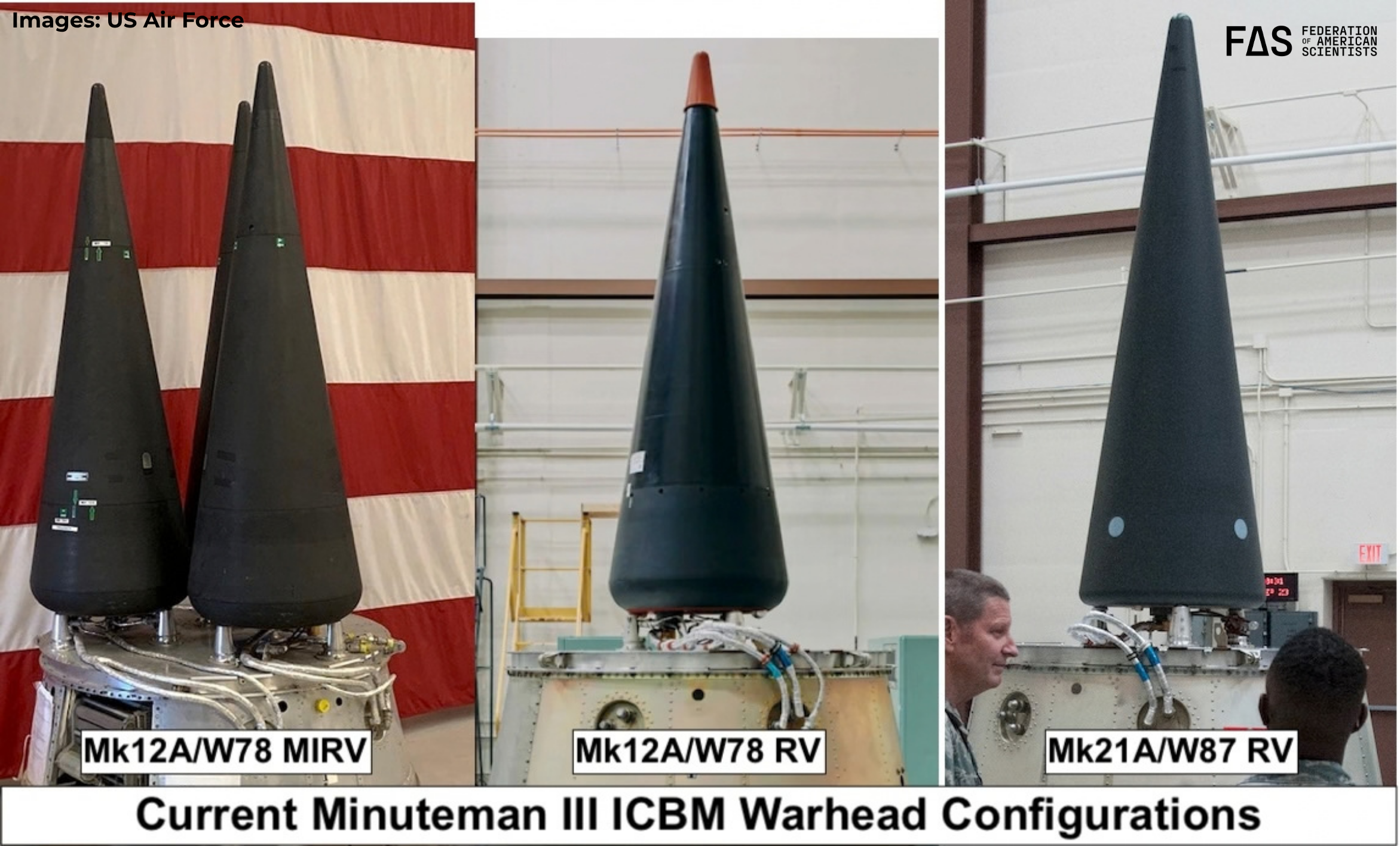
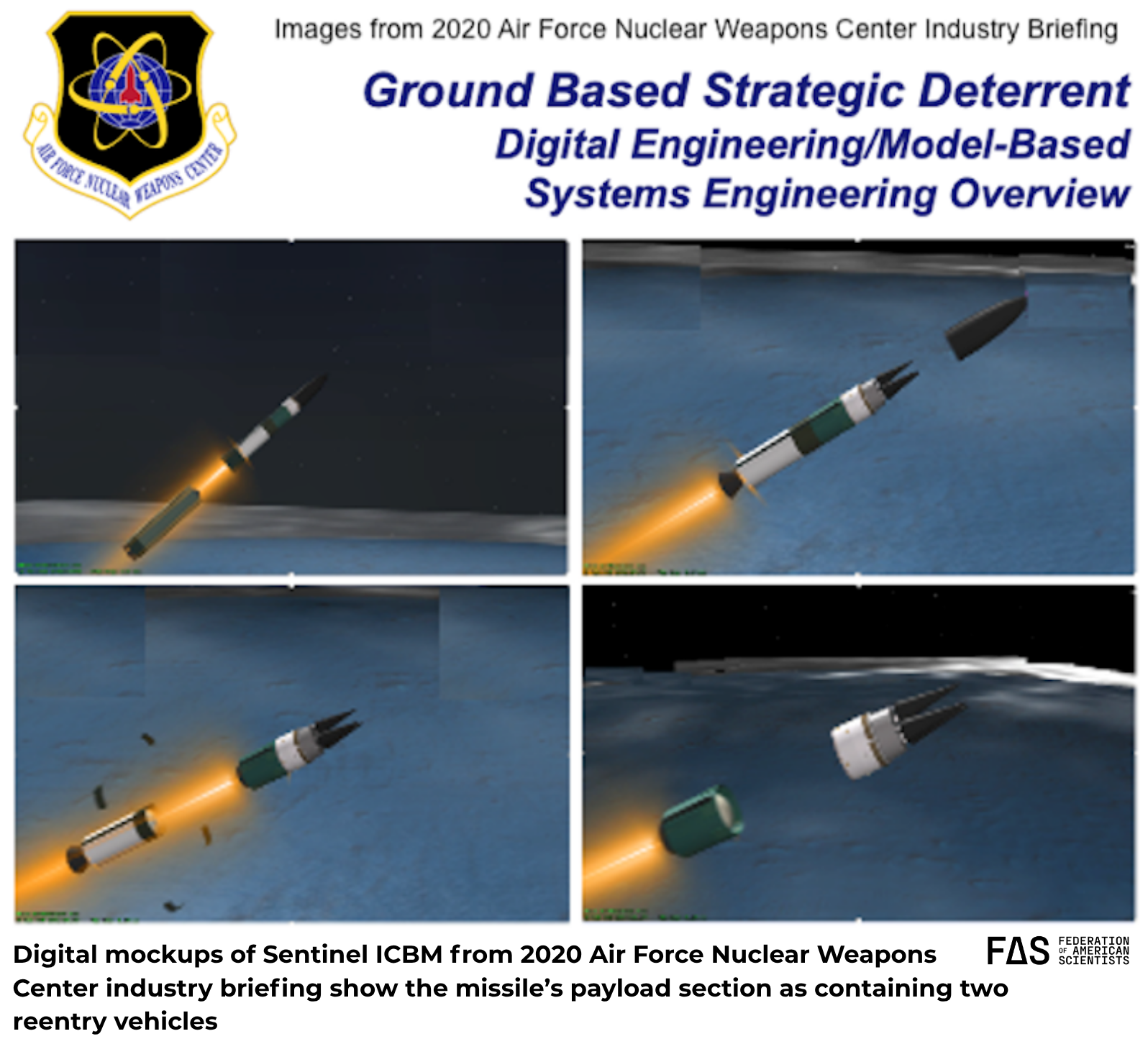
The Sentinel ICBM is designed to carry the Mk21A reentry vehicle, which is longer and wider than the Mk12A. So unless the Sentinel RV bus is wider than the Minuteman III RV bus, it seems likely that the Sentinel will only be capable of carrying one or two Mk21A reentry vehicles. Digital mockups of a Sentinel missile from a 2020 unclassified presentation by the Air Force Nuclear Weapons Center show the missile’s payload section as containing two reentry vehicles (see image below). Although Air Force officials have declined to specify how many warheads a Sentinel missile will be able to carry, the comparison of images of the Sentinel and the Minuteman III above combined with the digital mockup from the Air Force briefing indicate the Sentinel ICBM might be designed to carry up to two MIRV each.
If the Sentinel ICBMs will be able to carry up to two warheads each, that would mean the planned force of 400 deployed missiles would be capable of delivering up to 800 warheads. That is roughly the same number of warheads we estimate the current Minuteman III is capable of delivering.
It is difficult to assess from photos whether the Sentinel missile is longer or wider overall than the Minuteman, but the Sentinel clearly has a thicker second stage, which could potentially contribute to the missile’s extended range.
This is not the first time Google has agreed to censor imagery at the behest of governments, but be warned: obfuscation at this broad level poses a direct threat to the public’s ability to monitor and scrutinize government operations.
As humans expand our geographic reach, encroach on untouched natural territories, and interact more with animal populations, we will encounter novel zoonotic diseases that threaten the human body. The sooner we act to address these risks, the better.
“One thing became increasingly clear: AI doesn’t simply introduce a new category of risk. It changes the speed, scale, complexity, and interaction of risks that already exist.”