North Korea’s military “uses tactics based on former Soviet or current Russian doctrine, Chinese developments, lessons learned, and observation of recent military actions,” according to a new US Army manual on the subject.
“While North Korea maintains large amounts of military equipment, much of it is outdated making it quantitatively superior to most armies but qualitatively inferior,” the new manual said. See North Korean Tactics, Army Techniques Publication (ATP) 7-100.2, 24 July 2020.
But North Korea has proved resourceful in other areas, including offensive cyber warfare.
“The primary organization responsible for computer warfare in North Korea is Bureau 121, which fielded at least 1,000 elite hackers in 2010 who focused on other countries’ computer systems. This number is likely much higher now” and includes “cyberspace teams [deployed] in foreign countries.”
And not least of all, “The country’s possession of a nuclear arsenal and its pursuit of missile technology are attempts to ensure that external powers do not interfere with its internal affairs for fear of a nuclear reprisal,” the Army manual said.
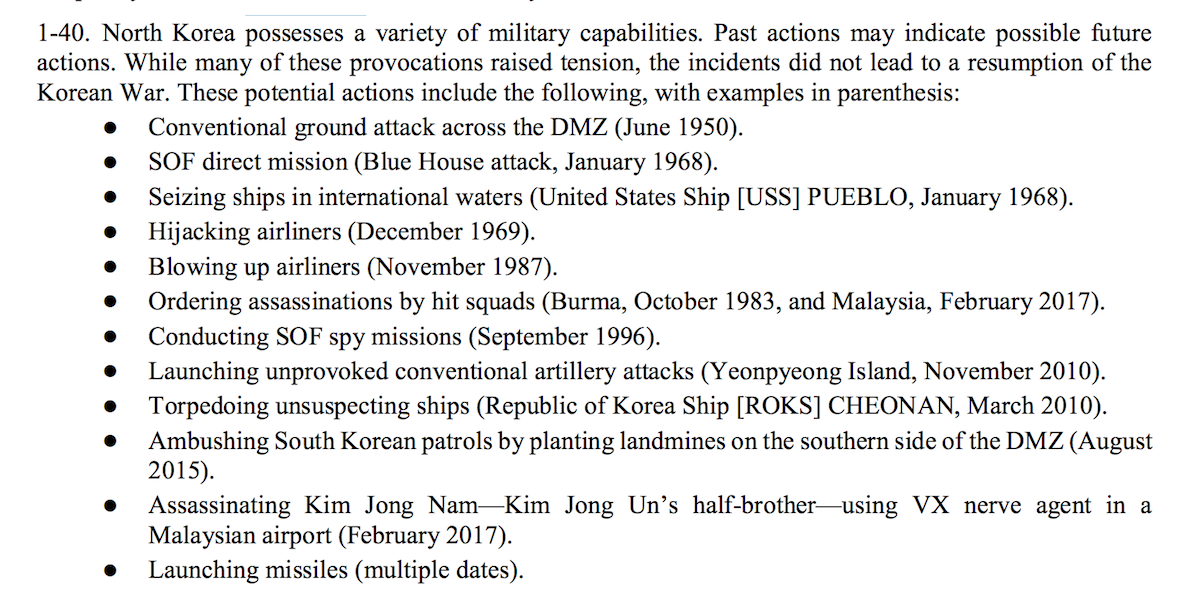
“North Korea is constantly adapting and evolving its capabilities,” the Army said.
The goal: help communities approach data center development with stronger negotiating tools and a clearer understanding of what’s possible.
Just as sports fanatics had plenty to celebrate this year, so does the heat policy team at FAS. In response to recent heat events, leaders across the country have taken steps to build heat resilience.
Congress should establish a Modeling, Analysis, and Technical Talent for Energy Regulation Hub (MATTER Hub) within the Department of Energy (DOE).
Western states functionally manage trillions in global climate risk (permafrost, forest carbon, etc.) and can do so in ways that drive state economic development.