Nuclear Modernization Talk at BASIC Panel
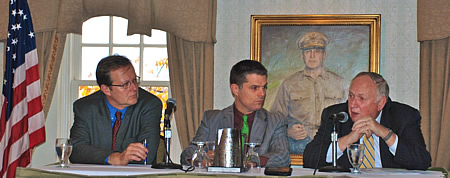 |
| Linton Brooks and I discussed nuclear modernization at a November 13 panel organized by BASIC. |
.
By Hans M. Kristensen
BASIC invited me to discuss nuclear weapons modernization with Linton Brooks at a Strategic Dialogue panel held at the Capitol Hill Club on November 13, 2012. We’re still waiting for the official transcript, but BASIC has a rough recording and my prepared remarks are available here. [Update: all material, including transcript with questions/answers, is available from BASIC].
In my talk, I argued that the Obama administration’s nuclear arms control profile is at risk of being overshadowed by extensive nuclear weapons modernization plans, and that the approach must be adjusted to ensure that efforts to reduce the numbers and role of nuclear weapons and put and end to Cold War thinking are clearly visible as being the priority of U.S. nuclear policy.
The administration has nearly completed a strategic review of nuclear targeting and alert requirements to identify additional reductions of nuclear forces. Release of the findings was delayed by the election, but the administration now needs to use the review to reinvigorate the nuclear arms reduction agenda that has slowed with the slow implementation of the modest New START Treaty and the disappointing “nuclear status quo” decision of the NATO Chicago Summit.
It is difficult to assess from photos whether the Sentinel missile is longer or wider overall than the Minuteman, but the Sentinel clearly has a thicker second stage, which could potentially contribute to the missile’s extended range.
This is not the first time Google has agreed to censor imagery at the behest of governments, but be warned: obfuscation at this broad level poses a direct threat to the public’s ability to monitor and scrutinize government operations.
As humans expand our geographic reach, encroach on untouched natural territories, and interact more with animal populations, we will encounter novel zoonotic diseases that threaten the human body. The sooner we act to address these risks, the better.
“One thing became increasingly clear: AI doesn’t simply introduce a new category of risk. It changes the speed, scale, complexity, and interaction of risks that already exist.”