How Methane Emissions Events Impact Air Quality and Put Human Health at Risk
In October 2015, an underground gas storage well at the Aliso Canyon Natural Gas Storage Facility in southern California failed. Over the course of four months, it released more than 100,000 metric tons of methane into the atmosphere, setting the record for the nation’s largest known methane emissions event.
In the days following, people in Porter Ranch began to experience bloody noses, headaches, nausea, rashes, and respiratory problems. The leak forced the closure of two schools for the remainder of the school year, and the evacuation of 10,000 people living in Porter Ranch, a community one mile downwind.
Aliso Canyon put methane super-emitters, events with emissions of over 100 kilograms per hour of methane, in the spotlight and raised a simple but critical question: Since methane, the primary component of natural gas, is non-toxic, why were people getting sick? What else was in the gas?
Some state regulatory agencies require oil and gas producers to report what is in their product to help the agency assess the environmental and health risks of oil and gas emissions. These documents are technically discoverable by the public, but often hard to access.
PSE Healthy Energy, and authors here, combed through tens of thousands of records and found that 99% of the natural gas sampled near the point of extraction across the country contains hazardous air pollutants— chemicals that the EPA has identified for their potential to cause serious health problems. For example, benzene, a known human carcinogen, was in more than 97% of the gas samples.
Even as federal methane regulations are being delayed or rolled back, states and local governments can still have many options for protecting human health from methane super-emitters. Regulatory options include strengthening air permitting disclosure requirements, expanding oil and gas infrastructure setback distances, broadening the types of infrastructure covered by setbacks, requiring leak detection and monitoring, strengthening emissions control requirements, investing in risk assessment and modeling of super-emitter events, and adopting short-term health benchmarks that reflect the acute risks posed by methane emissions.
Operators can implement many of these protective measures voluntarily to protect human health and limit their own legal and regulatory risks.
Challenge and Opportunity
The Health Risks of Methane Emissions
Methane is a powerful greenhouse gas that contributes to climate change. At this moment, more than two dozen satellites orbit Earth to detect and measure methane emissions, offering governments and citizens the opportunity to monitor methane emissions, and responsible parties to mitigate them. Recent advances in satellite monitoring have revealed that methane super-emitter events occur frequently across the United States and other countries around the world. Reducing the frequency and duration of these events will not only help slow climate change but will also benefit air quality and health.
PSE applied the gas composition data we gathered from regulatory documents to methane emissions events recorded via satellite, and modeled the air quality impacts and health risks of 1,490+ methane emissions events across the United States. More than 98% of the events exceeded state-based short-term health risk benchmarks, posing human health risks. These results are documented on our publicly available Methane Risk Map (MRM). The air quality impacts and human health risks of methane super-emitters are not systematically captured in air permitting and regulatory processes. The Methane Risk Map provides regulators, lawyers, and policymakers with science-backed data to establish health-protective policies such as gas infrastructure setback distances, stronger monitoring requirements, and leak prevention, detection, and mitigation measures.
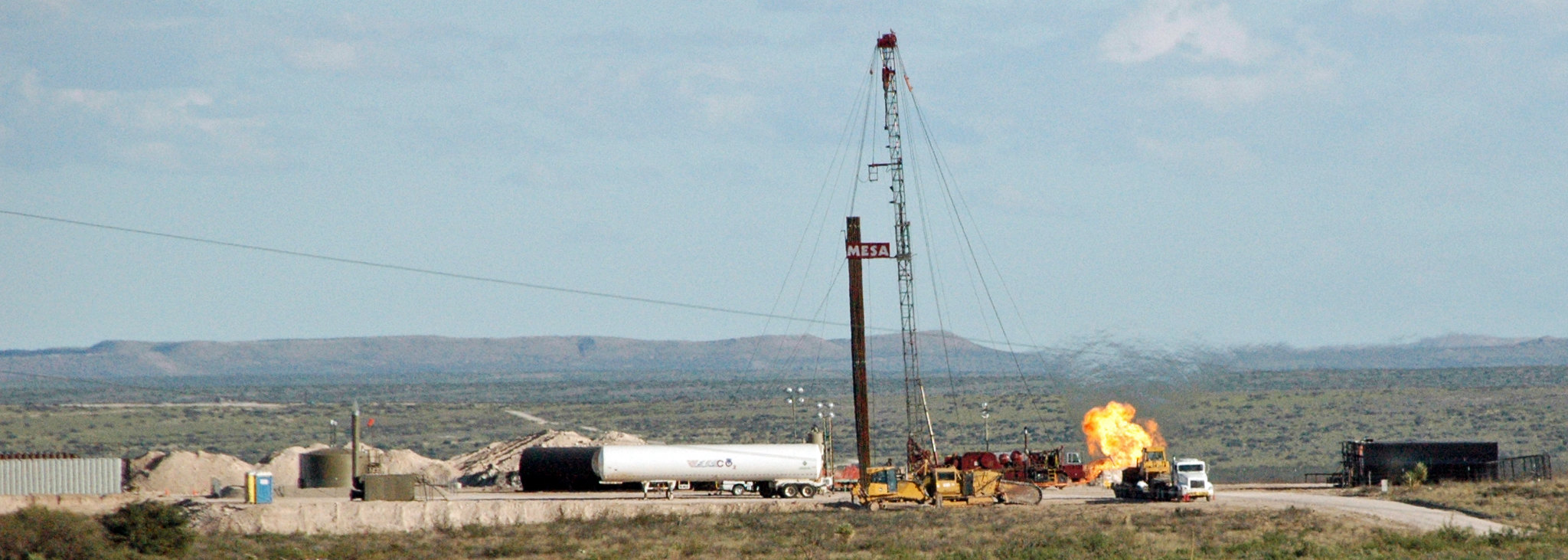
Our research found that different types of equipment have notable differences in the concentration of hazardous air pollutant emissions. For example, gas samples from liquid storage tanks—which hold crude oil, gas condensate, or produced water—contained benzene concentrations 59 times higher than those at wells or gathering pipelines, which collect and transport natural gas. This is because the stored liquid contains high levels of hazardous air pollutants, and emissions of working losses, breathing losses, and flash gas, which is formed due to changes in temperature or pressure, such as when a valve opens, take with them these hazardous air pollutants that were present in the liquid. Understanding how concentrations of hazardous air pollutants change and the causes of methane super-emitter events at different points in the gas supply chain can help regulators set policies that protect human health.
Policy State of Play
The U.S. EPA’s Methane Super Emitter Program (SEP) was established in the New Source Performance Standards and Emissions Guidelines in 2024 as part of a federal effort to improve detection, reporting, and mitigation of large, unscheduled, and intermittent methane emissions events. The SEP partnered with certified third-party remote sensing companies to identify and report methane super-emitter events. Oil and gas operators were required to investigate any detected methane super-emitter events within five days and report findings within 15 days. However, the SEP is constrained by 40 C.F.R. part 60 subparts OOOO, OOOOa, OOOOb, and OOOOC regarding which events are considered super-emitter events. Specifically, the code defines a super-emitter event as an emission event at or near an oil and natural gas facility (e.g., an individual well site, centralized production facility, natural gas processing plant, or compressor station), which excludes emissions from other sources (e.g., landfills, refineries, and other methane sources). In July 2025, future implementation of the SEP was extended until January 22, 2027. This delayed implementation affects enforceability at the federal level. While there may be state-level reporting requirements, there is little federal accountability for operators who are repeat offenders or fail to adequately mitigate events. Additionally, PSE’s research shows that these events almost always release hazardous air pollutants that pose acute health risks, indicating that mitigating methane emissions could provide health benefits.
The federal government is also taking steps to limit the ability of states to regulate the exposure of communities to harmful emissions. In January 2026, the federal government filed a lawsuit against the State of California related to SB1137, a state law passed in 2022 that requires new oil wells to be set back at least 3,200 feet from homes, schools, community centers, parks and playgrounds, healthcare facilities, or public buildings.
Despite these challenges, there are opportunities at the state and local levels to use the science-backed data on PSE’s Methane Risk Map to inform health-protective energy policies closer to home.
Oil and gas companies seeking to build new infrastructure must evaluate the air quality impacts that their proposed operations might have on the local community before they are given permission to expand. This makes air permitting processes for proposed natural gas infrastructure a key opportunity to advance health-protective energy policies. Oil and gas companies control the start and end of any short-term planned maintenance events—even ones that meet or exceed super-emitter emissions rates—and in doing so can account for any related blowdown events in annual emissions inventory reporting. However, non-routine methane super-emitter events—the kind that PSE has shown can have far-reaching air quality impacts—are not systematically accounted for in these permitting processes. Because super-emitters have historically been difficult to predict and detect, states do not include these events in their reporting requirements for oil and gas companies, leaving the health risks of such events unaccounted for.
Regulatory requirements and enforcement vary widely across states. Some states have regulatory requirements that help mitigate health risks from gas infrastructure. For example, California established setback distances for wells or gas production facilities and established the California Satellite Methane Project (CalSMP). CalSMP expands on the initial federal SEP work by mapping more methane sources, including landfills. Additionally, some states have health protections that are focused on chronic exposure to hazardous air pollutants, but ignore acute or short-term risks. For example, Colorado’s Air Quality Control Commission held hearings in September 2025 to set new chronic health-based standards for five-priority air toxics, including benzene. PSE’s Methane Risk Map demonstrates that hazardous air pollutants emitted with methane during super-emitter events can produce ambient air concentrations high enough to pose health risks for people living near these emissions. Rules that only consider chronic exposures do not account for these risks.
Plan of Action
Human health risks of methane super-emitter events can be mitigated through evidence-based interventions. Even as federal air quality and human health protections are being constrained, both voluntary actions by operators and regulatory actions at the state, local, and tribal level can provide solutions.
Recommendation 1. Increase gas composition transparency through air permitting.
Generally, state regulators require companies to estimate emissions from routine gas leaks (also known as fugitive emissions) using gas composition data from the site, from a representative site, regional data, or a composition profile that is not site-specific. But these data are often unavailable to the public, may require a Freedom of Information Act (FOIA) request to access, or are in formats that are difficult to utilize. Furthermore, how regulators and operators define a representative site, or sample, is not always disclosed.
In the process of building its national gas composition database, PSE learned that disclosure requirements and operator practices vary widely from state to state. Some states, such as Texas, New Mexico, and North Dakota, require gas composition analyses from accredited independent labs as part of permit applications, and make the full applications available to the public via web portals. However, other states, like California, lack gas composition lab reports or detailed data in publicly available documents, even though, in some cases, companies are required to perform these analyses. In California, public access barriers to gas composition data often come in the form of documents with extensive redactions, long and burdensome California Public Records Act processes, and fees.
To help regulators, researchers, and impacted community members determine the health risks of hazardous air pollutants released during methane super-emitter events, states can require disclosure of gas composition data in publicly available databases. Since leaks occur throughout the supply chain, the best practice would be for every oil and gas facility operator to publicly disclose the composition of its gas and flash gas from multiple types of infrastructure, analyzed by accredited independent laboratories. Furthermore, when operators use representative samples (such as for facilities that are not yet built), best practice is to explain why the sample is representative of the facility. Currently, states take an à la carte approach to disclosure, with many only checking some of these boxes, creating an inadequate patchwork of data to support health risk assessment and policymaking.
Recommendation 2. Establish greater setback distances for oil and gas infrastructure.
Currently, only some states require setback distances for oil and gas infrastructure (Table 1). This setback means that wells or other equipment must be a minimum distance—usually on the order of hundreds to thousands of feet—from a home, school, or other sensitive facility. However, our findings show that typical setback distances are insufficient. First, setback regulations often overlook storage tanks, whose flash gas emissions can contain much higher benzene concentrations than well leaks. Furthermore, across the 1,490+ events currently on the Methane Risk Map, we found that modeled benzene concentrations typically exceeded short-term, state-based regulatory benchmarks on average out to two miles from the source of emissions. Differentiating setback requirements by equipment category and gas composition would improve safeguards against the most hazardous air pollutant emissions.
Recommendation 3. Prioritize flash gas emissions because of their health risks.
While some regulatory requirements for flash gas and storage tanks exist, PSE’s research shows that when flash gas is emitted from tanks, it can pose significant health risks due to the potential for high benzene concentrations in the released gas. Given these risks, regulators should prioritize flash gas sources for enhanced leak detection and repair requirements and compliance oversight, even though these types of events may not always have the highest methane emissions rates. When leaks occur, regulators can require operators to monitor, report, and address air quality impacts. These data would improve tracking of methane super-emitter events, inform maintenance practices, and help protect nearby communities and onsite workers.
Recommendation 4. Invest in modeling air quality impacts of gas leaks to inform risk management and emergency planning.
Regulatory approaches typically rely on routine emissions data, which do not capture the scale or reach of pollution from events such as tank failures, well leaks, or pipeline ruptures, which, as demonstrated by PSE’s Methane Risk Map, can generate short-term concentrations of health-harming pollutants that far exceed safe levels and extend far beyond facility boundaries. Without air quality modeling that incorporates gas composition and site-specific conditions, regulators and operators cannot assess the full scope of potential health risks or design effective mitigation and response strategies. Establishing transparent standardized air quality impact modeling, especially around residential areas and sensitive receptors like schools and childcare facilities, that accounts for methane super-emitter scenarios as part of permitting and risk management processes would provide data to support informed decisions by both operators and regulators.
Recommendation 5. Expand air quality monitoring in fenceline communities.
Equipping regulators with optical gas imaging (OGI) cameras and initiating targeted mobile or stationary air monitoring in fenceline communities and at facilities with repeated emissions events would enable independent detection of emission events and verification of mitigation attempts. These measures would focus oversight where risks are highest. Furthermore, site-specific information, including the cause and estimated duration of the leak, can improve health risk assessments and modeling. Indeed, PSE is already incorporating new, site-specific data provided by regulators into the Methane Risk Map to improve its modeling of tank emissions.
Recommendation 6. Adopt short-term health benchmarks for hazardous air pollutants.
Effective air quality modeling of methane super-emitters requires establishing short-term (hourly) health-based concentration thresholds for the hazardous air pollutants that are found in natural gas, such as benzene, toluene, ethylbenzene, xylenes, and hexane. While some states, such as California and Texas, establish such benchmarks, some do not. As shown by PSE’s Methane Risk Map, methane emissions events at natural gas facilities can lead to short-term spikes in hazardous air pollutant concentrations. Adopting and requiring short-term health benchmarks, combined with air quality modeling of non-routine event scenarios, to inform permitting, monitoring, and emergency response decisions ensures that health protections reflect real-world risks and prioritize fenceline communities.
Conclusion
Our research reveals that methane super-emitter events not only impact climate, but also impact air quality and pose human health risks. The Methane Risk Map shows that hazardous air pollutants are routinely released alongside methane during upstream natural gas leaks, often at concentrations that degrade air quality and pose acute health risks to nearby communities. Risks from these types of events remain largely invisible under current regulatory frameworks.
The Methane Risk Map can help both operators and regulators characterize health risks from methane emission events and target voluntary measures and regulatory oversight where they are most needed. By strengthening control requirements, data coverage, availability and transparency, updating and effectively implementing health benchmarks, improving siting, and expanding monitoring and risk modeling, policymakers can close regulatory gaps that leave people’s health vulnerable, and develop energy policy that protects human health. Through voluntary actions and transparent cooperation with regulators, operators can proactively mitigate health risks and manage the potential risks posed by independent detection and monitoring technologies.
PSE collected and analyzed gas composition samples from federal and state agencies across major oil- and gas-producing basins. Using this information, we assembled the most comprehensive speciated database of gas composition covering a substantial share of reported upstream methane emissions nationwide. This database enables PSE scientists to estimate site-specific hazardous air pollutant concentrations in surrounding communities for each methane emissions event on the MRM.
The MRM only includes methane emissions events for which we have sufficient information to estimate source-specific gas composition; however, this only accounts for a small fraction of all the methane emissions events in the United States. The MRM is regularly being updated with new events as methane emissions and gas composition data become available. In the future, we plan to model methane emissions events from other parts of the gas supply chain, as well as from other U.S. states and countries.
The emissions rate for each event is derived from available satellite and aircraft measurements. These observations typically only provide emissions rates at a snapshot in time. Therefore, to be conservative, we compare one-hour average concentrations to acute or short-term health benchmarks.
If the MRM shows exceedances of health or safety benchmarks near your location, it suggests that there was a human health risk during those events. Prolonged or repeated exceedances—especially from the same site—can point to a concern. If you’re seeing risk indicators, it may be worth reaching out to local environmental groups or contacting your local health or environmental agencies for more information.
A deeper understanding of methane could help scientists better address these impacts – including potentially through methane removal.
The escalating frequency and intensity of extreme heat events, exacerbated by climate change, pose a significant and growing threat to public health. By leveraging funding mechanisms, incentives, and requirements, HHS can strengthen health system preparedness.
The U.S. would need 65,000 miles of pipeline to achieve net-zero emissions by 2050. Here’s how the Biden Administration can expanding the use of low-emission, composite materials to support a net-zero vision.
The U.S. should deploy air-pollution emission sensors in 300 American cities by 2030 to drive critical climate and air-quality decisions.