Ongoing DOE Staff Shortages Limit Trump Energy Priorities
America’s energy innovation ambitions are only as strong as the federal workforce responsible for delivering them. Yet, over the past year, the U.S. Department of Energy (DOE) has suffered massive losses of staff capacity and skills, largely due to the Trump administration’s Deferred Resignation Program (DRP), which slashed headcounts across the federal government. Occupations with skills essential to making and managing awards were among the hardest hit. As a result, many energy innovation programs ground to a halt in 2025. Although DOE activity began to rebound in 2026 without an increased and targeted hiring strategy, the department risks falling short just as the demand for energy innovation is accelerating.
The EFI Foundation (EFIF) and the Federation of American Scientists (FAS) analyzed changes in DOE’s workforce and spending trends using EFIF’s updated Energy Innovation Project database. The following analysis identifies the workforce needed to restore DOE’s capacity to deliver on its energy innovation mission.
In 2025, DOE Lost Staff Critical to Program Execution
Under the Trump administration, DOE has lost over 2700 federal staff, a majority of whom departed through the agencywide DRP in 2025. Nearly any federal employee could opt-in to the DRP, meaning DOE had very little control over what expertise left the department.
Of all staff that have departed DOE since February 2025, EFIF estimates over one third were in occupations with essential skills for making and managing award programs. Individuals in these roles are hired for experience managing budgets, personnel, and resources critical to executing the goals of specific programs. The occupations most impacted include management and program analysis (40% reduction), grants management (47% reduction), and loan specialists (42% reduction). Nearly every occupation type with skills essential to award management experienced a higher-than-average proportional decrease in headcount at DOE over the past year and a half.
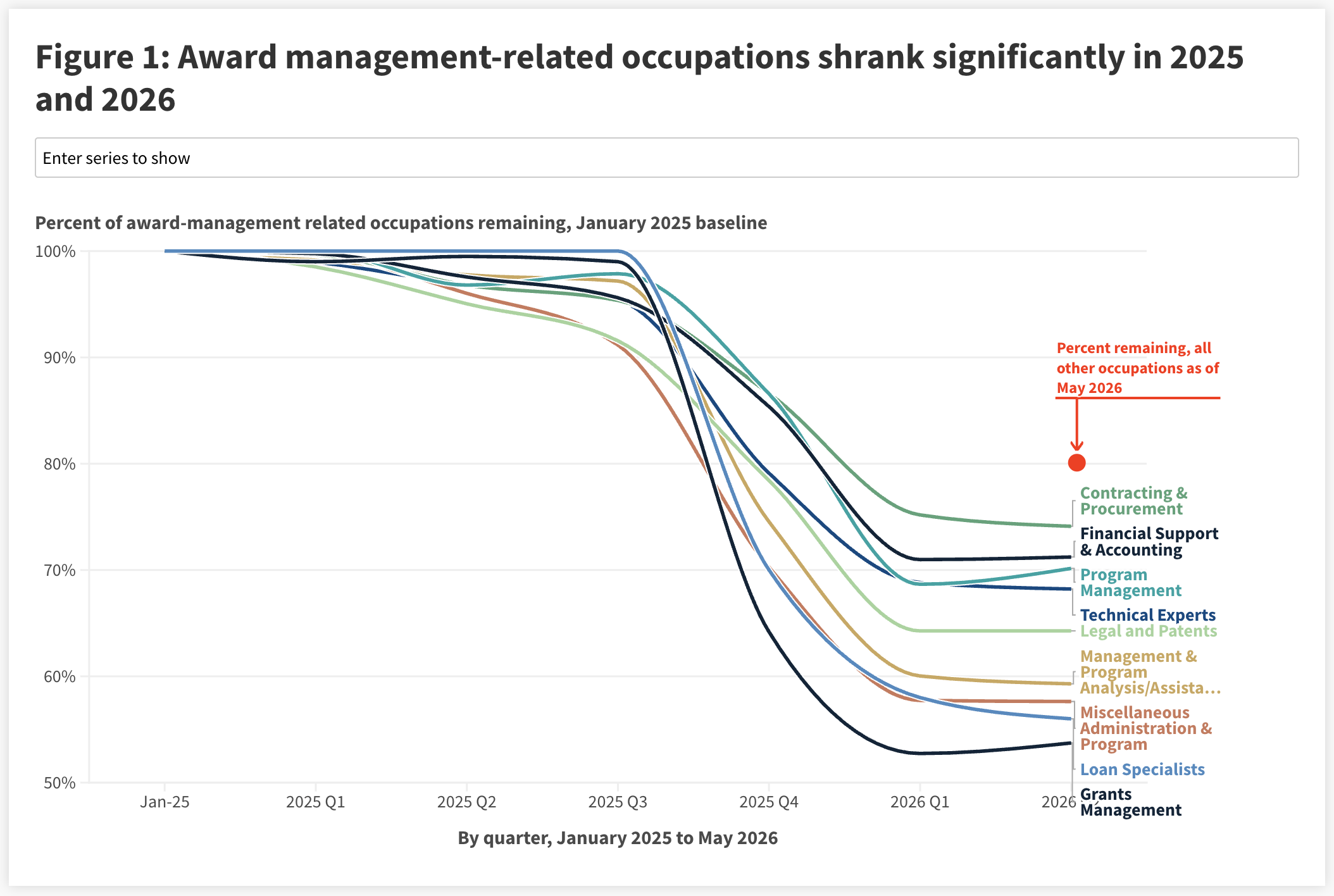
Notes: Data are from the U.S. Office of Personnel Management (OPM) and represent the percent difference in total headcount by occupation type across all DOE offices except the National Nuclear Security Administration and Federal Energy Regulatory Commission. Occupations are listed as occupational series, which are job categories defined by OPM as the description that an employee’s position falls under based on the duties and required qualifications of the position. EFIF identified 18 occupational series critical to managing DOE’s awards which saw significant changes across 2025 and 2026. Some categories are combined here for simplicity. See our approach section for details.
Without rebuilding the loss of essential skill sets, DOE will struggle to translate congressionally appropriated funding into real-word energy innovation outcomes.
The massive reduction in federal staff has a compounding impact on DOE capacity due to the loss of institutional knowledge. In total, the thousands of federal workers who have departed DOE under the second Trump administration took with them a combined 29,792 years of service. Nearly 90% of departing staff were career employees, over half of whom had more than five years of service, with tenure likely spanning multiple administrations. In contrast, over one third of hires over the same period were political staff, who serve limited terms and are often new to the federal workforce.
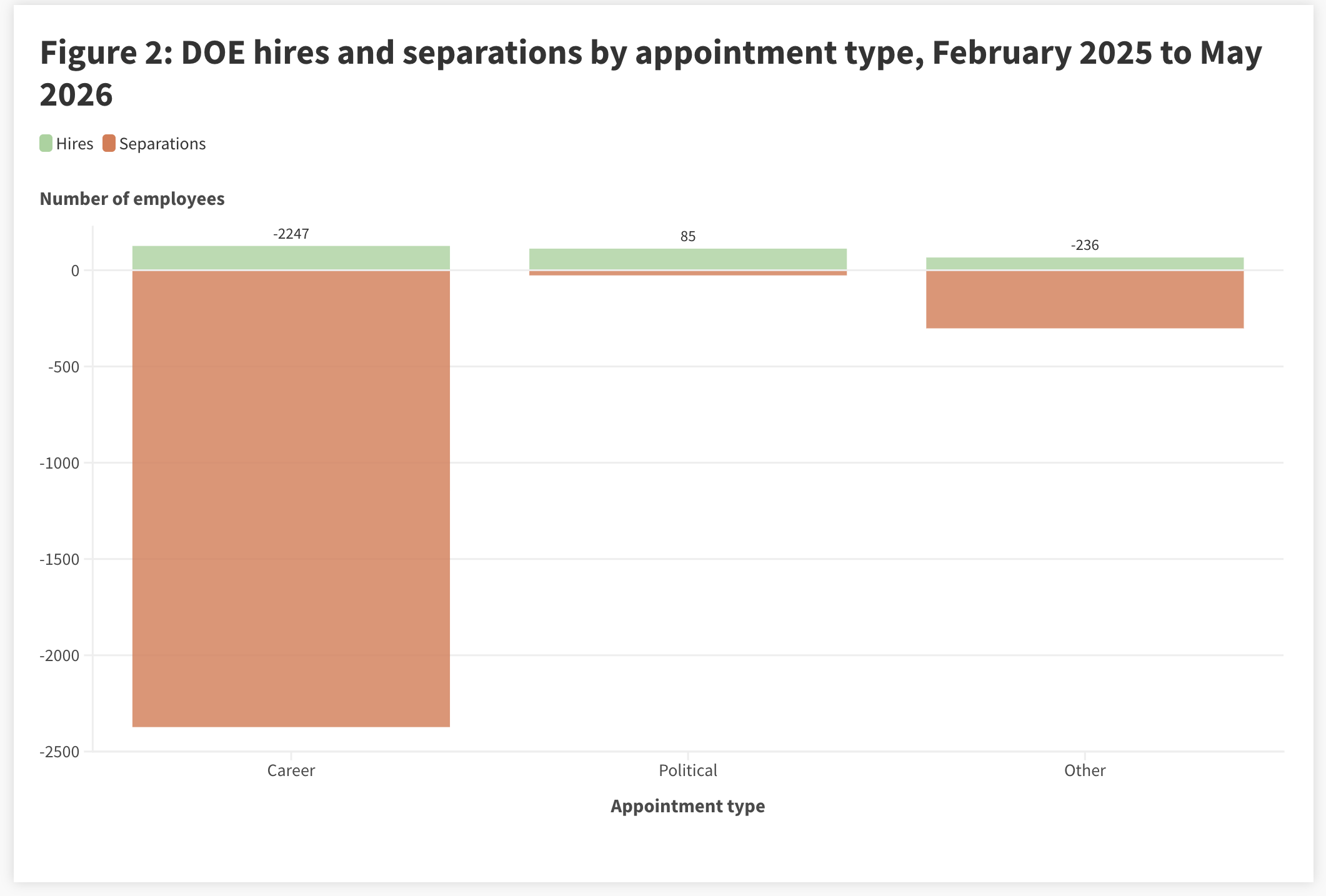
Notes: Data are from U.S. Office of Personnel Management and represent hires and departures across all DOE offices except the National Nuclear Security Administration and Federal Energy Regulatory Commission. Appointment types are defined by OPM as the type of appointment an employee is serving under in terms of permanence and competitiveness. EFIF separated OPM appointment types into career and political roles based on review of OPM appointment type descriptions. See the approach section for a detailed methodology.
Federal career staff are critical to ensuring agency function and smooth transition across presidential administrations. Career staff carry an understanding of department-specific administrative processes, lessons learned from prior programs, and relationships with private-sector partners—knowledge critical to executing and maintaining awards. While political staff often bring much-needed new perspectives and ideas into the fold, they are, by definition, more focused on overall policy direction than day-to-day functions. Increased political staff capacity cannot replace the role of seasoned career staff at the department. Energy innovation at DOE, which often operates on multi-administration timelines, depends on the health of its entire workforce.
DOE is Ramping Up Activity, But Execution Requires the Right Staff Levels and Expertise
In the first quarter (Q1) of 2026, DOE outpaced all of 2025 in funding announcements and project selections across its science and energy innovation offices. The department announced the same number of awards (14) in Q1 2026 as it did in all of 2025, but the dollar value of the 2026 awards was four times greater. In addition to an increase in new program funding, on April 15, 2026, Energy Secretary Chris Wright announced the unpausing of nearly 2,000 awards.
However, new spending activities in the second quarter of 2026 have dropped drastically. Is the agency experiencing the implications of an ongoing staffing shortage?
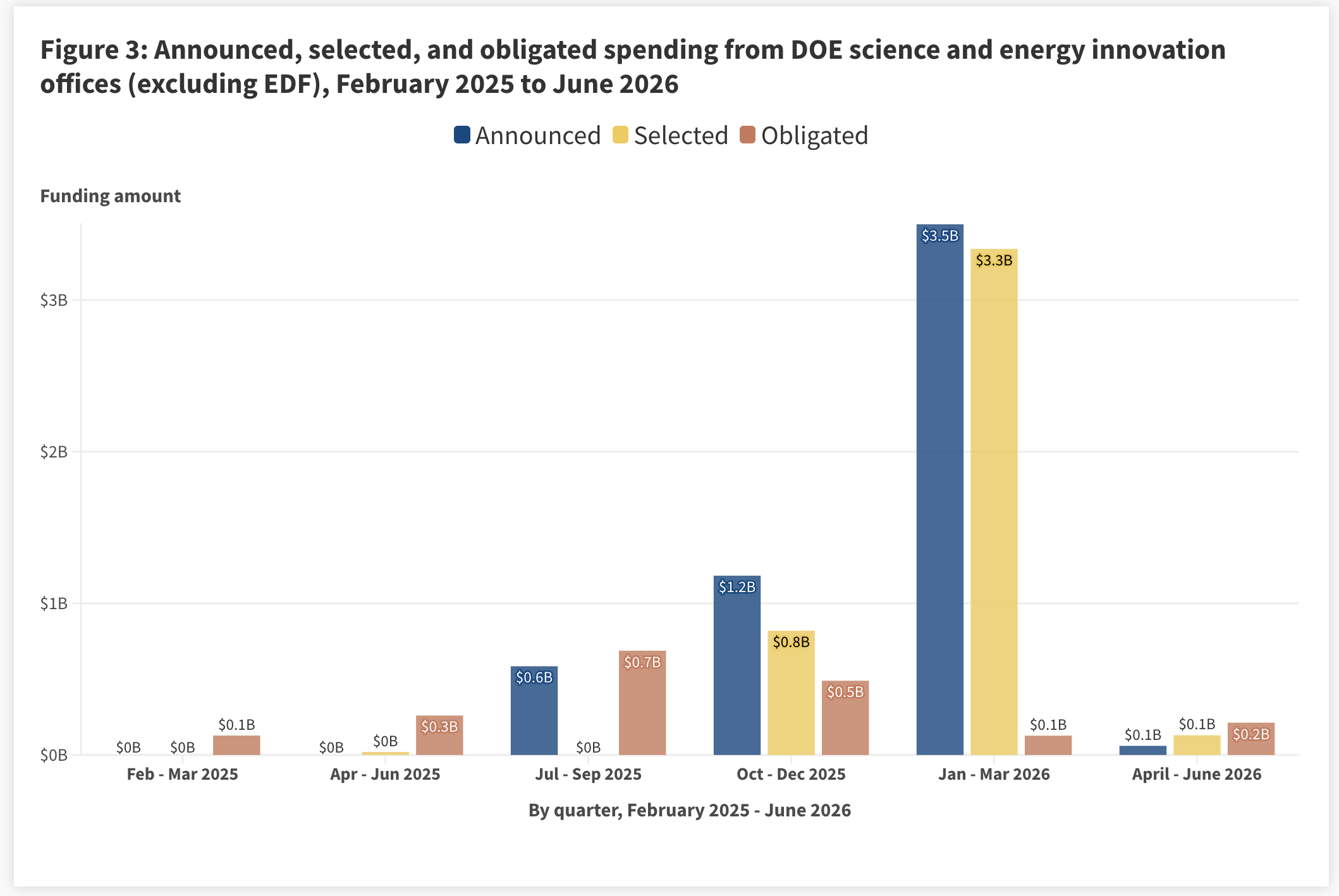
Notes: Data are from Grants.gov, DOE’s press releases, and USAspending.gov from February 1, 2025, to June 30, 2026 and were last updated on July 6, 2026. Solicitations without funding, such as requests for information (RFIs), are excluded. Data reflect DOE science and energy innovation offices, excluding the Office of Energy Dominance Financing (EDF), which was formerly known as the Loan Programs Office. See the approach section for a full list of offices tracked.
In addition to issuing new funding opportunities, DOE science and energy innovation offices actively manage over 5,000 awards worth $41.1 billion, according to EFIF’s Energy Innovation Project database. Yet, these offices were the hardest hit by the DRP. According to data obtained by FAS, an estimated 1,190 of DOE’s DRP participants were from its science and energy innovation offices. As of October 2025, these offices had lost an estimated 43% of their federal employees.
To rebuild a workforce that can drive forward American energy innovation, DOE must not only make up for the skills and expertise it lost in 2025, but also identify the workforce capacity and capabilities needed to achieve its priorities.
Although the department can shift staff capacity and programs around to increase headcount in priority offices, this does not replace the program-level expertise lost with the departure of seasoned staff. For example, the Office of Clean Energy Demonstrations (OCED) lost 85% of its staff by June 2025, leaving an estimated 40 employees to manage about 100 projects and a $27 billion portfolio. While the department can move OCED programs and limited remaining staff to other offices with higher headcounts, this does not replace the awardee relationships and commercial-scale project expertise former staff built while managing OCED’s portfolio.
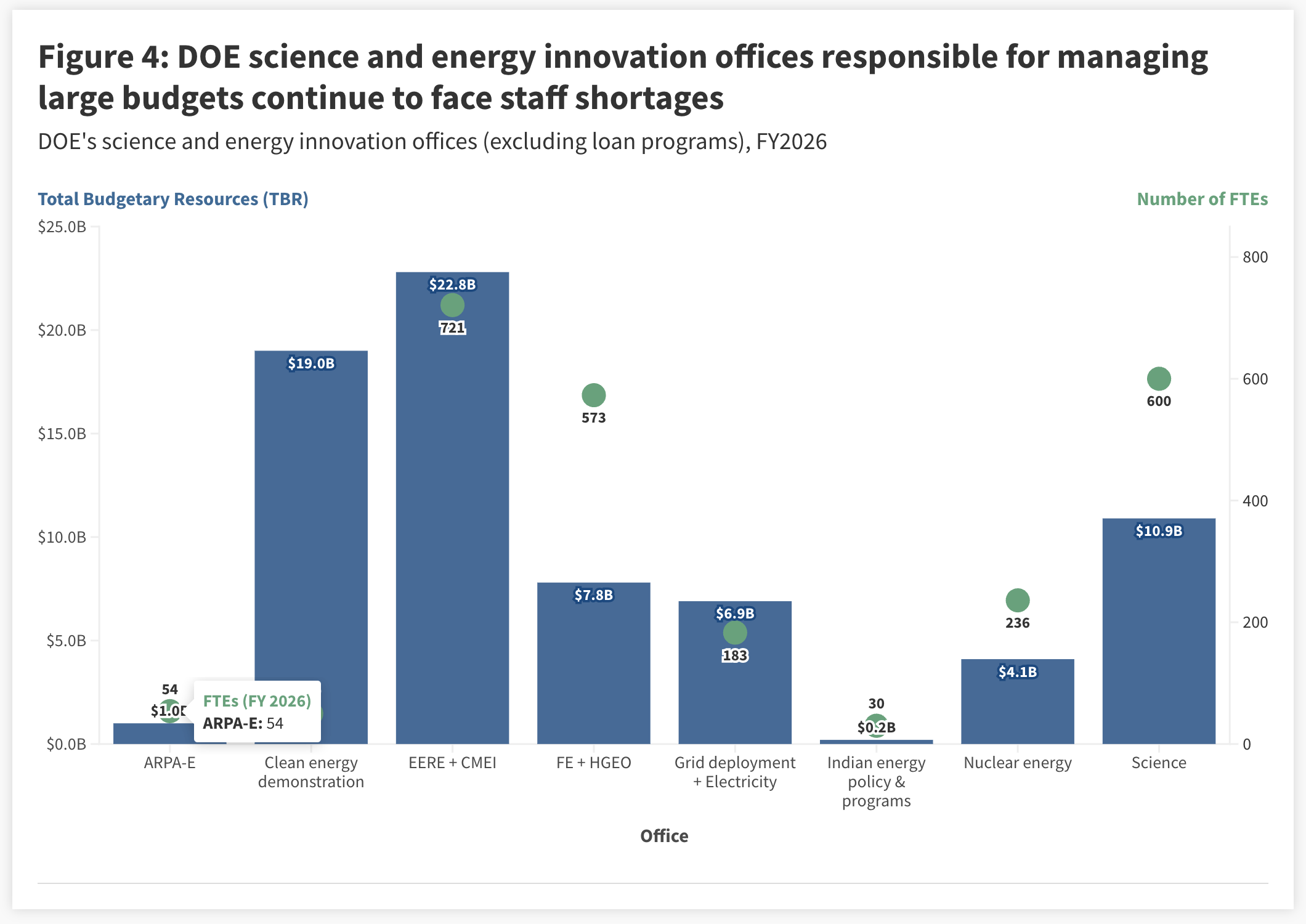
Notes: “Total budgetary resources” include DOE’s full obligational authority in a given fiscal year, including appropriations, unobligated carryover balances, and authority from offsetting collections. For the purposes of this analysis, off-budget financing accounts are excluded. Data are from USAspending.gov and reflect DOE science and energy innovation offices, excluding EDF. “FTE” is used throughout to mean full-time equivalents for federal employees, as measured by OMB. FTE data are from OMB’s Presidential Budget Request Technical Supplement for fiscal year 2027.
In addition to achieving the capacity needed to manage existing programs, the department should also acquire the workforce skills required to realize its new ambitions. For example, DOE’s new funding opportunities include increases in nontraditional other transaction agreements (OTAs). To execute OTAs, DOE needs expertise in both federal cost accounting—a narrow specialization—and the Generally Accepted Accounting Principles used by the private sector. The demand for new skills extends to DOE’s contracting capabilities as well. Due to their lack of a standard structure, OTAs require highly specialized contracts. As stated by a Bipartisan Infrastructure Law (BIL) program awardee, there exists “a disconnect between developers who know how to deliver projects and bureaucrats trying to write a contract.” DOE must carefully evaluate whether its remaining contracting workforce can accommodate burgeoning demand for OTAs and commercial-style agreements.
Without the right expertise, DOE will be unable to spend federal dollars responsibly, manage existing awards, and strategically impact the energy sector. Every award requires staff to evaluate applications, negotiate terms, obligate funds, and monitor performance over the life of a project. The pace of new and restarted awards appears to be building faster than DOE’s current workforce can absorb.
DOE Increased Hiring But Still Saw a Net Loss of Employees in 2026
In 2025, the Trump administration assumed that it could achieve its priorities with substantially fewer career staff by relying more on political staff. Yet, a year after the DRP, it is increasingly clear that a new workforce strategy is needed. Mass departures under the DRP have crippled federal agencies. The Office of Personnel Management (OPM) has recognized the negative impacts of staff losses and is looking to reverse cuts to critical positions. As stated by OPM director Scott Kupor, “we probably have some skills that we now need to hire back, quite frankly.”
In April 2026, OPM launched a governmentwide hiring initiative focused on project management and data science, aiming to hire 250 professionals across the federal workforce. While a start, this is far from sufficient to fill existing gaps. DOE alone has experienced a net decrease of 140 program managers under the Trump administration. Larger hiring efforts will be needed to recover workforce capacity.
Hiring has increased slightly at DOE in 2026. From January to May 2026, DOE hired 193 federal employees, more than in nearly all of 2025 (129, excluding January). Despite the uptick, however, DOE continues to experience a net loss of federal staff in 2026.
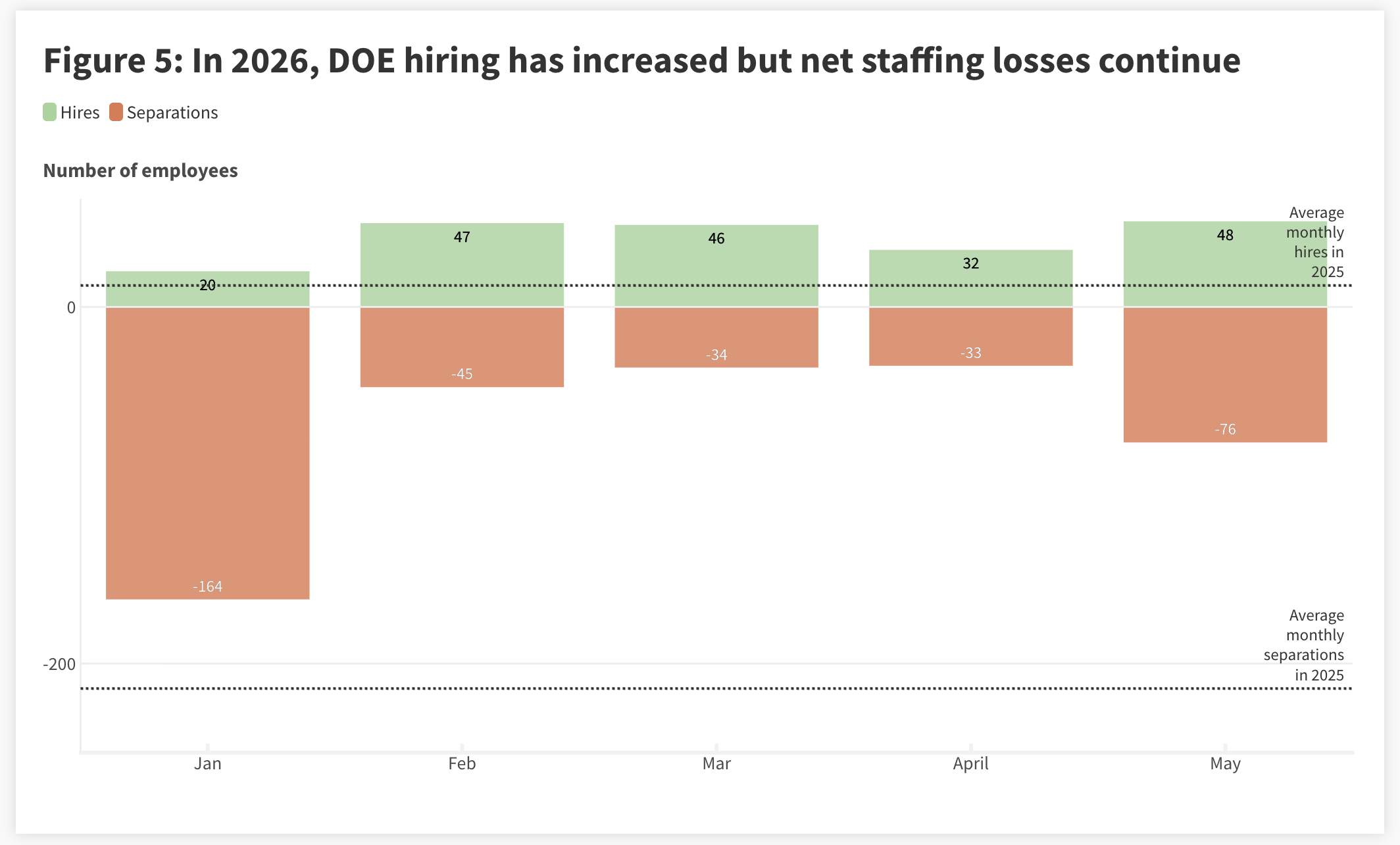
Notes: Data are from U.S. Office of Personnel Management and represent hirings and departures across all DOE offices except the National Nuclear Security Administration and Federal Energy Regulatory Commission. Average monthly separations and hires in 2025 exclude data from January 2025.
The 2027 president’s budget request (PBR) calls for increasing staff in select science and energy innovation offices, specifically the Office of Nuclear Energy (NE), Office of Hydrocarbons and Geothermal Energy (HGEO), and the Office of Energy Dominance Financing (EDF). However, in several science and energy innovation offices, requested staff size in the PBR still fall below pre-2025 levels. It is unclear if increased staff capacity in favored offices will come from new hires or a transfer of existing staff from other offices. Given current—and growing—workloads among science and energy innovation offices, it is unlikely that many offices have excess capacity to redistribute.
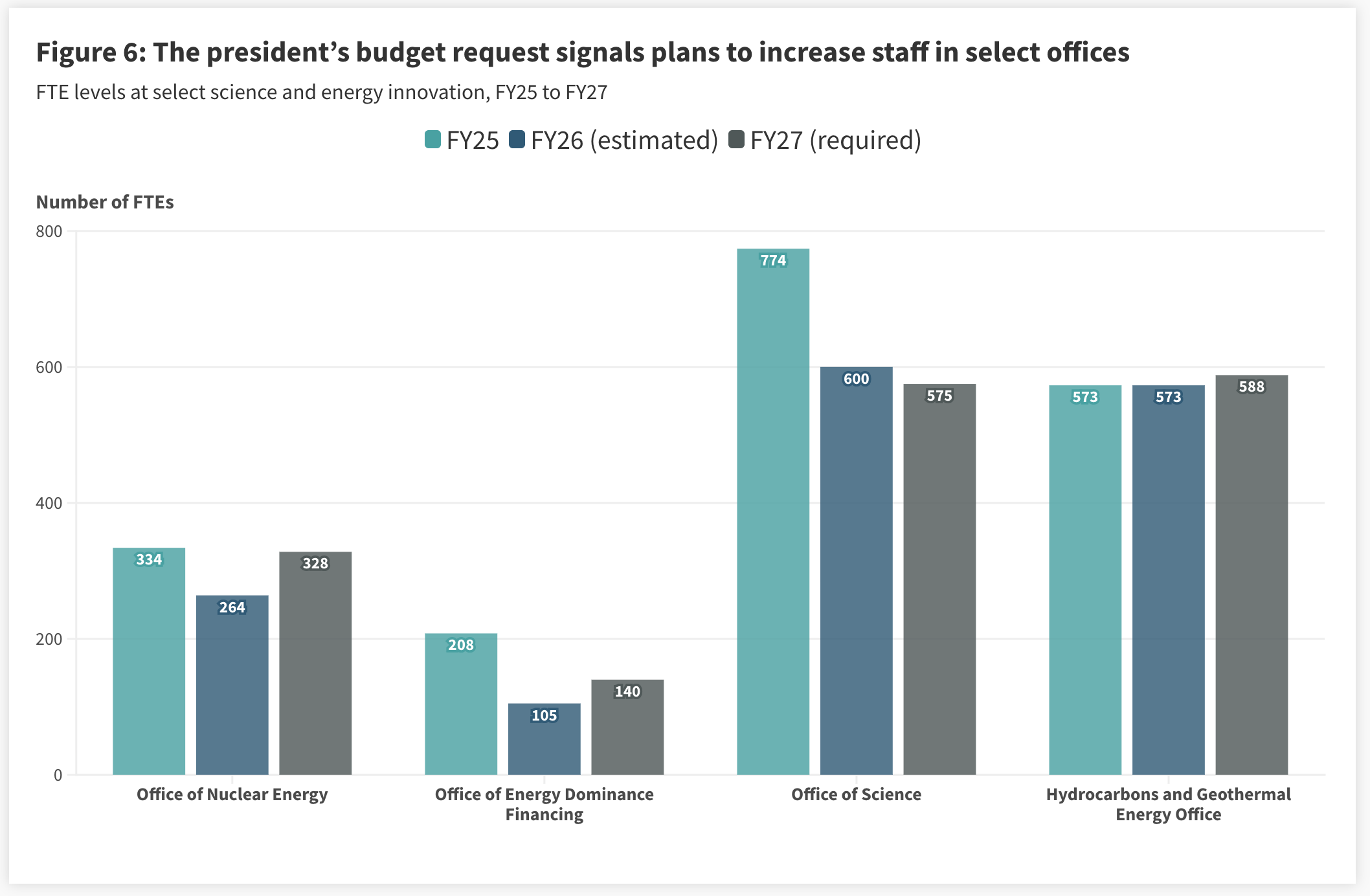
Notes: “FTE” is used throughout to mean full-time equivalents for federal employees, as measured by OMB. Data are from OMB’s Presidential Budget Request Technical Supplement for FY 2027. “Office of Energy Dominance Financing” represents all Loan Programs Office accounts; “Hydrocarbons and Geothermal Energy Office (HEGO)” represents both Fossil Energy and HGEO accounts.
It is unclear if and when DOE intends to hire new staff in key offices and replace the loss of essential award management skills. The pipeline to hire federal staff is long and narrow. As of July 22, 2026, there are 25 publicly open positions at DOE listed on USAJobs.gov but only two were in science and energy innovation offices. To achieve the administration’s energy innovation goals, DOE needs to up its hiring.
In the past, DOE has filled gaps in federal workforce capacity through contracting. However, combined staff pay and contractor spending in fiscal year 2026 is currently at pre-BIL levels, when the department had less than one third of its current science and energy innovation budget.
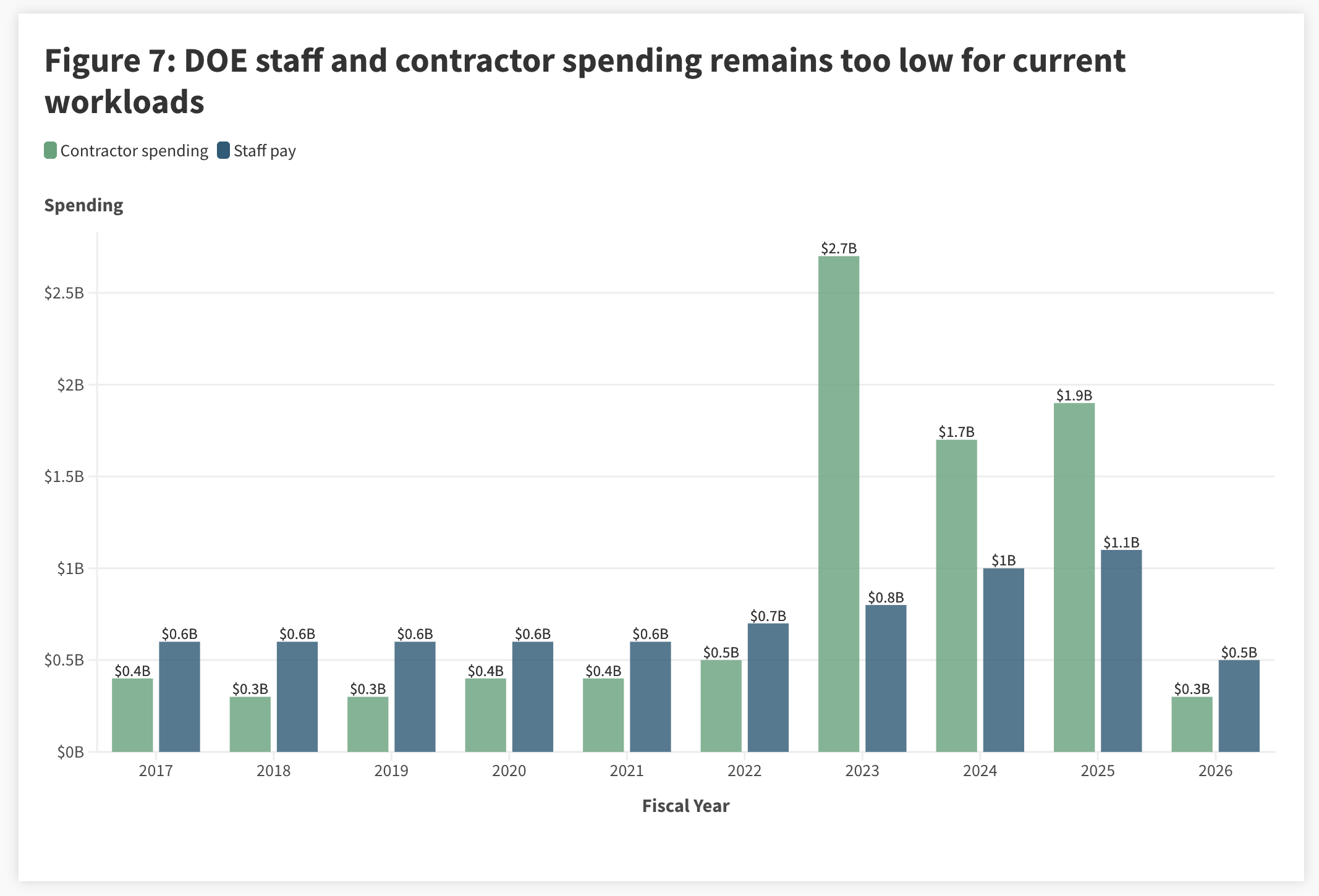
Notes: Data are from USAspending.gov, accessed July 2026. Obligations to contractors are calculated using the “advisory and assistance services” object class. Staff pay obligations are calculated by summing four object classes: civilian personnel benefits, full-time permanent, other personnel compensation, and other than full-time permanent.
Moreover, increasing contractor capacity does not fully replace the function of federal employees. Contractors are not allowed to fulfill some critical award-making functions reserved for federal employees including awarding grants, obligating funds, and executing loan commitments. These occupations are fundamental to project deployment, and increasing contractors is a temporary, far-from-optimal solution for a strained federal workforce.
Staffing DOE to Execute Its Mission
Rebuilding DOE’s workforce goes beyond simply replacing the employees the agency has lost. DOE first needs a holistic view of its goals as an agency to identify the workforce capacity needed to carry out that mission.
DOE has expanded in recent years into commercial-scale project deployment and has undergone changes to its priorities and internal operations during the second Trump administration. This means that the department’s workforce needs are likely different today than they have been in the past. Because of this, DOE must look to align hiring with current and expected future workload demands and organizational needs rather than simply restoring previous staffing levels one-to-one.
DOE faces an uphill battle. Executing ambitious energy priorities requires an equally ambitious workforce strategy. Yet, hiring trends in 2026 thus far are still insufficient to maintain—let alone build—workforce capacity. While targeted OPM hiring efforts across federal agencies for project management skill sets are a start, they must be expanded to meaningfully restore the loss of key workforce capabilities. Further, the Trump administration’s tumultuous start to its relationship with the federal workforce will likely have long-term effects on its ability to attract new or returning talent to federal agencies. Nevertheless, DOE needs to rebuild a workforce that can deliver on its energy priorities because any energy strategy is only as strong as the workforce responsible for implementing it.
Our Approach
All data used in report figures, with the exception of project selections, are available in EFIF’s Energy Innovation Project public database. For a full methodology on data gathering and cleaning, as well as offices included in EFIF’s science and energy innovation offices, please refer to the website’s methodology page.
DOE-wide staffing data were downloaded from OPM on July 6, 2026. Employment (headcount) figures are benchmarked to the end of the fiscal year on September 30th of each year with the exception of fiscal year 2026 which is benchmarked to May 30th 2026 due to data availability. Hires and separations are cumulative totals across all months within each fiscal year. The data set includes all DOE employees, limited to full-time employees by work schedule, employees whose sub-agency element is Department of Energy, and excludes employees under National Nuclear Security Administration pay plans. Office-specific staffing data are from the 2027 president’s budget request and DOE data obtained by FAS through the Freedom of Information Act which included staffing numbers for OCED; Office of Manufacturing and Energy Supply Chains; Grid Deployment Office; EDF (formerly known as LPO); Office of Federal Energy Management Programs; Office of Energy Efficiency and Renewable Energy; Advanced Research Projects Agency-Energy (ARPA-E); Office of Technology Commercialization; Office of Indian Energy Policy and Programs; Office of Cybersecurity, Energy Security, and Energy Responsibility; Office of Electricity; Office of Science; Office of Fossil Energy and Carbon Management; and Office of Nuclear Energy. Funding and awards data are from USAspending.gov, grants.gov, and EFIF review of DOE press releases.
For simplicity, EFIF combined multiple OPM-defined occupational series into single categories. “Management and program analysis/assistance” represents series 0344 and 0343, “miscellaneous administration and program” represents series 0301, “contracting and procurement” represents series 1102 and 1106, “program management” represents series 0340, “financial support and accounting” represents series 0501, 0505, and 0510, “grants management” represents series 1109, “loan specialists” represents series 1165, and “legal and patents” represents series 0901, 0905, 0950, 0963, 0986, 1221, and 1222. “Technical experts” were identified by their classification as Science, Technology, Engineering, and Mathematics (STEM) occupations, omitting those occupational series related to technology support or operations.
To distinguish career from political employees, EFIF combined OPM appointment types in the following way. “Career” includes career (competitive service permanent), career (senior executive service permanent), career-conditional (competitive service permanent), executive (excepted service permanent), nonpermanent (competitive service nonpermanent), and Schedule B (excepted service permanent). “Political” includes executive (excepted service nonpermanent), limited term (senior executive service nonpermanent), noncareer (senior executive service permanent),, and Schedule C (excepted service nonpermanent). “Other” includes other (excepted service nonpermanent), other (excepted service permanent), Schedule D (excepted service nonpermanent), Schedule A (excepted service nonpermanent), Schedule A (excepted service permanent, Schedule D (excepted service permanent), and invalid.
Surprise! It’s a double album drop with the release of both the President’s Budget Request (PBR to us, not Pabst Blue Ribbon) and the Department of Energy’s (DOE) Budget Justification for Fiscal Year 2027 (FY27) last Friday.
How DOE can emerge from political upheaval achieve the real-world change needed to address the interlocking crises of energy affordability, U.S. competitiveness, and climate change.
As Congress begins the FY27 appropriations process this month, congress members should turn their eyes towards rebuilding DOE’s programs and strengthening U.S. energy innovation and reindustrialization.
The new alignment signals a clear shift in priorities: offices dedicated to clean energy and energy efficiency have been renamed, consolidated, or eliminated, while new divisions elevate hydrocarbons, fusion, and a combined Office of AI & Quantum.