Additional Delays Expected in B61-12 Nuclear Bomb Schedule
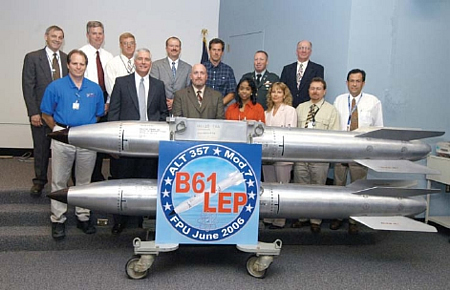
The B61-7, which completed a limited life-extension program in 2006, will be retired by the more extensive B61-12 program.
By Hans M. Kristensen
The National Nuclear Security Administration (NNSA) expects additional delays in production and delivery of the B61-12 nuclear bomb as a result of so-called sequestration budget cuts.
During testimony before the Hours Energy and Water Subcommittee last week, NNSA’s Acting Administrator Neile Miller said an expected $600 million reduction of the agency’s weapons activities budget could “slow the B61-12 LEP” and other weapons programs.
The Nuclear Posture Review set delivery of the first B61-12 for 2017, but that timeline has since slipped to 2019. Miller did not say how long production could be delayed but it could potentially slip into the 2020s.
The B61 LEP is already the most expensive and complex warhead modernization program since the Cold War, with cost estimates ranging from $8 billion to more than $10 billion, up from $4 billion in 2010. The price hike has triggered Congressional questions and efforts to trim the program. B61-12 proponents argue the weapon is needed to provide extended nuclear deterrence to NATO and Asian allies, but the mission in Europe is fading out and a cheaper alternative could be to retaining the B61-7 for the B-2A bomber and retire other B61 versions.
The B61-12 program extends the life of the tactical B61-4 warhead, incorporates selected components from three other B61 versions (B61-3, B61-7, and B61-10), adds unknown new safety and security features, and adds a guided tail kit to increase the accuracy and target kill capability of the B61-12 compared with the B61-4.
This publication was made possible by a grant from the Ploughshares Fund. The statements made and views expressed are solely the responsibility of the author.
It is difficult to assess from photos whether the Sentinel missile is longer or wider overall than the Minuteman, but the Sentinel clearly has a thicker second stage, which could potentially contribute to the missile’s extended range.
This is not the first time Google has agreed to censor imagery at the behest of governments, but be warned: obfuscation at this broad level poses a direct threat to the public’s ability to monitor and scrutinize government operations.
As humans expand our geographic reach, encroach on untouched natural territories, and interact more with animal populations, we will encounter novel zoonotic diseases that threaten the human body. The sooner we act to address these risks, the better.
“One thing became increasingly clear: AI doesn’t simply introduce a new category of risk. It changes the speed, scale, complexity, and interaction of risks that already exist.”