As someone who started their career in the nuclear weapons nonproliferation field, I have always thought of nuclear weapons first when I hear the phrase “existential risks”. What other technology could be more dangerous than a device that could kill hundreds of thousands, if not millions of people with a push of a button? Enter Artificial Intelligence (AI)…which has supercharged the threat of nuclear weapons, and other existential risks.
AI is no longer a standalone technology policy issue. It is a general-purpose capability embedded across global security. These systems are entering biological research, cyber operation, nuclear stability, military decision-making, and other security contexts. It continues to change how global risks emerge, spread, and interact.
That is why, for 18 months, FAS, in partnership with the Future of Life Institute, brought together leaders from government, industry, academia, and civil society to build unlikely coalitions, convene difficult conversations, and advance practical policy solutions. to better understand how AI actually changes existential risks we currently face in nuclear, biosecurity, cyber, and military integration domains.
This involved hosting roundtables on these different intersections, conferring with experts from across different scopes, and diving into each overlapping issue to see where there are pain points, where there are opportunities to apply lessons from other technologies to AI governance, and how to develop policy recommendations to help decision-makers reduce uncertainty and remain robust across a range of possible futures.
This project resulted in a series of investigations looking at AI’s intersection with a range of issue areas. One thing became increasingly clear: AI doesn’t simply introduce a new category of risk. It changes the speed, scale, complexity, and interaction of risks that already exist.
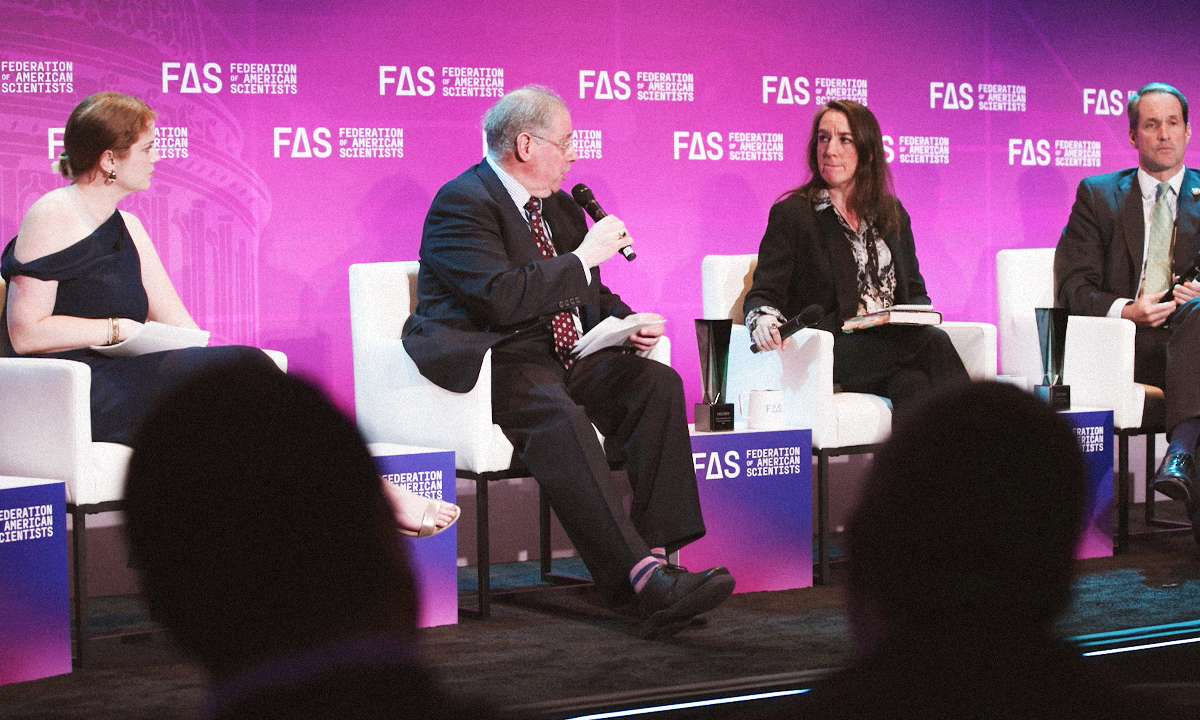
The project wrapped-up with something a bit more shiny, but still substantive – a gala! We brought together more than 200 leaders from government, industry, academia, and civil society for the AI x Global Risk Gala at the International Spy Museum to mark the release of the Converging Risk Report. The evening brought together people to think about how we govern a technology that is changing multiple dimensions of existential risk at once?
We also celebrated people working to make that question a little easier to answer. We presented AI Impact Awards recognizing leaders across advocacy, civil society, industry, and policy. The recipients included Joseph Gordon-Levitt for advocacy, Sneha Revanur for civil society, Chris Meserole for industry, and Senators Marsha Blackburn and Richard Blumenthal for policy leadership.
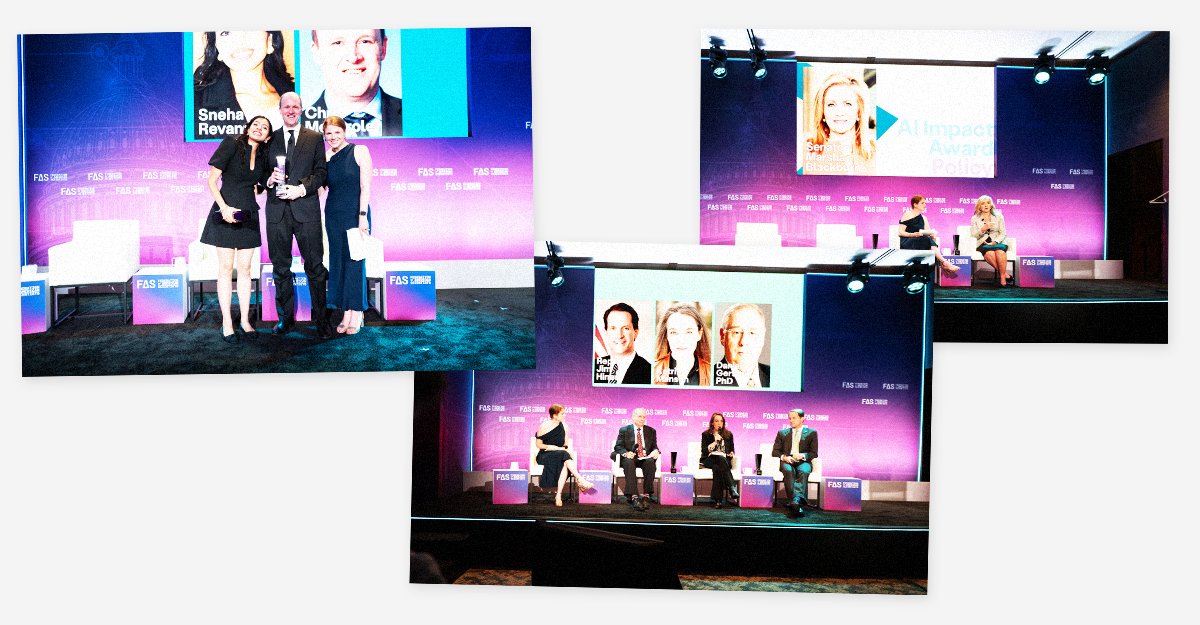
We presented AI Impact Awards recognizing leaders across advocacy, civil society, industry, and policy. The recipients included Joseph Gordon-Levitt for advocacy, Sneha Revanur for civil society, Chris Meserole for industry, and Senators Marsha Blackburn and Richard Blumenthal for policy leadership.
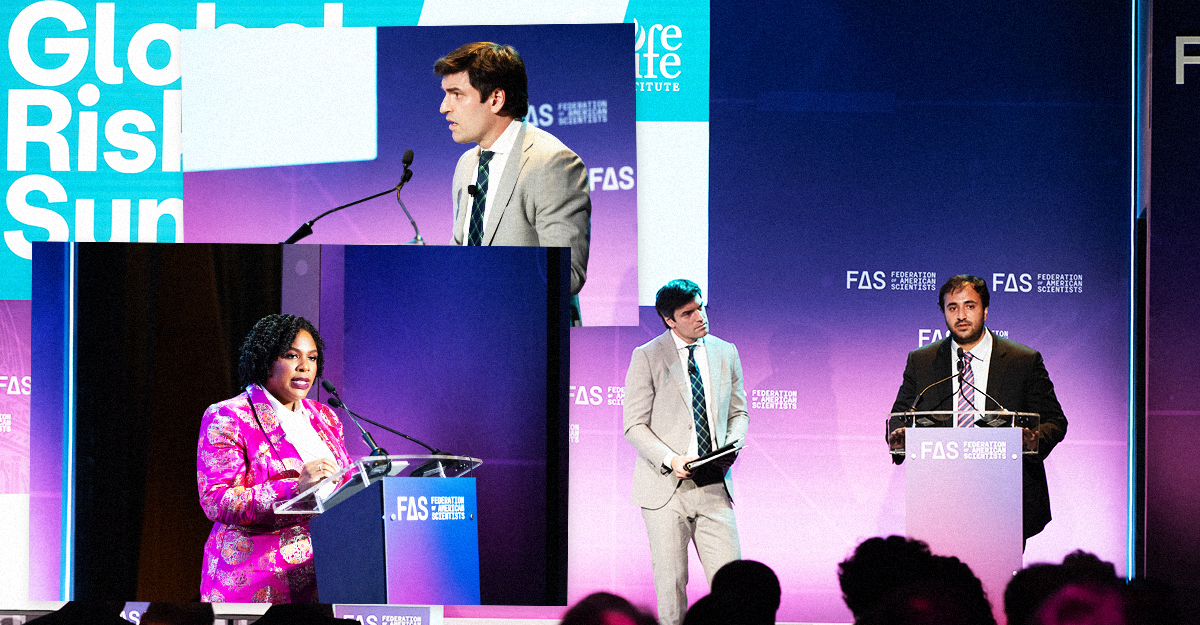
The night was not possible with FAS CEO Daniel Correa, FAS CSO Jedidah Isler, and our partners at FLI, like Hamza Chaudhry.
But the disco balls were really just the capstone. The most important product of the project was the aforementioned Converging Risk Report, which synthesizes the work across the different domains and examines how the stakes can rise as AI interacts with existing systems and risks through the ‘TVC (Threat, Vulnerability, and Consequences)’ framework.
While the technology may be rapidly developing, we need to have smart, evidence-based policy recommendations now to prepare for the different realities we may face. The goal isn’t to predict exactly what the future will look like but rather to build the capacity, coordination, and policy infrastructure to make better decisions even when we don’t know what’s coming next.
That means asking hard questions now: Where does AI increase existing vulnerabilities? Where could it accelerate the consequences of a failure? Where can policymakers act today to reduce uncertainty and build resilience?
For me, that is what made this project so fascinating. I came into it centering my view of existential risk primarily through the lens of nuclear weapons. I left thinking much more about the connection between risks and how AI can act (and is acting) as a force multiplier across them.
It is difficult to assess from photos whether the Sentinel missile is longer or wider overall than the Minuteman, but the Sentinel clearly has a thicker second stage, which could potentially contribute to the missile’s extended range.
This is not the first time Google has agreed to censor imagery at the behest of governments, but be warned: obfuscation at this broad level poses a direct threat to the public’s ability to monitor and scrutinize government operations.
As humans expand our geographic reach, encroach on untouched natural territories, and interact more with animal populations, we will encounter novel zoonotic diseases that threaten the human body. The sooner we act to address these risks, the better.
“One thing became increasingly clear: AI doesn’t simply introduce a new category of risk. It changes the speed, scale, complexity, and interaction of risks that already exist.”