FAS Taps Jon B. Wolfsthal as New Director of Global Risk
The Federation of American Scientists is excited to welcome Jon B. Wolfsthal as the organization’s new Director of Global Risk. The Global Risk will encompass nuclear policy, FAS’ longstanding Nuclear Information Project, along with other emerging global threats.
“We could not be more thrilled to be bringing on a leader with Jon’s dedication, knowledge and experience,” FAS CEO Dan Correa said. “We take FAS’ legacy of leadership in nuclear policy and transparency extremely seriously, especially at a time when the threat to the world seems to be resurgent. Our Nuclear Information Project continues to be a globally-renowned source of information on nuclear weapons for both world governments and the public, and Jon will help take the work even further. His track record as a leading thinker on global threats will also help FAS tackle emerging policy challenges as well.”
Hans Kristensen, Director of FAS’ Nuclear Information Project, added, “I have long admired Jon’s insights and intellect when it comes to nuclear policy and arms control. His resume speaks for itself – we can’t wait to start working with him at FAS.”
Jon B. Wolfsthal most recently served as a senior adjunct fellow at the Center for a New American Security in the Transatlantic Security Program. He is also a member of the Science and Security Board of the Bulletin of the Atomic Scientists and a member of the US Department of State’s International Security Advisory Board. He served previously as senior advisor to Global Zero in Washington, DC.
Before 2017, Mr. Wolfsthal served as Special Assistant to President of the United States Barack Obama for National Security Affairs and is a former senior director at the National Security Council for arms control and nonproliferation. He also served from 2009-2012 as Special Advisor to Vice President Joseph R. Biden for nuclear security and nonproliferation and as a director for nonproliferation on the National Security Council.
During his government service, Mr. Wolfsthal has been involved in almost every aspect of U.S. nuclear weapons, deterrence, arms control, nonproliferation policy. He helped negotiate and secure the ratification of the New START arms reduction agreement with the Russian Federation, helped develop nuclear policy including through the 2010 Nuclear Posture Review. He has worked on efforts to secure vulnerable nuclear materials, helped guide U.S. nuclear weapons targeting and deterrent policies, and supported efforts to prevent the acquisition and use of nuclear weapons by North Korea and Iran. He also served as a career civil servant at the U.S. Department of Energy from 1995-1999 in a variety of capacities, including the on-site nuclear monitor at Yongbyon, North Korea during 1995-96.
Aside from his government work, Wolfsthal has served as Deputy Director of the James Martin Center for Nonproliferation Studies at the Middlebury Institute for International Studies in Monterey. He has also been a senior fellow at the Center for Strategic and International Studies and was deputy director for nonproliferation at the Carnegie Endowment for International Peace.
With Joseph Cirincione, he is the author of Deadly Arsenals: Tracking Weapons of Mass Destruction and a leading authority on nuclear weapons policy, regional proliferation, arms control and nuclear deterrence. He is author of the Trillion Dollar Nuclear Triad, and the editor of the Nuclear Status Report. He is the author of dozens of scholarly articles, reports and scores of op-eds and published thought pieces, and has appeared on or been quoted in most leading domestic and international news media outlets (New York Times, Washington Post, The Economist, CNN, NPR. BBC, CBC, VOA, etc).
Wolfsthal officially joins FAS in October 2023.
FAS Launches ‘FRO-casting’ Tournament on Metaculus to Solicit Ideas for Focused Research Organizations (FROs)
FROs focus efforts on technology challenges that require coordinated and cross-disciplinary pursuits at the boundary of research and engineering
The Federation of American Scientists (FAS), one of the oldest science think tanks in Washington, and Metaculus, a forecasting and modeling platform, today announced the opening of the ‘FRO-casting’ tournament to test a new approach for evaluating scientific proposals.
This pilot program applies an expected value the forecasting methodology developed by FAS and Metaculus to proposals for Focused Research Organizations (FROs) in the life sciences, sourced by Convergent Research. FROs are envisioned as standalone, time-limited non-profit organizations organized like a startup to solve well-defined technical challenges that are neither profitable nor publishable. Their goal is to produce vital public goods: processes, tools, and datasets that are actively translated into use by others, to enable new methods and accelerate the pace of scientific research.
This is a public tournament in which forecasts will be produced by the Metaculus community and subject-matter experts identified by FAS.
The ‘FRO-casting’ challenge is open to subject matter experts, scientists, forecasters, decision makers, and the public. It is free to participate.
This effort aims to provide (a) quantitative assessments of the risk-reward profile of each FRO proposal that can inform agency decision-making, (b) actionable insight to proposal authors regarding their approach, and (c) new metascientific understanding of forecasting in scientific review.
“It is difficult to balance science agencies’ dual mission of protecting government funding from being spent on overly risky investments while also being ambitious in funding proposals that will push the frontiers of science,” writes FAS Senior Associate Alice Wu, “We at FAS are exploring innovative approaches to peer review to help tackle this challenge.” Ms. Wu is one of the leaders of this challenge, along with FAS colleague Jordan Dworkin, Metascience Program Lead.
Board Update: John Bailey Joins FAS Board of Directors
The Federation of American Scientists (FAS) is excited to announce that John Bailey has joined the organization’s board of directors.
John’s background includes roles in government, philanthropic institutions, and venture capital, where he has focused on critical issues including innovation policy, artificial intelligence, immigration, behavioral health, climate technology, and the future of work.
He currently serves as a fellow at the Chan Zuckerberg Initiative and a non-resident senior fellow at the American Enterprise Institute. He served as a domestic policy advisor in the Bush White House, and the nation’s second Director of Educational Technology in the U.S. Department of Education. As Deputy Policy Director to the U.S. Secretary of Commerce, he contributed to the development of the first National Pandemic Strategy and the President’s immigration reform package.
“John’s wisdom and wide range of experience across government and the private sector will be invaluable to FAS as we continue the work of making sure the best science leads to sound public policy,” FAS CEO Dan Correa said. “We feel fortunate to have someone as respected and skilled in the world of policy innovation contributing to FAS’ mission.”
“In an era where technology and science are evolving at an unprecedented pace, it is more important than ever to have entities like FAS leading the way in formulating policies that not only support research but also guide emerging domains such as AI for the greater good.” Bailey said. “I’m excited by the work, and more importantly, the people driving FAS forward at this transformative moment. It’s one of the most exciting science policy organizations, and I look forward to being more deeply involved in advancing its larger mission.”
Bailey’s term on the FAS board began earlier this month.
Federation of American Scientists Announces Food Supply Chain Impact Fellowship to Amplify Food System Policy Priorities
Fellows will focus on the development and implementation of innovative approaches to improve competition in the nation’s food supply chain
Washington, D.C. – The Federation of American Scientists (FAS) today announced a call for applications to the Food Supply Chain Impact Fellowship, designed to improve the nation’s small- and mid-size food businesses. The FAS Impact Fellowship program provides a pathway for diverse food systems and supply chain experts to participate in an impactful, short-term “tour of service” in the federal government.
The Food Supply Chain Impact Fellowship is a new fellowship opportunity administered by the FAS Talent Hub. FAS will place two cohorts of fellows at USDA to work on critical food supply chain issues. Fellows will develop and implement plans to support the Regional Rood Business Centers, the Resilient Food Systems Infrastructure program, and other food system transformation priorities.
At FAS fellows will participate in deep-dives into executive and legislative systems and unique USDA-specific sessions led by food system experts. Fellows will also receive training on how to lead change as a partner with the Federal government that includes an introduction of government programs and innovative practices.
Impact Fellows help ensure that on-the-ground skills and experience are inextricably linked with policymaking as our nation confronts unprecedented challenges and pursues ambitious opportunities.
Interested parties are encouraged to apply at https://fas.org/talent-hub/fscfi/
ABOUT FAS
The Federation of American Scientists (FAS) works to advance progress on a broad suite of contemporary issues where science, technology, and innovation policy can deliver dramatic progress, and seeks to ensure that scientific and technical expertise have a seat at the policymaking table. Established in 1946 by scientists in response to the atomic bomb, FAS continues to work on behalf of a safer, more equitable, and more peaceful world. More information at fas.org.
###
FAS Announces Additions to Leadership Team
The Federation of American Scientists (FAS) is excited to welcome three new additions to the organization, continuing a period of rapid growth driven by increasing philanthropic support for FAS’ mission, and wider recognition from government agencies that have seen how the organization can assist in embedding science, technology, innovation and experience into a wide range of policy areas.
Shannon Becks will take on the role of FAS’ Director of Policy Fellowship Programs – Shannon arrives after more than a decade at the American Society of Engineering Education, and FAS is fortunate to be adding her deep experience administering federally-funded fellowships and dedication to increasing diversity within STEM fields. Shannon will oversee the Impact Fellowship program and other cross-organization efforts to connect science and technology talent with opportunities to serve in government.
Manizha Nabieva steps into the role of Chief Financial Officer. She comes after spending more than a decade at the International Center for Research on Women (ICRW), most recently serving as ICRW’s CFO. Manizha’s extensive experience in financial planning, budgeting, compliance, as well as her track record of mentoring talent within her previous organizations, will help bring FAS to new levels of impact and professionalism.
Finally, Ginger Zielinskie has agreed to join FAS full-time as Chief Growth Officer, bringing a wealth of experience leading strategy and operations for several different organizations in the nonprofit sector, including data.org and Benefits Data Trust. Ginger had already been providing invaluable assistance in a consulting role – FAS is thrilled that she’s agreed to give her full attention to helping our organization grow strategically.
“Talent is our greatest asset and these fantastic new leaders, each coming into roles brand new to our organization, allow us to expand our reach, while remaining loyal to the founding vision that inspires our work to this day,” FAS CEO Daniel Correa said.


The Federation of American Scientists, founded in 1945, is a catalytic, non-partisan, and nonprofit organization committed to using science and technology to benefit humanity through national security transparency and policy agenda-setting. While continuing its proud tradition of nuclear weapons analysis, FAS now also works to embed science, technology, innovation and experience into a wide range of policy areas to build a healthy, prosperous and equitable society.
On the Passing of Former FAS Board Member David Hafemeister
The Federation of American Scientists (FAS) is saddened to learn of the recent death of David Hafemeister, a former FAS Board member who served the organization for 8 years. Dr. Hafemeister was 88 years old.
Hafemeister’s decorated career working on nuclear proliferation and arms control included stints in the office of Senator John Glenn, the State Department, and the National Academy of Sciences (NAS). In 2022, Hafemeister received the University of Illinois Alumni Achievement Award for his work on international arms control.
Daniel Correa, FAS CEO, said “David Hafemeister spent his long and impressive career dedicated to things FAS is still focused on: sound public policy and cutting-edge science. We honor his contributions.”
Steven Aftergood, former director of FAS’ Government Secrecy Project, said “[David] was part of a generation of scientists that took public policy very seriously, and he was deeply involved in nuclear arms control. He worked on the issues from multiple angles — as an advocate (with FAS and APS), as a policy maker at the State Department, and as an influential congressional staffer. I think he represented the heritage of FAS at its best.”
The Federation of American Scientists, founded in 1945, is a catalytic, non-partisan, and nonprofit organization committed to using science and technology to benefit humanity through national security transparency and policy agenda-setting. While continuing its proud tradition of nuclear weapons analysis, FAS now also works to embed science, technology, innovation and experience into a wide range of policy areas to build a healthy, prosperous and equitable society.
FAS Unveils 23 Actionable Recommendations for Improving Wildland Fire Policy
WASHINGTON, D.C. – The Federation of American Scientists unveiled 23 actionable policy proposals developed by expert contributors. These recommendations were developed with the aim of contributing to a holistic, evidence-based approach to managing wildland fire in the United States and in response to the Wildland Fire Mitigation and Management Commission’s request for stakeholder input in its work to develop a report for Congress .
In partnership with COMPASS, the California Council on Science and Technology (CCST), and Conservation X Labs, FAS hosted a Wildland Fire Policy Accelerator to collect, refine, and amplify actionable, evidence-based ideas to improve how we live with fire.
The recommendations cover issues across the wildland fire policy spectrum, falling into four categories: Landscapes and Communities, Public Health and Infrastructure, Science, Data, and Technology, and Workforce. Contributors come from academia, the private sector, and nonprofits and have expertise in public health, fire intelligence, forestry, cultural burning, and more.
“The ideas we are presenting showcase how the development of evidence-based policy can be inclusive of more diverse expert input and lead to better results. We are eager to see the final recommendations the Commission ultimately relays to Congress, and how they respond” says FAS Director of Science Policy Erica Goldman.
“These are urgent issues that can only be solved through cross-sectoral, multidisciplinary collaborations. We’re grateful to be at the table and excited to see how these bold ideas can evolve and inform public policy across local and state governments,” says CCST Senior Science Officer Teresa Feo.
The Federation of American Scientists (FAS) is a nonprofit policy research and advocacy organization founded in 1945 to meet national security challenges with evidence-based, scientifically-driven, and nonpartisan policy, analysis, and research. The organization works to advance progress on a broad suite of contemporary issues where science, technology, and innovation policy can deliver dramatic progress, and seeks to ensure that scientific and technical expertise have a seat at the policymaking table.
ALI Releases Statement on the President’s FY2024
WASHINGTON, D.C. — The Alliance for Learning Innovation (ALI) applauds the increases proposed for education research and development (R&D) and innovation in the President’s budget request. These include the $870.9 million proposed for the Institute of Education Sciences (IES), including $75 million for a National Center for Advanced Development in Education (NCADE), the $405 million proposed for the Education Innovation and Research (EIR) program and the $1.4 billion for the National Science Foundation’s (NSF) Directorate for STEM Education. These investments represent real commitments to advancing an inclusive education research system that centers students, teachers, and communities.
These recommendations build upon the bipartisan interest in utilizing education R&D to accelerate learning recovery, increase student achievement, and ensure students and teachers are prepared for the continued impact technology will have on teaching and learning. National and economic security depends on the success of our students and ALI appreciates the priorities this budget request places on fostering innovations in education that will support U.S. competitiveness.
Dan Correa, CEO of the Federation of American Scientists and co-lead of ALI notes, “Investments in education research and development hold so much promise for dramatically improving gaps in student achievement. Learning recovery, workforce development, and global competition all demand a pool of talent that can only come from an education system that meets the needs of diverse learners. The President’s budget request recognizes that more robust education R&D is needed to support bold innovations that meet the needs of students, teachers, families, and communities.”
This budget will allow IES and other federal agencies the ability to build on boundary-pushing efforts like the National AI Institute for Exceptional Education, which is supporting advancements in AI, human-AI interaction, and learning science to improve educational outcomes for children with speech and language related challenges.
For too long, federal support for education R&D has languished while resources and attention have been devoted to R&D in health care, defense, energy, and other fields. Today’s budget represents a critical step forward in addressing this deficiency. The Alliance for Learning Innovation looks forward to championing the continued development of an education R&D ecosystem that will lead to the types of groundbreaking developments and advancements we see in health care and defense; thus affording students everywhere access to fulfilling futures.
For more information about the Alliance for Learning Innovation, please visit https://www.alicoalition.org/.
FAS Statement on President Biden’s FY2024 Budget Proposal
WASHINGTON, D.C. – Federation of American Scientists CEO Dan Correa released the following statement on President Joe Biden’s 2024 budget proposal:
“We’re pleased to see the Administration continuing its support for critical investments in science and technology. These investments are vital for achieving national goals like excelling in AI and the bioeconomy, managing wildfire risks, and enhancing STEM training opportunities. It is also crucial to expand funding for tech and innovation hubs across the country. Robust support for science and innovation agencies is necessary to fulfill the national competitiveness vision of CHIPS and Science. But the budget request is only a first step, and we look forward to working with Congress this year to achieve the investments that strengthen American prosperity.”
The Federation of American Scientists (FAS) is a nonprofit policy research and advocacy organization founded in 1945 to meet national security challenges with evidence-based, scientifically-driven, and nonpartisan policy, analysis, and research. The organization works to advance progress on a broad suite of contemporary issues where science, technology, and innovation policy can deliver dramatic progress, and seeks to ensure that scientific and technical expertise have a seat at the policymaking table.
Find more ideas aimed at today’s greatest challenges in FAS’ report: Science and Innovation in the 118th Congress. You can also explore further – or submit your own ideas through FAS’ Day One Project.
New Coalition Launches for Increased Investment in Education R&D
WASHINGTON, D.C. – On Monday the Federation of American Scientists (FAS) launched the Alliance for Learning Innovation (ALI), a bipartisan initiative co-led with Lewis-Burke Associates, LLC, to increase education research and development investments across the federal government.
The alliance brings together a group of education nonprofits, practitioners, philanthropy, and the private sector to advocate for research-based innovations in education. As a coalition, ALI focuses on innovative solutions that build education R&D infrastructure, center students and practitioners, advance equitable outcomes for students, improve talent pathways, and expand the workforce needed in a globally competitive world. To that end, the alliance has developed a comprehensive multi-part agenda including the goal of dramatically increasing the federal investment in education R&D.
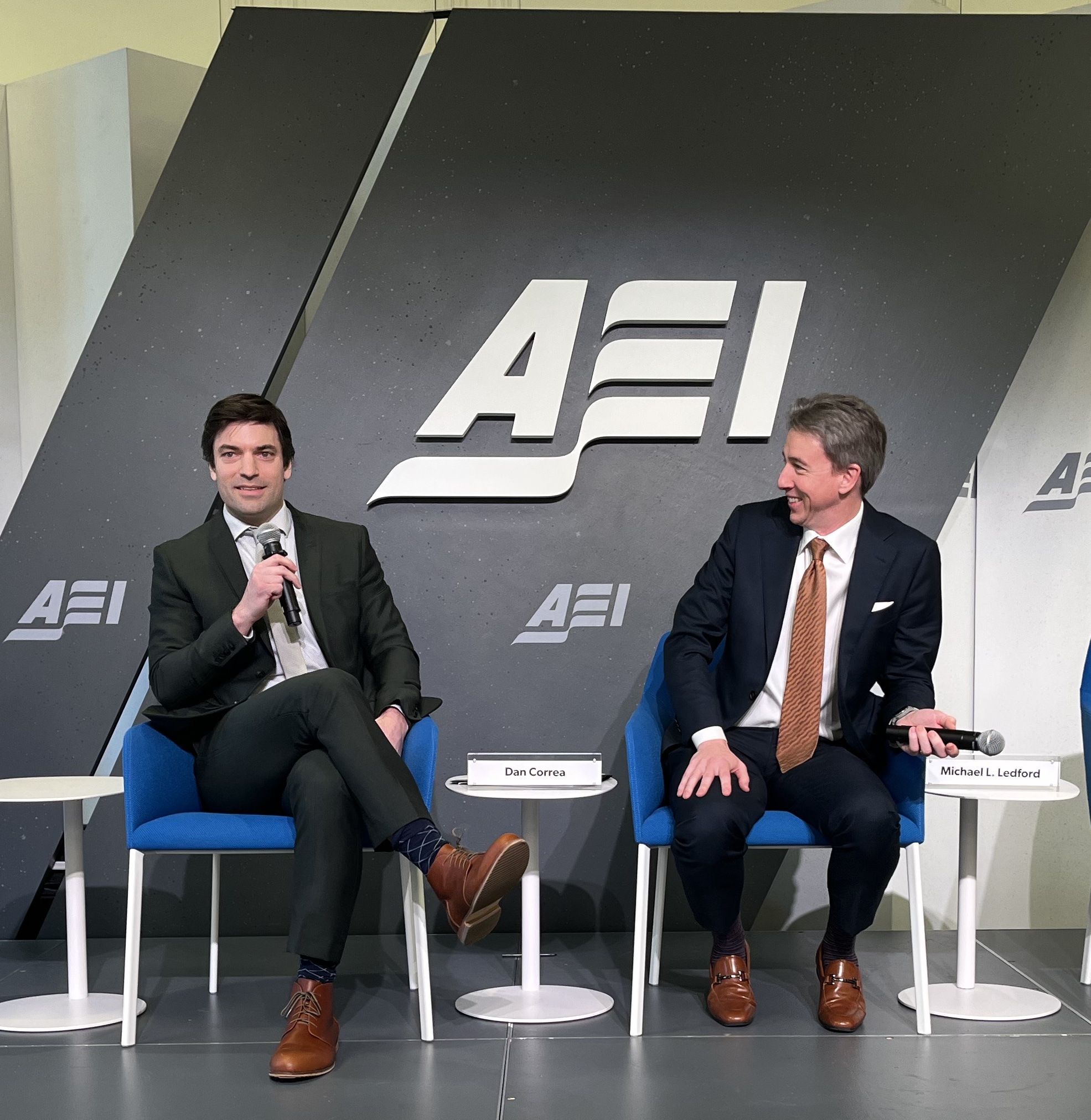
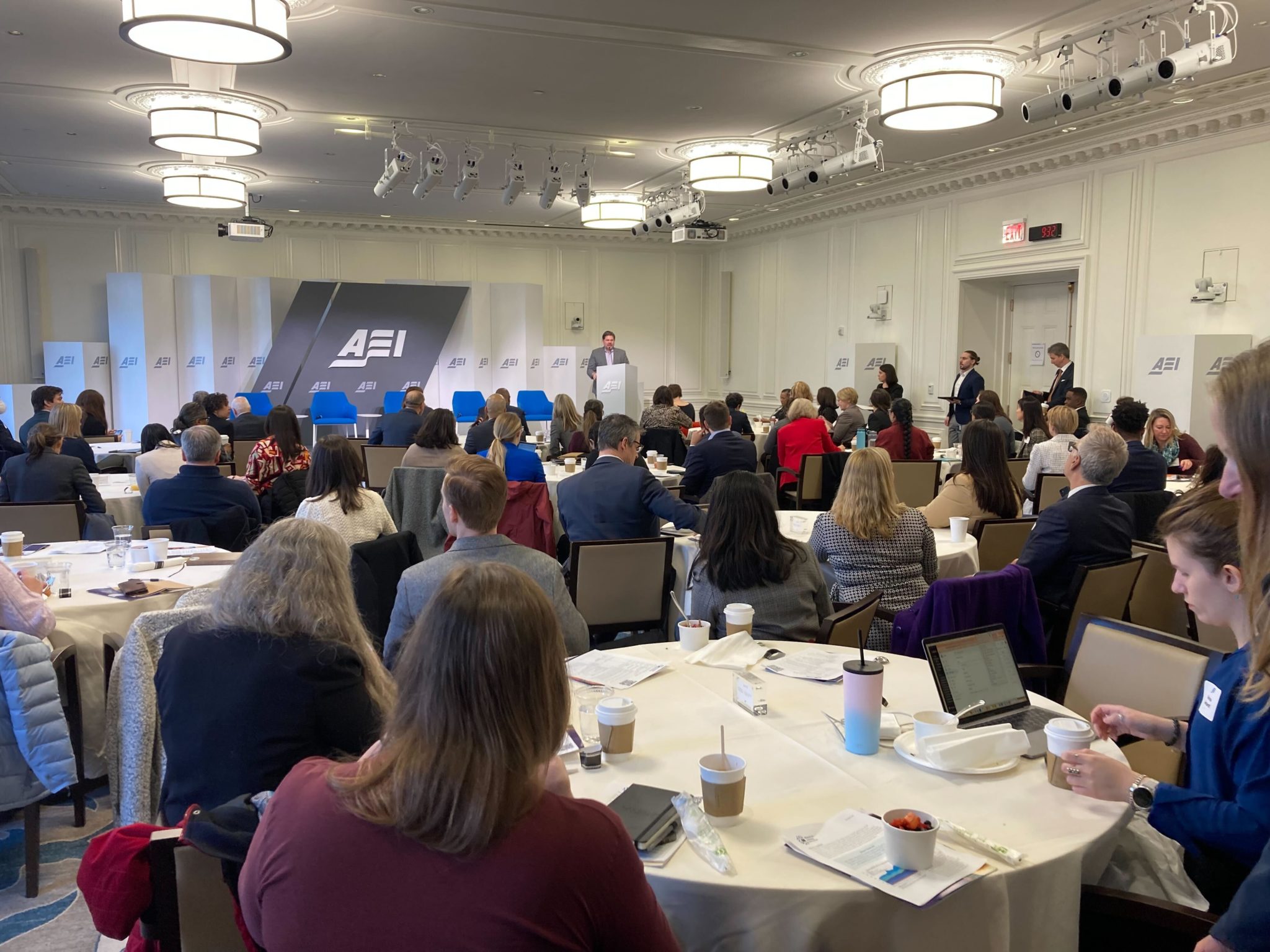
“It’s an ambitious goal, but it’s exactly what we need right now,” said FAS CEO, Dan Correa, at the launch event earlier this week at the American Enterprise Institute in Washington, DC. Michael L. Ledford, J.D., President of Lewis-Burke Associates LLC added “this is an important moment and I know the ALI coalition and many organizations in this room feel an incredible sense of urgency to act and continue to make progress.”
Recent National Assessment of Educational Progress (NAEP) results suggest the urgent need for transformative new approaches to K-12 education and that requires greater investment in education R&D. The U.S. is experiencing the largest drop in reading scores since 1990 and the first-ever decline in math scores. This decrease is partly the result of the COVID-19 pandemic, but also of a system that was already not working for many students.
“The world is changing quickly. We need better tools to support student outcomes and we need to update the toolkit we use to support R&D in education,” said Dr. Mark Schneider, Director of the Institute of Education Sciences (IES) at the U.S. Department of Education. IES has recently been charged by Congress with using a portion of its fiscal year 2023 budget to support a new funding opportunity for quick turnaround, high-reward scalable solutions intended to significantly improve outcomes for students. Dr. Schneider is fueled with a sense of urgency to ensure this initial investment improves outcomes and builds a firm foundation for the future of a larger, more innovative federal R&D infrastructure in education.
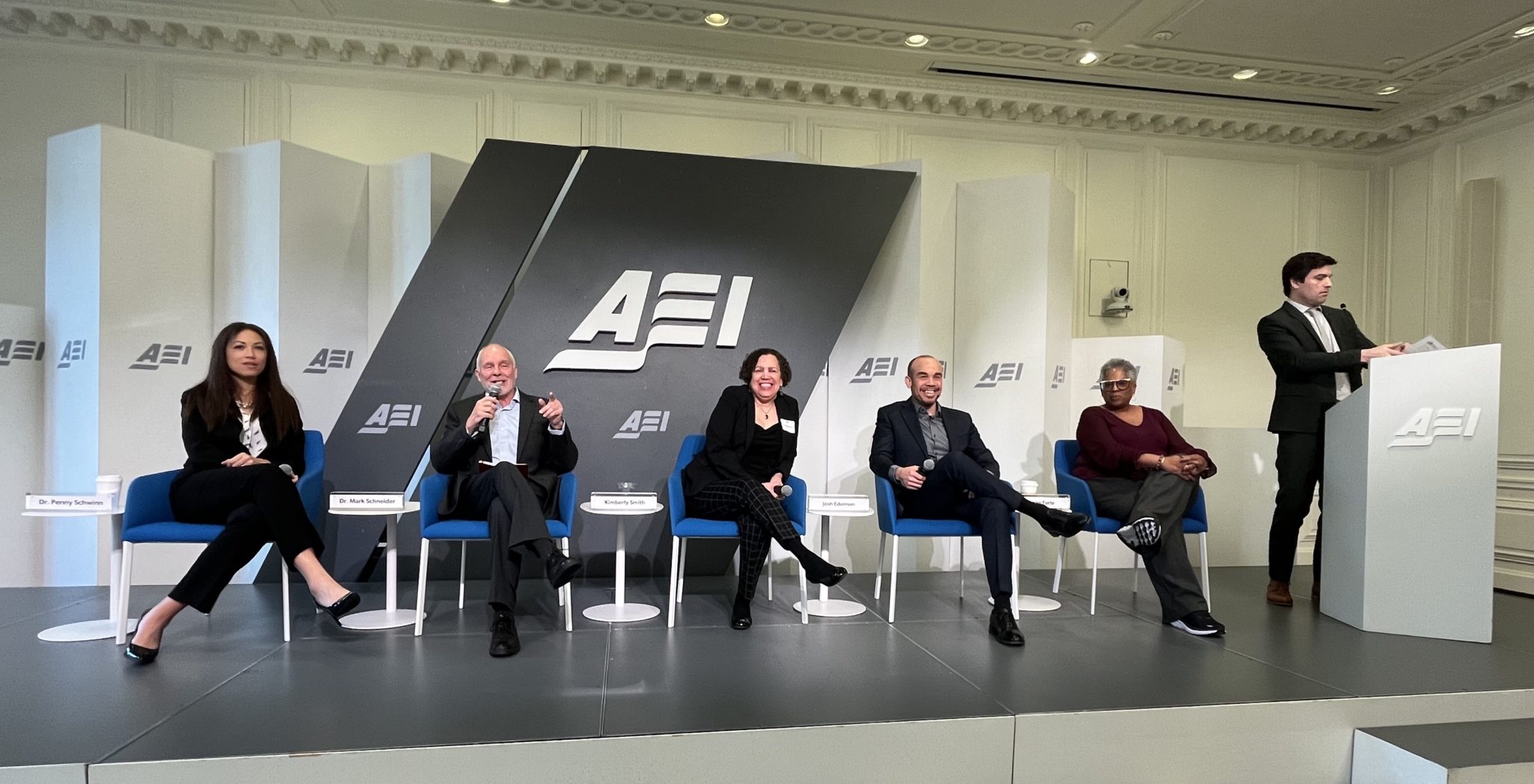
Dr. James Moore III, Assistant Director of the STEM Education Directorate (EDU) at the National Science Foundation built on what Dr. Schneider shared and reinforced that “we have to double-down on catalyzing opportunities throughout America, especially in places that have been traditionally under-resourced. Right now is an opportunity to think differently, to innovate on the current models, and figure out how to address the comprehensive needs of students at every juncture of education and beyond.”
Dr. Penny Schwinn, Commissioner of the Tennessee Department of Education agreed and discussed what this has looked like in Tennessee. “Without evidence-based solutions driven by R&D, we won’t have strong outcomes for kids. We are utilizing education R&D with the goal of improving student outcomes, supporting educators, and building a better education system for all learners.”
Denise Forte, President and CEO of the Education Trust added that, “getting education R&D right requires reaching into communities and working directly with students and parents. Better applying and scaling evidence-based approaches is essential to improving education equity.”
“We need BOTH mindset and skill set shifts to make the changes we seek,” said Josh Edelman of Transcend Education on Monday. “The current system of schooling is out of date and we need to move to 21st century learning that is learner centered.” Kimberly Smith, Digital Promise, added that “engaging students, families and educators is critically important if the R&D work is to be equitable and effective for all students.”
“Gen Z is optimistic about what’s possible – from our society and from our schools,” said Romy Drucker, Education Program Director, Walton Family Foundation. “ALI will help realize the ambitious vision that youth have for education, reinventing learning to be more relevant and inspiring.”
For media inquiries, please contact press@fas.org
FAS and Metaculus are Using Forecasting to Support Better Climate Policy
WASHINGTON, D.C.–Today the Federation of American Scientists (FAS) is teaming up with Metaculus to kick off the Climate Tipping Points Tournament, a virtual forecasting tournament aimed at helping policymakers make better informed decisions about climate change policies. The concept of forecasting is familiar to anyone who has checked their phone’s weather app before heading out for the day. But the broader science of forecasting is increasingly being applied to policy-relevant topics from epidemiology, energy, technology progress, and even climate change.
Tournament participants will make forecasts on policy-relevant outcomes, including “conditional forecasts” that predict the tangible impacts of implementing or not implementing policies that focus on zero-emission vehicle adoption. Metaculus’s unique system will then aggregate and weight these forecasts by forecasters’ past accuracy, providing policymakers with a more informed picture of the potential success or failure of policies designed to mitigate the impacts of climate change.
“Partnering with FAS on the Climate Tipping Points Tournament represents a new way for forecasters to contribute to the climate policy conversation. We’re very excited about the opportunity this represents for policy entrepreneurs who need empirically grounded analysis,” said Metaculus CEO, Gaia Dempsey.
Climate tipping points–originally introduced decades ago by the IPCC as thresholds for long-term and irreversible damage to the environment—can also be positive indicators of a more sustainable, cleaner and livable future. “This is not a utopian pipedream – a growing body of research suggests that positive tipping points, such as thresholds in electric vehicle adoption, or changes in food markets and consumption habits, could just as rapidly accelerate transitions to a more sustainable way of life,” said FAS’s Science Policy Director, Erica Goldman.
Participants don’t have to be data science experts; the tournament is open to the public and anyone is welcome to join. A team of Metaculus Pro Forecasters will also make predictions, separate from the public tournament. Those interested can go to Metaculus’s website and begin making predictions immediately for a shot at winning the $5,000 prize pool.
For more information, press interviews or questions please reach out to press@fas.org or press@metaculus.com.
About the Federation of American Scientists (FAS)
The Federation of American Scientists (FAS) is a nonprofit policy research and advocacy organization founded in 1945 to meet national security challenges with evidence-based, scientifically-driven, and nonpartisan policy, analysis, and research.
About Metaculus
Metaculus is an online forecasting platform and aggregation engine working to improve human reasoning and coordination on topics of global importance. By bringing together an international community and keeping score for thousands of forecasters, Metaculus is able to deliver machine learning-optimized aggregate predictions that help partners set priorities and make decisions.
FAS Joins Over 30 Biosecurity Leaders Supporting Proposed Recommendations to the U.S. Government and NSABB on Strengthening ePPP and DURC Policies
WASHINGTON, D.C. — The Federation of American Scientists joined over 30 leaders in the scientific, medical, public health, research, and science policy fields in providing a set of recommendations regarding oversight of enhanced potential pandemic pathogen (ePPP) research and dual use research to the National Science Advisory Board on Biosecurity (NSABB). Research involving potential pandemic pathogens can provide significant benefits to society but, if done incorrectly, can also contribute to pandemic risk.
The recommendations aim to diminish the risk that U.S. science could inadvertently initiate epidemics or pandemics, clarify the scope and decision-making process associated with governance of ePPP research and dual-use science, increase transparency around U.S. policy and decision making on these issues, and minimize or eliminate disruption of science work that does not pose these risks.
“Without proper governance, dual use research can be as dangerous as it is illuminating. The U.S. government must revise its decision-making process to protect scientists and the public,” said FAS CEO Daniel Correa. “Bio innovation and pandemic prevention are not disparate aims, and finding the balance between them can enhance pathogen research responsibly and foster innovation.”
The letter highlights five primary recommendations to improve the guidance and implementation of governing research related to dual use and ePPP pathogens including:
- Modify and expand the scope of pathogens governed by the ePPP Framework to include criterion of research that could lead to another pandemic not currently accounted for in the framework – including modest virulence, enhanced virulence and transmissibility regardless of the starting pathogen, and oversight of sequencing viruses.
- Assess and detail risks and benefits to provide guidance on when benefits of research would outweigh the risks, including detailed risk and benefit factors.
- Clarify and restructure processes of review, communication, biosafety and biosecurity, and transparency to include involvement of more stakeholders, preventing conflicts of interest, and overall more transparent standards and guidelines.
- Expand the reach of the ePPP Framework to apply to non-federally funded research and be implemented by all U.S. government agencies, as well as to strengthen international outreach.
- Revise the policy for dual use research of concern (DURC) to include additional pathogens, types of experiments, and clarify risk assessment and mitigation plan requirements.