Soldiers need to be able to communicate on a noisy, dangerous battlefield even when conventional means of communication are unavailable.
To help meet that need, the US Army has just updated its compilation of hand and flag signals.
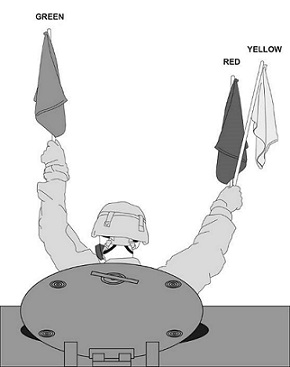
One configuration of flags signifies “Chemical, biological, radiological, and nuclear hazard present”:
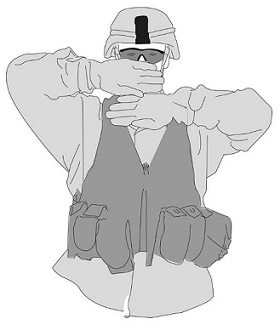
Or a soldier may need to signal “I do not understand,” as follows:
See Visual Signals for Armor Fighting Vehicles (Combined Arms), GTA 17-02-019, US Army, February 2018.
Just as sports fanatics had plenty to celebrate this year, so does the heat policy team at FAS. In response to recent heat events, leaders across the country have taken steps to build heat resilience.
Congress should establish a Modeling, Analysis, and Technical Talent for Energy Regulation Hub (MATTER Hub) within the Department of Energy (DOE).
Western states functionally manage trillions in global climate risk (permafrost, forest carbon, etc.) and can do so in ways that drive state economic development.
Implementation will not be easy. Several of the plan’s critical strategies challenge established utility business models.