No Need to Replace UK Nuclear Subs Now, FAS Board Member Tells Brits
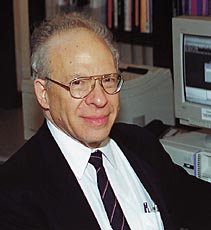 (Updated January 26, 2007)
British Vanguard-class ballistic missile submarines have at least 15 years more service life in them, and the U.K. government does not have to make a decision now on whether to replace them with a new class of submarines, Richard Garwin told BBC radio Tuesday.
Garwin, who is a member of the Federation of American Scientists Board of Directors and a long-term adviser to the U.S. government on defense matters, is in Britain to testify before the House of Commons Defence Select Committee on the future of Britain’s nuclear deterrent.
The U.K. government announced on December 4, 2006, that it had decided to replace its current Vanguard-class sea-launched ballistic missile submarines (SSBNs) with a new class to enter operation in 2024. If approved by the parliament, the plan would extend Britain’s nuclear era into the 2050s.
According to the U.K. government, a decision to build a new new class must be made now because the Vanguard-class SSBNs only have a have a design life of 25 years. But Garwin says that the submarines have a minimum design life of 25 years, which can be extended by at least another 15 years. A decision made now is premature and unwise, Garwin told BBC, because the large Trident missiles may not be necessary 15 years from now.
New additions: Garwin testimony / House of Lords debate
Background: BBC Today | Garwin Archive at FAS | Britain’s Next Nuclear Era
“One thing became increasingly clear: AI doesn’t simply introduce a new category of risk. It changes the speed, scale, complexity, and interaction of risks that already exist.”
In the current environment of declining trust and magnifying strategic competition, banning debris-creating tests is a concrete step towards stability that favors interests of all states seeking to conduct space activities.
Google’s motto famously used to be “don’t be evil.” However, its latest feature has just made being evil a whole lot easier.
The bootcamp brought together more than two dozen next-generation open-source practitioners from across the world.