Reflections from the 2026 FAS Nuclear Analysis Bootcamp
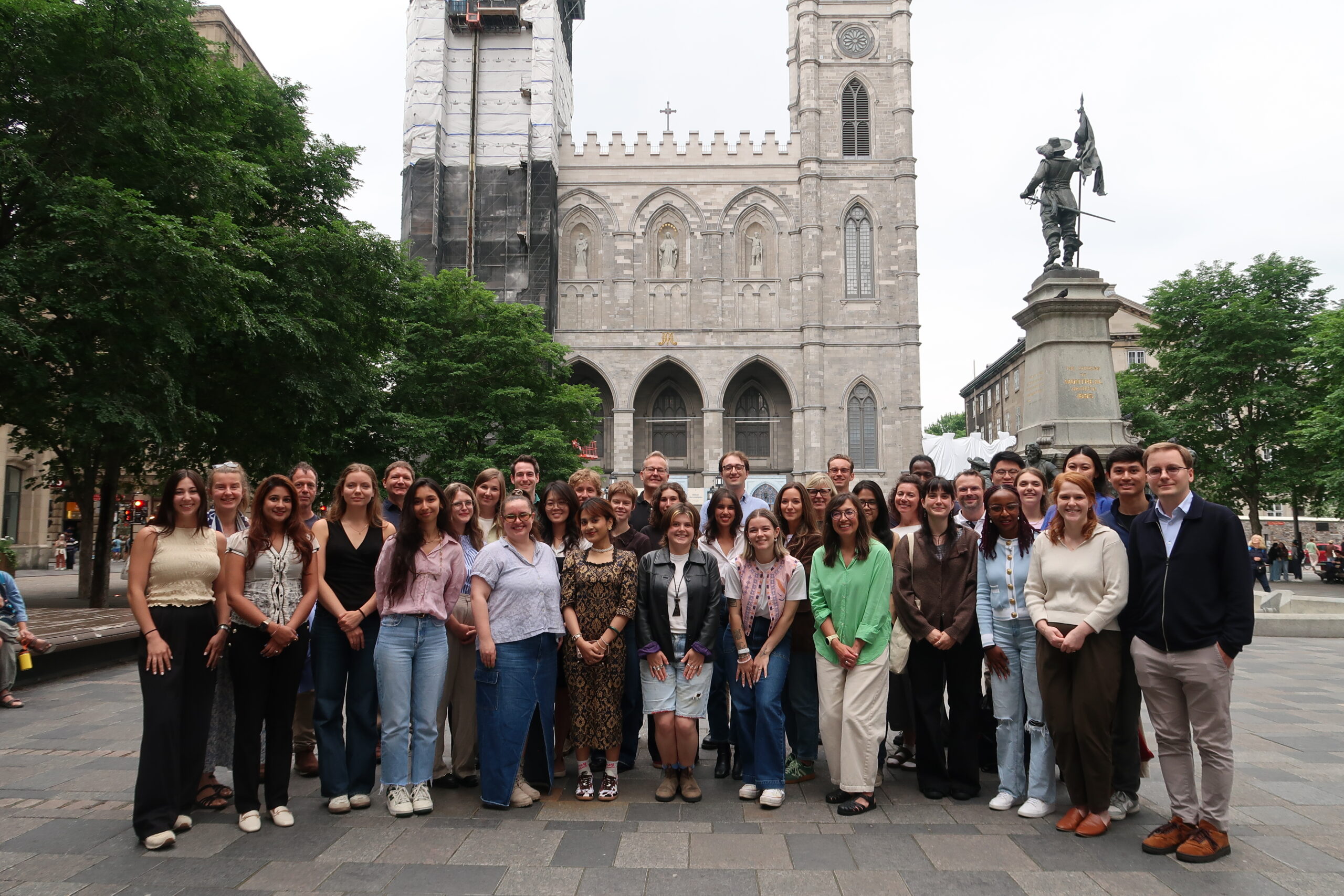
The Federation of American Scientists’ Nuclear Information Project (NIP), with generous support from the Andrew Carnegie Foundation, recently hosted its second annual Open Source Nuclear Analysis Bootcamp in Montreal, Quebec, in partnership with the Stanley Center for Peace and Security.
The bootcamp brought together more than two dozen next-generation open-source practitioners from across the world, including from Australia, Canada, China, Czechia, Indonesia, Italy, Japan, Kenya, the Netherlands, Scotland, Thailand, the United Kingdom, and the United States.
Participants spent the week working directly with NIP team members and external experts to develop skills in open-source and satellite imagery analysis, gaining hands-on training in a wide range of topics, including ethics, filing Freedom of Information Act (FOIA) and declassification requests, geolocation and satellite imagery analysis of nuclear-related sites, and how to analyze missile technology and the nuclear fuel cycle. Throughout the interactive modules, participants practiced using tools such as Google Earth Pro, QGIS, Google Dorking, InVID-WeVerify plugins, satellite imagery from Planet Labs PBC, and more.
At the end of the week, participants put their newfound knowledge to the test by working collaboratively to solve open-source challenges: assessing the performance of a North Korean missile test; calculating the plutonium output from a nuclear reactor; evaluating China’s People’s Liberation Army Rocket Force military activity; and analyzing imagery of missile facilities.
While not an organizer of the bootcamp myself, I was grateful to be able to participate, and I noted some key decisions that made it a unique experience conducive to learning and practical skills building.
Learning takes a degree of intellectual vulnerability, oftentimes manifesting in people asking, in self-reference, their ‘silly questions.’ The frequency and response to these can showcase the level of collective risk-taking the group is willing/able to take and can stimulate more exploration or the opposite. During the bootcamp, I felt supported in asking my lay questions to clarify my confusion about the technical material, and safe in asking how certain mechanics worked or how a system operated. This praxis extended beyond the ‘classroom’ setting to the lunch tables, the halls, and the streets of Montreal during our unstructured time with experts and peers. Building off this vulnerability, the organizers encouraged the reduction of hierarchy between participants and experts. My colleagues in the Nuclear Information Project and our counterparts at the Stanley Center made a couple of easy adjustments to how the rooms and conversations flowed that made all the difference.
Primarily, the experts noted outright that they were the skilled practitioners, but not the only keepers of knowledge, and reiterated that they had not inherited an exclusive monopoly on the material or skills we were building. Additionally, the organizers made tactical decisions to reduce the traditional formalities of the space and encourage diversity of opinions. This extended even to the name tags, which featured only first names – rather than the traditional full name (identity) and title (occupation), which I think relaxes competitive tendencies. The organizers also created a pre-arrival group chat including organizers, experts, and participants, where everyone was asked to introduce themselves ahead of time and provide the coordinates for their favorite locations around the world. This helped build connection and set the tone before anyone even arrived in Montreal.
It was clear from the outset, in both practice and policy, that organizers and participants had agreed to facilitate a collaborative, common learning environment – a culture that extended even to group dinners, where small, intimate conversations enabled frank and candid discussion outside the classroom space. “I really appreciated the tone of the week. It felt rigorous but still welcoming, and I liked that people were honest about uncertainty, mistakes, and the limits of the methods. That made the field feel more approachable,” said one participant.
Growing the field of nuclear open-source analysts is ever more important as nuclear risks grow in magnitude and complexity while the transparency needed to address them simultaneously diminishes. Additionally, as emerging open-source technologies continue to become cheaper, faster, and more accessible, it will be critical – if not necessary – for researchers and others to arm themselves with the ability to use and accurately interpret these sources, to develop a shared understanding of the threat landscape and to avoid misinterpretation and misrepresentation. I see my colleagues fostering the growing field with intentionality in their pedagogy. For FAS and its partners, making strategic choices in how they are growing the next generation is just the beginning. One participant shared that “this is genuinely the best initiative in the nuclear policy field I have participated in, both in the quality of the program/teaching, and in terms of organisation.”
Following overwhelmingly positive feedback from participants and trainers, the FAS NIP team is excited to begin preparing for the third iteration of the open-source bootcamp in the Summer of 2027. Given the significant demand for continued opportunities to learn and collaborate on open-source nuclear analysis, FAS remains committed to fostering and developing an OSINT community of practice, and we look forward to welcoming future participants to our programming over the coming months and years.
As humans expand our geographic reach, encroach on untouched natural territories, and interact more with animal populations, we will encounter novel zoonotic diseases that threaten the human body. The sooner we act to address these risks, the better.
“One thing became increasingly clear: AI doesn’t simply introduce a new category of risk. It changes the speed, scale, complexity, and interaction of risks that already exist.”
In the current environment of declining trust and magnifying strategic competition, banning debris-creating tests is a concrete step towards stability that favors interests of all states seeking to conduct space activities.
Google’s motto famously used to be “don’t be evil.” However, its latest feature has just made being evil a whole lot easier.