FAS’s Contribution to Ending the Cold War Nuclear Arms Race
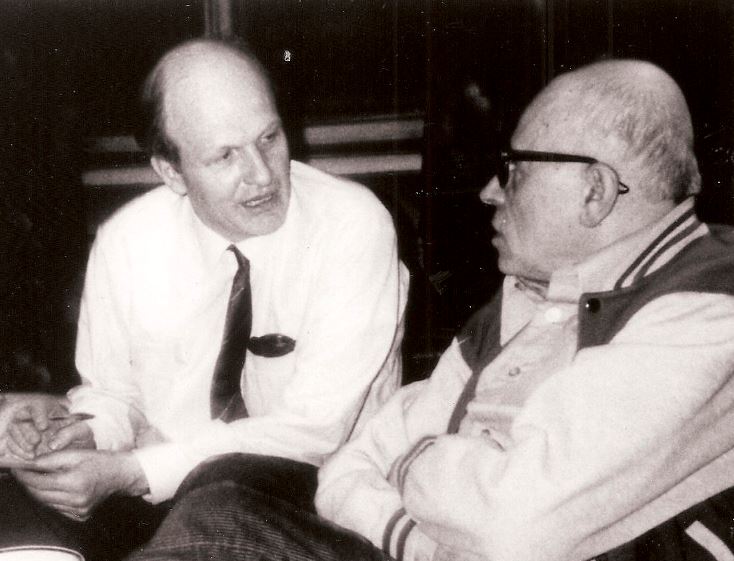
by Frank von Hippel
“When, at Jeremy Stone’s instigation, I was elected chair of the Federation of American Scientists in 1979, I had no idea what an adventure that I was about to embark upon. This adventure was triggered by President Reagan taking office in 1981 and resulted in FAS making significant contributions to ending the U.S.-Soviet nuclear arms race and the Cold War. This was not the President Reagan we remember now as the partner of Mikhail Gorbachev in ending the Cold War. This was a president who had been convinced by the Committee on the Present Danger that the United States was falling behind in the nuclear arms race and was in mortal danger of a Soviet first nuclear strike…”
It is difficult to assess from photos whether the Sentinel missile is longer or wider overall than the Minuteman, but the Sentinel clearly has a thicker second stage, which could potentially contribute to the missile’s extended range.
This is not the first time Google has agreed to censor imagery at the behest of governments, but be warned: obfuscation at this broad level poses a direct threat to the public’s ability to monitor and scrutinize government operations.
As humans expand our geographic reach, encroach on untouched natural territories, and interact more with animal populations, we will encounter novel zoonotic diseases that threaten the human body. The sooner we act to address these risks, the better.
“One thing became increasingly clear: AI doesn’t simply introduce a new category of risk. It changes the speed, scale, complexity, and interaction of risks that already exist.”