Behavioral Economics Megastudies are Necessary to Make America Healthy
Through partnership with the Doris Duke Foundation, FAS is advancing a vision for healthcare innovation that centers safety, equity, and effectiveness in artificial intelligence. Inspired by work from the Social Science Research Council (SSRC) and Arizona State University (ASU) symposiums, this memo explores new research models such as large-scale behavioral “megastudies” and how they can transform our understanding of what drives healthier choices for longer lives. Through policy entrepreneurship FAS engages with key actors in government, research, academia and industry. These recommendations align with ongoing efforts to integrate human-centered design, data interoperability, and evidence-based decision-making into health innovation.
By shifting funding from small underpowered randomized control trials to large field experiments in which many different treatments are tested synchronously in a large population using the same objective measure of success, so-called megastudies can start to drive people toward healthier lifestyles. Megastudies will allow us to more quickly determine what works, in whom, and when for health-related behavioral interventions, saving tremendous dollars over traditional randomized controlled trial (RCT) approaches because of the scalability. But doing so requires the government to back the establishment of a research platform that sits on top of a large, diverse cohort of people with deep demographic data.
Challenge and Opportunity
According to the National Research Council, almost half of premature deaths (< 86 years of age) are caused by behavioral factors. Poor diet, high blood pressure, sedentary lifestyle, obesity, and tobacco use are the primary causes of early death for most of these people. Yet, despite studying these factors for decades, we know surprisingly little about what can be done to turn these unhealthy behaviors into healthier ones. This has not been due to a lack of effort. Thousands of randomized controlled trials intended to uncover messaging and incentives that can be used to steer people towards healthier behaviors have failed to yield impactful steps that can be broadly deployed to drive behavioral change across our diverse population. For sure, changing human behavior through such mechanisms is controversial, and difficult. Nonetheless studying how to bend behavior should be a national imperative if we are to extend healthspan and address the declining lifespan of Americans at scale.
Limitations of RCTs
Traditional randomized controlled trials (RCTs), which usually test a single intervention, are often underpowered, and expensive, and short-lived, limiting their utility even though RCTs remain the gold standard for determining the validity of behavioral economics studies. In addition, because the diversity of our population in terms of biology, and culture are severely limiting factors for study design, RCTs are often conducted on narrow, well-defined populations. What works for a 24-year-old female African American attorney in Los Angeles may not be effective for a 68-year-old male white fisherman living in Mississippi. Overcoming such noise in the system means either limiting the population you are examining through demographics, or deploying raw power of numbers of study participants that can allow post study stratification and hypothesis development. It also means that health data alone is not enough. Such studies require deep personal demographic data to be combined with health data, and wearables. In essence, we need a very clear picture of the lives of participants to properly identify interventions that work and apply them appropriately post-study on broader populations. Similarly, testing a single intervention means that you cannot be sure that it is the most cost-effective or impactful intervention for a desired outcome. This further limits the ability to deploy RCTs at scale. Finally, the data sometimes implies spurious associations. Therefore, preregistration of endpoints, interventions, and analysis of such studies will make for solid evidence development even if the most tantalizing outcomes come from sifting through the data later to develop new hypotheses that can be further tested.
Value of Megastudies
Professors Angela Duckworth and Katherine Milkman, at the University of Pennsylvania, have proposed an expansion of the use of megastudies to gain deeper behavioral insights from larger populations. In essence, megastudies are “massive field experiments in which many different treatments are tested synchronously in a large sample using a common objective outcome.” This sort of paradigm allows independent researchers to develop interventions to test in parallel against other teams. Participants are randomly assigned across a large cohort to determine the most impactful and cost-effective interventions. In essence, the teams are competing against each other to develop the most effective and practical interventions on the same population for the same measurable outcome.
Using this paradigm, we can rapidly assess interventions, accelerate scientific progress by saving time and money, all while making more appropriate comparisons to bend behavior towards healthier lifestyles. Due to the large sample sizes involved and deep knowledge of the demographics of participants, megastudies allow for the noise that is normal in a broad population that normally necessitates narrowing the demographics of participants. Further, post study analysis allows for rich hypothesis generation on what interventions are likely to work in more narrow populations. This enables tailored messaging and incentives to the individual. A centralized entity managing the population data reduces costs and makes it easier to try a more diverse set of risk-tolerant interventions. A centralized entity also opens the door to smaller labs to participate in studies. Finally, the participants in these megastudies are normally part of ongoing health interactions through a large cohort study or directly through care providers. Thus, they benefit directly from participation and tailored messages and incentives. Additionally, dataset scale allows for longer term study design because of the reduction in overall costs. This enables study designers to determine if their interventions work well over a longer period of time or if the impact of interventions wane and need to be adjusted.
Funding and Operational Challenges
But this kind of “apples to apples” comparison has serious drawbacks that have prevented megastudies from being used routinely in science despite their inherent advantage. First, megastudies require access to a large standing cohort of study participants that will remain in the cohort long term. Ideally, the organizer of such studies should be vested in having positive outcomes. Here, larger insurance companies are poor targets for organizing. Similarly, they have to be efficient, thus, government run cohorts, which tend to be highly bureaucratic, expensive, and inefficient are not ideal. Not everything need go through a committee. (Looking at you, All of Us at NIH and Million Veterans Program at the VA).
Companies like third party administrators of healthcare plans might be an ideal organizing body, but so can companies that aim to lower healthcare costs as a means of generating revenue through cost savings. These companies tend to have access to much deeper data than traditional cohorts run by government and academic institutions and could leverage that data for better stratifying participants and results. However, if the goal of government and philanthropic research efforts is to improve outcomes, then they should open the aperture on available funds to stand up a persistent cohort that can be used by many researchers rather than continuing the one-off paradigm, which in the end is far more expensive and inefficient. Finally, we do not imply that all intervention types should be run through megastudies. They are an essential, albeit underutilized tool in the arsenal, but not a silver bullet for testing behavioral interventions.
Fear of Unauthorized Data Access or Misuse
There is substantial risk when bringing together such deep personal data on a large population of people. While companies compile deep data all the time, it is unusual to do so for research purposes and will, for sure, raise some eyebrows, as has been the case for large studies like the aforementioned All of Us and the Million Veteran’s Program.
Patients fear misuse of their data, inaccurate recommendations, and biased algorithms—especially among historically marginalized populations. Patients must trust that their data is being used for good, not for marketing purposes and determining their insurance rates.
Icons © 2024 by Jae Deasigner is licensed under CC BY 4.0
Need for Data Interoperability
Many healthcare and community systems operate in data silos and data integration is a perennial challenge in healthcare. Patient-generated data from wearables, apps, or remote sensors often do not integrate with electronic health record data or demographic data gathered from elsewhere, limiting the precision and personalization of behavior-change interventions. This lack of interoperability undermines both provider engagement and user benefit. Data fragmentation and poor usability requires designing cloud-based data connectors and integration, creating shared feedback dashboards linking self-generated data to provider workflows, and creating and promoting policies that move towards interoperability. In short, given the constantly evolving data integration challenge and lack of real standards for data formats and integration requirements, a dedicated and persistent effort will have to be made to ensure that data can be seamlessly integrated if we are to draw value from combining data from many sources for each patient.
Additional Barriers
One of the largest barriers to using behavioral economics is that some rural, tribal, low-income, and older adults face access barriers. These could include device affordability, broadband coverage, and other usability and digital literacy limitations. Megastudies are not generally designed to bridge this gap leaving a significant limitation of applicability for these populations. Complicating matters, these populations also happen to have significant and specific health challenges unique to their cohorts. As the use of behavioral economic levers are developed, these communities are in danger of being left behind, further exacerbating health disparities. Nonetheless, insight into how to reach these populations can be gained for individuals in these populations that do have access to technology platforms. Communications will have to be tailored accordingly.
External motivators have been consistently shown to be the essential drivers of behavioral change. But motivation to sustain a behavior change and continue using technology often wanes over time. Embedding intrinsic-value rewards and workplace incentives may not be enough. Therefore, external motivations likely have to be adjusted over time in a dynamic system to ensure that adjustments to the behavior of the individual can be rooted in evidence. Indeed, study of the dynamic nature of driving behavioral change will be necessary due to the likelihood of waning influence of static messaging. By designing reward systems that tie personal values and workplace wellness programs sustained engagement through social incentives and tailored nudges may keep users engaged.
Plan of Action
By enabling a private sector entity to create a research platform using patient data combined with deep demographic data, and an ethical framework for access and use, we can create a platform for megastudies. This would allow the rapid testing of behavioral interventions that steer people towards healthier lifestyles, saving money, accelerating progress, and better understanding what works, in whom, and when for changing human behavior.
This could have been done through either the All of Us program or Million Veterans program or a different large cohort study, but neither program has the deep demographic and lifestyle data required to stratify their population. Both are mired in bureaucratic lethargy that is common in large scale government programs. Health insurance companies and third-party administrators of health insurance can gather such data, be nimbler, create a platform for communicating directly with patients, coordinate with their clinical providers. But one could argue that neither entity has a real incentive to bend behavior and encourage healthy lifestyles. Simply put, that is not their business.
Recommendation 1. Issue a directive to agencies to invest in the development of a megastudy platform for health behavioral economics studies.
The White House of HHS Secretary should direct the NIH or ARPA-H to develop a plan for funding the creation of a behavioral economics megastudy platform. The directive should include details on the ethical and technical framework requirements as well as directions for development of oversight of the platform once it is created. The platform should be required to establish a sustainability plan as part of the application for a contract to create the megastudy platform.
Recommendation 2. Government should fund the establishment of a megastudy platform.
ARPA-H and/or DARPA should develop a program to establish a broad research platform in the private sector that will allow for megastudies to be conducted. Then research teams can, in parallel, test dozens of behavioral interventions on populations and access patient data. This platform should have required ethical rules and be grounded in data sovereignty that allows patients to opt out of participation and having their data shared.
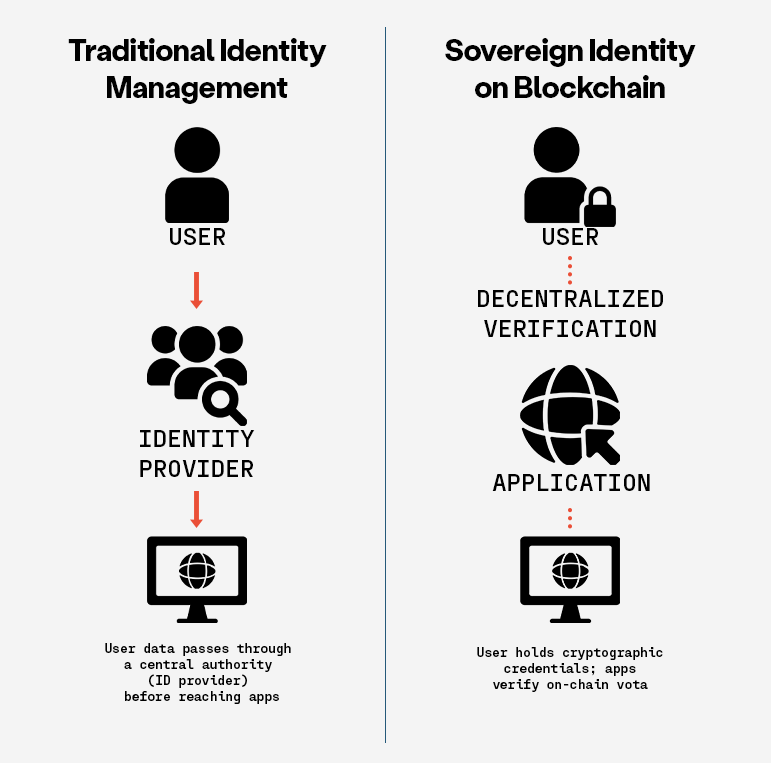
Data sovereignty is one solution to the trust challenge. Simply put, data sovereignty means that patients have access to the data on themselves (without having to pay a fee that physicians’ offices now routinely charge for access) and control over who sees and keeps that data. So, if at any time, a participant changes their mind, they can get their data and force anyone in possession of that data to delete it (with notable exceptions, like their healthcare providers). Patients would have ultimate control of their data in a ‘trust-less’ way that they never need to surrender, going well past the rather weak privacy provisions of HIPAA, so there is no question that they are in charge.
We suggest that using blockchain and token systems for data transfer would certainly be appropriate. Data held in a federated network to limit the danger of a breach would also be appropriate.
Recommendation 3. The NIH should fund behavioral economics megastudies using the platform.
Once the megastudy platform(s) are established, the NIH should make dedicated funds available for researchers to test for behavioral interventions using the platform to decrease costs, increase study longevity, and improve speed and efficiency for behavioral economics studies on behavioral health interventions.
Conclusion
Randomized controlled trials have been the gold standard for behavioral research but are not well suited for health behavioral interventions on a broad and diverse population because of the required number of participants, typical narrow population, recruiting challenges, and cost. Yet, there is an urgent need to encourage and incentivize d health related behaviors to make Americans healthier. Simply put, we cannot start to grow healthspan and lifespan unless we change behaviors towards healthier choices and habits. When the U.S. government funds the establishment of a platform for testing hundreds of behavioral interventions on a large diverse population, we will start to better understand the interventions that will have an efficient and lasting impact on health behavior. Doing so requires private sector cooperation and strict ethical rules to ensure public trust.
This memo produced as part of Strengthening Pathways to Disease Prevention and Improved Health Outcomes.
Accelerating R&D for Critical AI Assurance and Security Technologies
The opportunities presented by advanced artificial intelligence are immense, from accelerating cutting-edge scientific research to improving key government services. However, for these benefits to be realized, both the private and public sectors need confidence that AI tools are reliable and secure. This will require R&D effort to solve urgent technical challenges related to understanding and evaluating emergent AI behaviors and capabilities, securing AI hardware and infrastructure, and preparing for a world with many advanced AI agents.
To secure global adoption of U.S. AI technology and ensure America’s workforce can fully leverage advanced AI, the federal government should take a strategic and coordinated approach to support AI assurance and security R&D by: clearly defining AI assurance and security R&D priorities; establishing an AI R&D consortium and deploying agile funding mechanisms for critical R&D areas; and establishing an AI Frontier Science Fellowship to ensure a pipeline of technical AI talent.
Challenge and Opportunity
AI systems have progressed rapidly in the past few years, demonstrating human-level and even superhuman performance across diverse tasks. Yet, they remain plagued by flaws that produce unpredictable and potentially dangerous failures. Frontier systems are vulnerable to attacks that can manipulate them into executing unintended actions, hallucinate convincing but incorrect information, and exhibit other behaviors that researchers struggle to predict or control.
As AI capabilities rapidly advance toward more consequential applications—from medical diagnosis to financial decision-making to military systems—these reliability issues could pose increasingly severe risks to public safety and national security, while reducing beneficial uses. Recent polling shows that just 32% of Americans trust AI, and this limited trust will slow the uptake of impactful AI use-cases that could drive economic growth and enhance national competitiveness.
The federal government has an opportunity to secure America’s technological lead and promote global adoption of U.S. AI by catalyzing research to address urgent AI reliability and security challenges—challenges that align with broader policy consensus reflected in the National Security Commission on AI’s recommendations and bipartisan legislative efforts like the VET AI Act. Recent research has surfaced substantial expert consensus around priority research areas that address the following three challenges.
The first challenge involves understanding emergent AI capabilities and behaviors. As AI systems get larger, also referred to as “scaling”, they develop unexpected capabilities and reasoning patterns that researchers cannot predict, making it difficult to anticipate risks or ensure reliable performance. Addressing this means advancing the science of AI scaling and evaluations.
This research aims to build a scientific understanding of how AI systems learn, reason, and exhibit diverse capabilities. This involves not only studying specific phenomena like emergence and scaling but, more broadly, employing and refining evaluations as the core empirical methodology to characterize all facets of AI behavior. This includes evaluations in areas such as CBRN weapons, cybersecurity, and deception, and broader research on AI evaluations to ensure that AI systems can be accurately assessed and understood. Example work includes Wijk et al. (2024) and McKenzie et al. (2023)
The second challenge is securing AI hardware and infrastructure. AI systems require robust protection of model weights, secure deployment environments, and resilient supply chains to prevent theft, manipulation, or compromise by malicious actors seeking to exploit these powerful technologies. Addressing this means advancing hardware and infrastructure security for AI.
Ensuring the security of AI systems at the hardware and infrastructure level involves protecting model weights, securing deployment environments, maintaining supply chain integrity, and implementing robust monitoring and threat detection mechanisms. Methods include the use of confidential computing, rigorous access controls, specialized hardware protections, and continuous security oversight. Example work includes Nevo et al. (2024) and Hepworth et al. (2024)
The third challenge involves preparing for a world with many AI agents—AI models that can act autonomously. Alongside their potentially immense benefits, the increasing deployment of AI agents creates critical blind spots, as agents could coordinate covertly beyond human oversight, amplify failures into system-wide cascades, and combine capabilities in ways that circumvent existing safeguards. Addressing this means advancing agent metrology, infrastructure, and security.
Developing a deeper understanding of agentic behavior in LLM-based systems, including clarifying how LLM agents learn over time, respond to underspecified goals, and engage with their environments. This also includes research that ensures safe multi-agent interactions, such as detecting and preventing malicious collective behaviors, studying how transparency can affect agent interactions, and developing evaluations for agent behavior and interaction. Example work includes Lee and Tiwari (2024) and Chan et al. (2024)
While academic and industry researchers have made progress on these problems, this progress is not keeping pace with AI development and deployment. The market is likely to underinvest in research that is more experimental or with no immediate commercial applications. The U.S. government, as the R&D lab of the world, has an opportunity to unlock AI’s transformative potential through accelerating assurance and security research.
Plan of Action
The rapid pace of AI advancement demands a new strategic, coordinated approach to federal R&D for AI assurance and security. Given financial constraints, it is more important than ever to make sure that the impact of every dollar invested in R&D is maximized.
Much of the critical technical expertise now resides in universities, startups, and leading AI companies rather than traditional government labs. To harness this distributed talent, we need R&D mechanisms that move at the pace of innovation, leverage academic research excellence, engage early-career scientists who drive breakthroughs, and partner with industry leaders who can share access to essential compute resources and frontier models. Traditional bureaucratic processes risk leaving federal efforts perpetually behind the curve.
The U.S. government should implement a three-pronged plan to advance the above R&D priorities.
Recommendation 1. Clearly define AI assurance and security R&D priorities
The Office of Science and Technology Policy (OSTP) and the National Science Foundation (NSF) should highlight critical areas of AI assurance and security as R&D priorities by including these in the 2025 update of the National AI R&D Strategic Plan and the forthcoming AI Action Plan. All federal agencies conducting AI R&D should engage with the construction of these plans to explain how their expertise could best contribute to these goals. For example, the Defense Advanced Research Projects Agency (DARPA)’s Information Innovation Office could leverage its expertise in AI security to investigate ways to design secure interaction protocols and environments for AI agents that eliminate risks from rogue agents.
The priorities would help coordinate government R&D activities by providing funding agencies with a common set of priorities, public research institutes such as the National Labs to conduct fundamental R&D activities, Congress with information to support relevant legislative decisions, and industry to serve as a guide to R&D.
Additionally, given the dynamic nature of frontier AI research, OSTP and NSF should publish an annual survey of progress in critical AI assurance and security areas and identify which challenges are the highest priority.
Recommendation 2. Establish an AI R&D consortium and deploy agile funding mechanisms for critical R&D
As noted by OSTP Director Michael Kratsios, “prizes, challenges, public-private partnerships, and other novel funding mechanisms, can multiply the impact of targeted federal dollars. We must tie grants to clear strategic targets, while still allowing for the openness of scientific exploration.” Federal funding agencies should develop and implement agile funding mechanisms for AI assurance and security R&D in line with established priorities. Congress should include reporting language in its Commerce, Justice, Science (CJS) appropriations bill that supports accelerated R&D disbursements for investment into prioritized areas.
A central mechanism should be the creation of an AI Assurance and Security R&D Consortium, jointly led by DARPA and NSF, bringing together government, AI companies, and universities. In this model:
- Government provides funding for personnel, administrative support, and manages the consortium’s strategic direction
- AI companies contribute model access, compute credits, and engineering expertise
- Universities provide researchers and facilities for conducting fundamental research
This consortium structure would enable rapid resource sharing, collaborative research projects, and accelerated translation of research into practice. It would operate under flexible contracting mechanisms using Other Transaction Authority (OTA) to reduce administrative barriers.
Beyond the consortium, funding agencies should leverage Other Transaction Authority (OTA) and Prize Competition Authority to flexibly contract and fund research projects related to priority areas. New public-private grant vehicles focused on funding fundamental research in priority areas should be set up via existing foundations linked to funding agencies such as the NSF Foundation, DOE’s Foundation for Energy Security and Innovation, or the proposed NIST Foundation.
Specific funding mechanisms should be chosen based on the target technology’s maturity level. For example, the NSF can support more fundamental research through fast grants via its EAGER and RAPID programs. Previous fast-grant programs, such as SGER, were found to be wildly effective, with “transformative research results tied to more than 10% of projects.”
For research areas where clear, well-defined technical milestones are achievable, such as developing secure cluster-scale environments for large AI training workloads, the government can support the creation of focused research organizations (FROs) and implement advanced market commitments (AMCs) to take technologies across the ‘valley of death’. DARPA and IARPA can administer higher-risk, more ambitious R&D programs with national security applications.
Recommendation 3. Establish an AI Frontier Science Fellowship to ensure a pipeline of technical AI talent that can contribute directly to R&D and support fast-grant program management
It is critical to ensure that America has a growing pool of talented researchers entering the field of AI assurance and security, given its strategic importance to American competitiveness and national security.
The NSF should launch an AI Frontier Science Fellowship targeting early-career researchers in critical AI assurance and security R&D. Drawing from proven models like CyberCorp Scholarship for Service, COVID-19 Fast Grants, and proposals such as for “micro-ARPAs”, this program operates on two tracks:
- Frontier Scholars: This track would provide comprehensive research support for PhD students and post-docs conducting relevant research on priority AI security and reliability topics. This includes computational resources, research rotations at government labs and agencies, and financial support.
- Rapid Grant Program Managers (PM): This track recruits researchers to serve fixed terms as Rapid Grant PMs, responsible for administering EAGER/RAPID grants focused on AI assurance and security.
This fellowship solves multiple problems at once. It builds the researcher pipeline while creating a nimble, decentralized approach to science funding that is more in line with the dynamic nature of the field. This should improve administrative efficiency and increase the surface area for innovation by allowing for more early-stage high-risk projects to be funded. Also, PMs who perform well in administering these small, fast grants can then become full-fledged program officers and PMs at agencies like the NSF and DARPA. This program (including grant budget) would cost around $40 million per year.
Conclusion
To unlock AI’s immense potential, from research to defense, we must ensure these tools are reliable and secure. This demands R&D breakthroughs to better understand emergent AI capabilities and behaviors, secure AI hardware and infrastructure, and prepare for a multi-agent world. The federal government must lead by setting clear R&D priorities, building foundational research talent, and injecting targeted funding to fast-track innovation. This unified push is key to securing America’s AI leadership and ensuring that American AI is the global gold standard.
This memo was written by an AI Safety Policy Entrepreneurship Fellow over the course of a six-month, part-time program that supports individuals in advancing their policy ideas into practice. You can read more policy memos and learn about Policy Entrepreneurship Fellows here.
Yes, the recommendations are achievable by reallocating the existing budget and using existing authorities, but this would likely mean accepting a smaller initial scale.
In terms of authorities, OSTP and NSF can already update the National AI R&D Strategic Plan and establish AI assurance and security priorities through normal processes. To implement agile funding mechanisms, agencies can use OTA and Prize Competition Authority. Fast grants require no special statute and can be done under existing grant authorities.
In terms of budget, agencies can reallocate 5-10% of existing AI research funds towards security and assurance R&D. The Frontier Science Fellowship could start as a $5-10 million pilot under NSF’s existing education authorities, e.g. drawing from NSF’s Graduate Research Fellowship Program.
While agencies have flexibility to begin this work, achieving the memo’s core objective – ensuring AI systems are trustworthy and reliable for workforce and military adoption – requires dedicated funding. Congress could provide authorization and appropriation for a named fellowship, which would make the program more stable and allow it to survive personnel turnover.
Market incentives drive companies to fix AI failures that directly impact their bottom line, e.g., chatbots giving bad customer service or autonomous vehicles crashing. More visible, immediate problems are likely to be prioritized because customers demand it or because of liability concerns. This memo focuses on R&D areas that the private sector is less likely to tackle adequately.
The private will address some security and reliability issues, but there are likely to be significant gaps. Understanding emergent model capabilities demands costly fundamental research that generates little immediate commercial return. Likewise, securing AI infrastructure against nation-state attacks will likely require multi-year R&D processes, and companies can fail to coordinate to develop these technologies without a clear demand signal. Finally, systemic dangers arising from multi-agent interactions might be left unmanaged because these failures emerge from complex dynamics with unclear liability attribution.
The government can step in to fund the foundational research that the market is likely to undersupply by default and help coordinate the key stakeholders in the process.
Companies need security solutions to access regulated industries and enterprise customers. Collaboration on government-funded research provides these solutions while sharing costs and risks.
The proposed AI Assurance and Security R&D Consortium in Recommendation 2 create a structured framework for cooperation. Companies contribute model access and compute credits while receiving:
- Government-funded researchers working on their deployment challenges
- Shared IP rights under consortium agreements
- Early access to security and reliability innovations
- Risk mitigation through collaborative cost-sharing
Under the consortia’s IP framework, companies retain full commercial exploitation rights while the government gets unlimited rights for government purposes. In the absence of a consortium agreement, an alternative arrangement could be a patent pool, where companies can access patented technologies in the pool through a single agreement. These structures, combined with the fellowship program providing government-funded researchers, creates strong incentives for private sector participation while advancing critical public research objectives.
Agenda for an American Renewal
Imperative for a Renewed Economic Paradigm
So far, President Trump’s tariff policies have generated significant turbulence and appear to lack a coherent strategy. His original tariff schedule included punitive tariffs on friends and foes alike on the mistaken basis that trade deficits are necessarily the result of an unhealthy relationship. Although they have been gradually paused or reduced since April 2, the uneven rollout (and subsequent rollback) of tariffs continues to generate tremendous uncertainty for policymakers, consumers, and businesses alike. This process has weakened America’s geopolitical standing by encouraging other countries to seek alternative trade, financial, and defense arrangements.
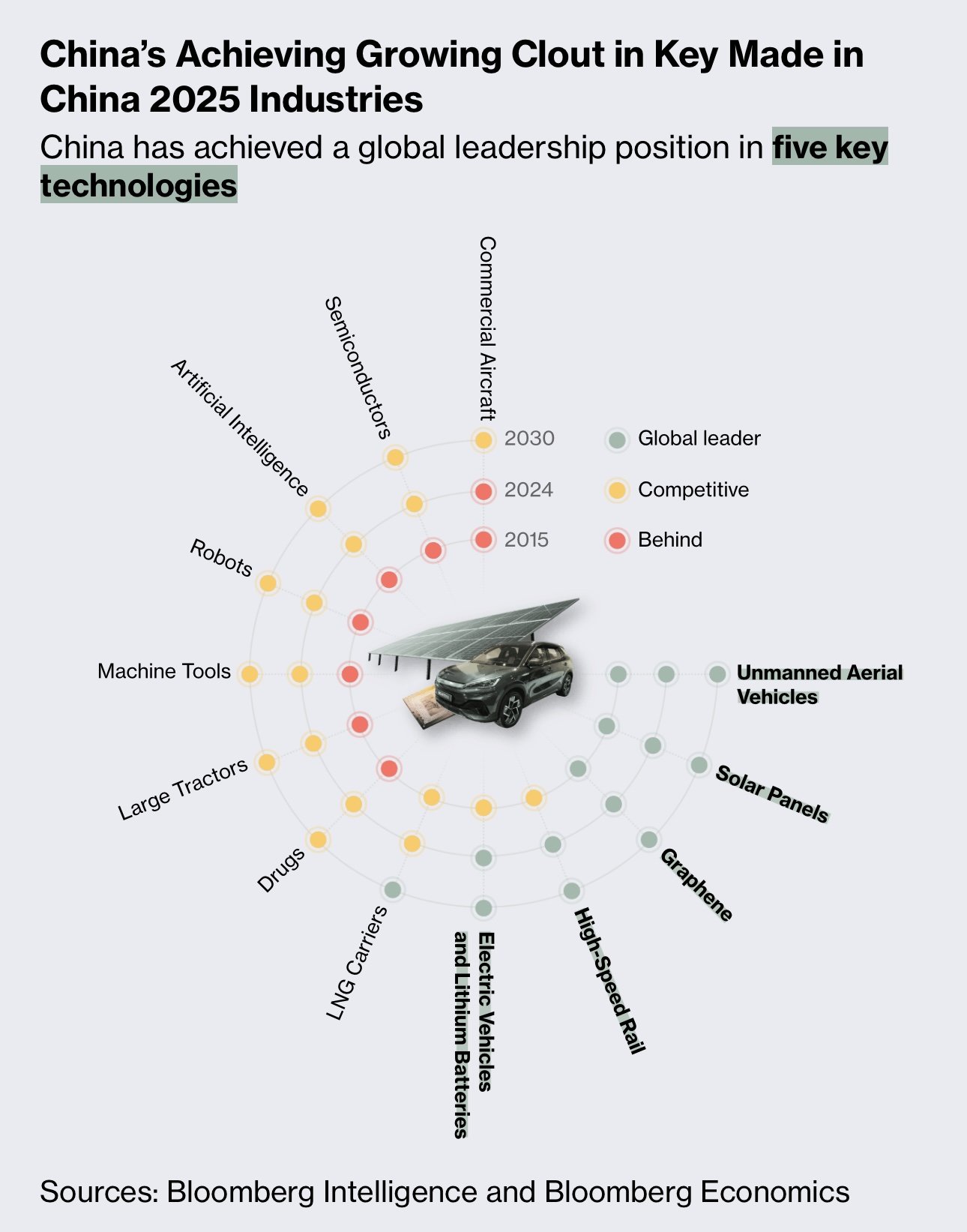
However, notwithstanding the uncoordinated approach to date, President Trump’s mistaken instinct for protectionism belies an underlying truth: that American manufacturing communities have not fared well in the last 25 years and that China’s dominance in manufacturing poses an ever-growing threat to national security. After China’s admission to the WTO in 2001, its share of global manufacturing grew from less than 10% to over 35% today. At the same time, America’s share of manufacturing shrank from almost 25% to less than 15%, with employment shrinking from more than 17 million at the turn of the century to under 13 million today. These trends also create a deep geopolitical vulnerability for America, as in the event of a conflict with China, we would be severely outmatched in our ability to build critical physical goods: for example, China produces over 80% of the world’s batteries, over 90% of consumer drones, and has a 200:1 shipbuilding capacity advantage over the U.S. While not all manufacturing is geopolitically valuable, the erosion in strategic industries, which went hand-in-hand with the loss of key manufacturing skills in recent decades, poses potential long-term challenges for America.
In addition to its growing manufacturing dominance, China is now competing with America’s preeminence in technology leadership, having leveraged many of the skills gained in science, engineering, and manufacturing for lower-value add industries to compete in higher-end sectors. DeepSeek demonstrated that China can natively generate high-quality artificial intelligence models, an area in which the U.S. took its lead for granted. Meanwhile, BYD rocketed past Tesla in EV sales and accounted for 22% of global sales in 2024 as compared to Tesla’s 10%. China has also been operating an extensive satellite-enabled secure quantum communications channel since 2016, preventing others from eavesdropping.
China’s growing leadership in advanced research may give it a sustained edge beyond its initial gains: according to one recent analysis of frontier research publications across 64 critical technologies, global leadership has shifted dramatically to China, which now leads in 57 research domains. These are not recent developments: they have been part of a series of five year plans, the most well known of which is Made in China 2025, giving China an edge in many critical technologies that will continue to grow if not addressed by an equally determined American response.
An Integrated Innovation, Economic Foreign Policy, and Community Development Approach
Despite China’s growing challenge and recent self-inflicted damage to America’s economic and geopolitical relationships, America still retains many ingrained advantages. The U.S. still has the largest economy, the deepest public and private capital pools for promising companies and technologies, and the world’s leading universities; it has the most advanced military, continues to count most of the world’s other leading armed forces as formal treaty allies, and remains the global reserve currency. Ordinary Americans have benefited greatly from these advantages in the form of access to cutting edge products and cheaper goods that increase their effective purchasing power and quality of life – notwithstanding Secretary Bessent’s statements to the contrary.
The U.S. would be wise to leverage its privileged position in high-end innovation and in global financial markets to build “industries of the future.” However, the next economic and geopolitical paradigm must be genuinely equitable, especially to domestic communities that have been previously neglected or harmed by globalization. For these communities, policies such as the now-defunct Trade Adjustment Assistance program were too slow and too reactive to help workers displaced by the “China Shock,” which is estimated to have caused up to 2.4 million direct and indirect job losses.
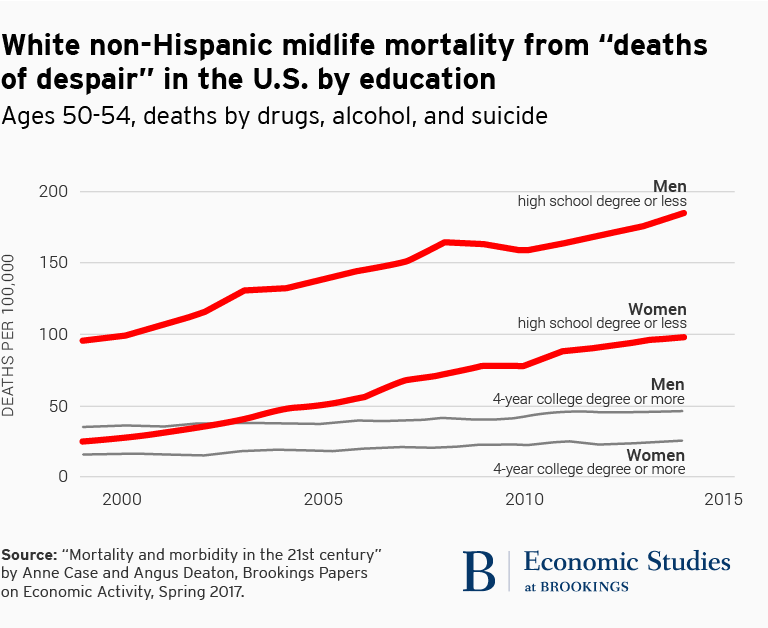
Although jobs in trade-affected communities were eventually “replaced,” the jobs that came after were disproportionately lower-earning roles, accrued largely to individuals who had college degrees, and were taken by new labor force entrants rather than providing new opportunities for those who had originally been displaced. Moreover, as a result of ineffective policy responses, this replacement took over a decade and has contributed to heinous effects: look no further than the rate at which “deaths of despair” for white individuals without a college degree skyrocketed after 2000.

Nonetheless, surrendering America’s hard-won advantages in technology and international commerce, especially in the face of a growing challenge from China, would be an existential error. Rather, our goal is to address the shortcomings of previous policy approaches to the negative externalities caused by globalization. Previous approaches have focused on maximizing growth and redistributing the gains, but in practice, America failed to do either by underinvesting in the foundational policies that enable both. Thus, we are proposing a two-pronged approach that focuses on spurring cutting-edge technologies, growing novel industries, and enhancing production capabilities while investing in communities in a way that provides family-supporting, upwardly mobile jobs as well as critical childcare, education, housing, and healthcare services. By investing in broad-based prosperity and productivity, we can build a more equitable and dynamic economy.
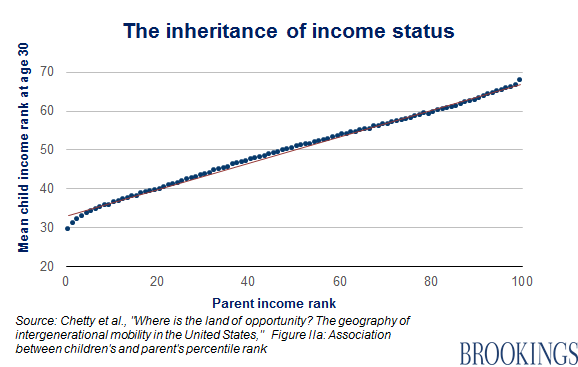
Our agenda is intentionally broad (and correspondingly ambitious) rather than narrow in focus on manufacturing communities, even though current discourse is focused on trade. This is not simply a “political bargain” that provides greater welfare or lip-service concessions to hollowed-out communities in exchange for a return to the prior geoeconomic paradigm. Rather, we genuinely believe that economic dynamism which is led by an empowered middle-class worker, whether they work in manufacturing or in a service industry, is essential to America’s future prosperity and national security – one in which economic outcomes are not determined by parental income and one where black-white disparities are closed in far less than the current pace of 150+ years.

Thus, the ideas and agenda presented here are neither traditionally “liberal” nor “conservative,” “Democrat” nor “Republican.” Instead, we draw upon the intellectual traditions of both segments of the political spectrum. We agree with Ezra Klein’s and Derek Thompson’s vision in Abundance for a technology-enabled future in which America remembers how to build; at the same time, we take seriously Oren Cass’s view in The Once and Future Worker that the dignity of work is paramount and that public policy should empower the middle-class worker. What we offer in the sections below is our vision for a renewed America that crosses traditional policy boundaries to create an economic and political paradigm that works for all.
Policy Recommendations
Investing in American Innovation
Given recent trends, it is clear that there is no better time to re-invigorate America’s innovation edge by investing in R&D to create and capture “industries of the future,” re-shoring capital and expertise, and working closely with allies to expand our capabilities while safeguarding those technologies that are critical to our security. These investments will enable America to grow its economic potential, providing fertile ground for future shared prosperity. We emphasize five key components to renewing America’s technological edge and manufacturing base:
Invest in R&D. Increase federally funded R&D, which has declined from 1.8% of GDP in the 1960s to 0.6% of GDP today. Of the $200 billion federal R&D budget, just $16 billion is allocated to non-healthcare basic science, an area in which the government is better suited to fund than the private sector due to positive spillover effects from public funding. A good start is fully funding the CHIPS and Science Act, which authorized over $200 billion over 10 years for competitiveness-enhancing R&D investments that Congress has yet to appropriate. Funding these efforts will be critical to developing and winning the race for future-defining technologies, such as next-gen battery chemistries, quantum computing, and robotics, among others.
Capability-Building. Develop a coordinated mechanism for supporting translation and early commercialization of cutting-edge technologies. Otherwise, the U.S. will cede scale-up in “industries of the future” to competitors: for example, Exxon developed the lithium-ion battery, but lost commercialization to China due to the erosion of manufacturing skills in America that are belatedly being rebuilt. However, these investments are not intended to be a top-down approach that selects winners and losers: rather, America should set a coordinated list of priorities (leveraging roadmaps such as the DoD’s Critical Technology Areas), foster competition amongst many players, and then provide targeted, lightweight financial support to industry clusters and companies that bubble to the top.
Financial support could take the form of a federally-funded strategic investment fund (SIF) that partners with private sector actors by providing catalytic funding (e.g., first-loss loans). This fund would focus on bridging the financing gap in the “valley of death” as companies transition from prototype to first-of-a-kind / “nth-of-a-kind” commercial product. In contrast to previous attempts at industrial policy, such as the Inflation Reduction Act (IRA) or CHIPS Act, they should have minimal compliance burdens and focus on rapidly deploying capital to communities and organizations that have proven to possess a durable competitive advantage.
Encourage Foreign Direct Investment (FDI). Provide tax incentives and matching funds (potentially from the SIF) for companies who build manufacturing plants in America. This will bring critical expertise that domestic manufacturers can adopt, especially in industries that require deep technical expertise that America would need to redevelop (e.g., shipbuilding). By striking investment deals with foreign partners, America can “learn from the best” and subsequently improve upon them domestically. In some cases, it may be more efficient to “share” production, with certain components being manufactured or assembled abroad, while America ramps up its own capabilities.
For example, in shipbuilding, the U.S. could focus on developing propulsion, sensor, and weapon systems, while allies such as South Korea and Japan, who together build almost as much tonnage as China, convert some shipyards to defense production and send technical experts to accelerate development of American shipyards. In exchange, they would receive select additional access to cutting-edge systems and financially benefit from investing in American shipbuilding facilities and supply chains.
Immigration. America has long been described as a “nation of immigrants.” Their role in innovation is impossible to deny: 46% of companies in the Fortune 500 were founded by immigrants and accounted for 24% of all founders; they are 19% of the overall STEM workforce but account for nearly 60% of doctorates in computer science, mathematics, and engineering. Rather than spurning them, the U.S. should attract more highly educated immigrants by removing barriers to working in STEM roles and offering accelerated paths to citizenship. At the same time, American policymakers should acknowledge the challenges caused by illegal immigration. One such solution is to pass legislation such as the Border Control Act of 2024, which had bipartisan support and increased border security, supplemented by a “points-based” immigration system such as Canada’s which emphasizes educational credentials and in-country work experience.
Create Targeted Fences. Employ tariffs and export controls to defend nascent, strategically important industries such as advanced chips, fusion energy, or quantum communications. However, rather than employing these indiscriminately, tariffs and export controls should be focused on ensuring that only America and its allies have access to cutting-edge technologies that shape the global economic and security landscape. They are not intended to keep foreign competition out wholesale; rather, they should ensure that burgeoning technology developers gain sufficient scale and traction by accelerating through the “learn curve.”
Building Strong Communities
Strong communities are the foundation of a strong workforce, without which new industries will not thrive beyond a small number of established tech hubs. However, strengthening American communities will require the country to address the core needs of a family-sustaining life. Childcare, education, housing, and healthcare are among the largest budget items for families and have been proven time and again to be critical to economic mobility. Nevertheless, they are precisely the areas in which costs have skyrocketed the most, as has been frequently chronicled by the American Enterprise Institute’s “Chart of the Century.” These essential services have been underinvested in for far too long, creating painful shortages for communities that need them most. As such, addressing these issues form the core pillars of our domestic reinvestment plan. Addressing them means grappling with the underlying drivers of their cost and scarcity. These include issues of state capacity, regulatory and licensing barriers, and low productivity growth in service-heavy care sectors. A new policy agenda that addresses the fundamental supply-side issues is needed to reshape the contours of this debate.
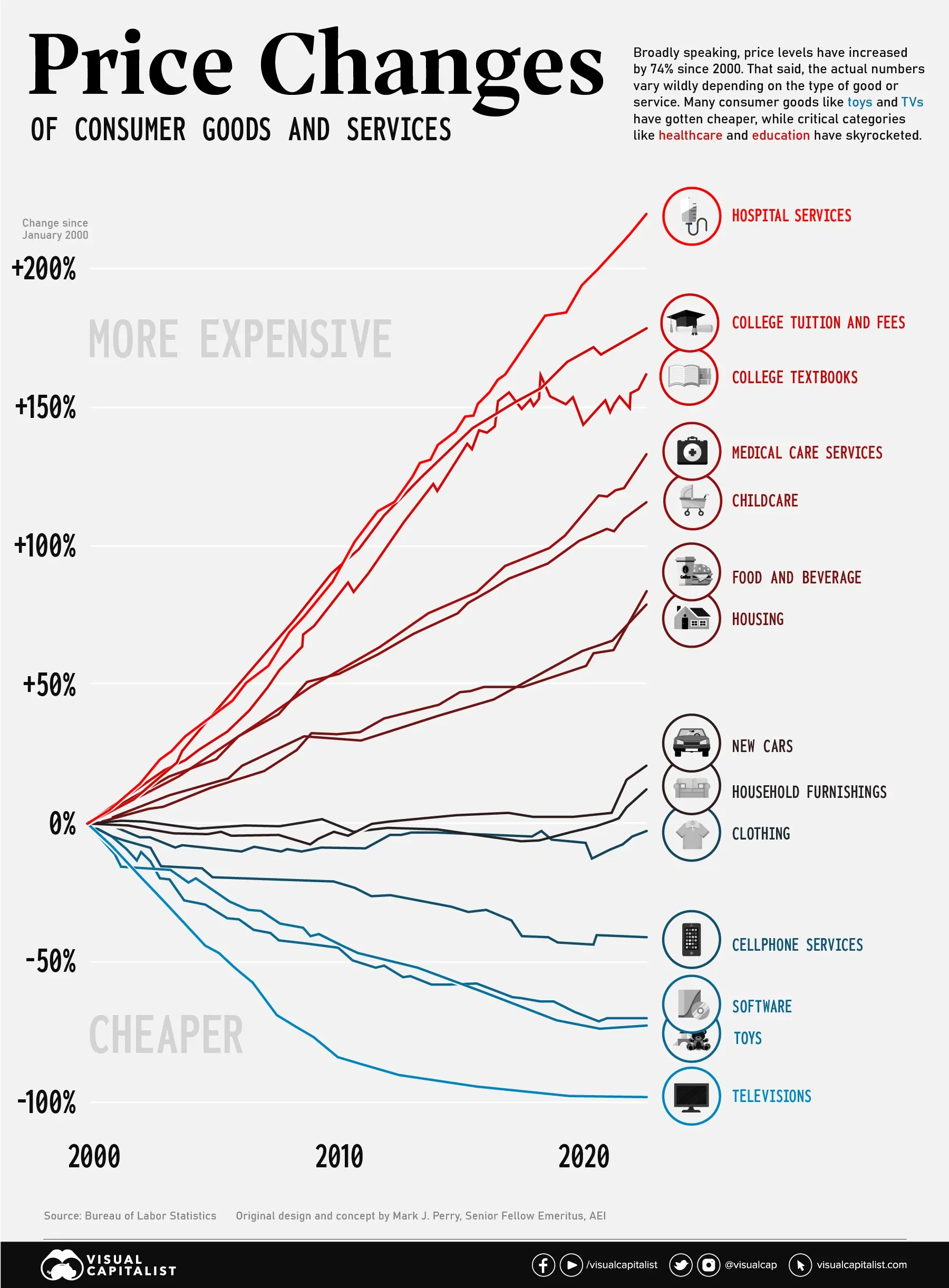
Expand Childcare. Inadequate childcare costs the U.S. economy $122 billion in lost wages and productivity as otherwise capable workers, especially women, are forced to reduce hours or leave the labor force. Access is further exacerbated by supply shortages: more than half the population lives in a “childcare desert,” where there are more than three times as many children as licensed slots. Addressing these shortages will alleviate the affordability issue, enabling workers to stay in the workforce and allow families to move up the income ladder.
Fund Early Education. Investments in early childhood education have been demonstrated to generate compelling ROI, with high-quality studies such as the Perry preschool study demonstrating up to $7 – $12 of social return for every $1 invested. While these gains are broadly applicable across the country, they would make an even greater difference in helping to rebuild manufacturing communities by making it easier to grow and sustain families. Given the return on investment and impact on social mobility, American policymakers should consider investing in universal pre-K.
Invest in Workforce Training and Community Colleges. The cost of a four-year college education now exceeds $38K per year, indicating a clear need for cheaper BA degrees but also credible alternatives. At the same time, community colleges can be reimagined and better funded to enable them to focus on high-paying jobs in sectors with critical labor shortages, many of which are in or adjacent to “industries of the future.” Some of these roles, such as IT specialists and skilled tradespeople, are essential to manufacturing. Others, such as nursing and allied healthcare roles, will help build and sustain strong communities.
Build Housing Stock. America has a shortage of 3.2 million homes. Simply put, the country needs to build more houses to address the cost of living and enable Americans to work and raise families. While housing policy is generally decided at lower levels of government, the federal government should provide grants and other incentives to states and municipalities to defray the cost of developing affordable housing; in exchange, state and local jurisdictions should relax zoning regulations to enable more multi-family and high-density single-family housing.
Expand Healthcare Access. American healthcare is plagued with many problems, including uneven access and shortages in primary care. For example, the U.S. has 3.1 primary care physicians (PCPs) per 10,000 people, whereas Germany has 7.1 and France has 9.0. As such, the federal government should focus on expanding the number of healthcare practitioners (especially primary care physicians and nurses), building a physical presence for essential healthcare services in underserved regions, and incentivizing the development of digital care solutions that deliver affordable care.
Allocating Funds to Invest in Tomorrow’s Growth
Investment Requirements
While we view these policies as essential to America’s reinvigoration, they also represent enormous investments that must be paid for at a time when fiscal constraints are likely to tighten. To create a sense of the size of the financial requirements and trade-offs required, we lay out each of the key policy prescriptions above and use bipartisan proposals wherever possible, many of which have been scored by the Congressional Budget Office (CBO) or another reputable institution or agency. Where this is not possible, we created estimates based on key policy goals to be accomplished. Although trade deals and targeted tariffs are likely to have some budget impact, we did not evaluate them given multiple countervailing forces and political uncertainties (e.g., currency impacts).
Potential Pay-Fors
Given the budgetary requirements of these proposals, we looked for opportunities to prune the federal budget. The CBO laid out a set of budgetary options that collectively could save several trillion over the next decade. In laying out the potential pay-fors, we used two approaches that focused on streamlining mandatory spending and optimizing tax revenues in an economically efficient manner. Our first approach is to include budgetary options that eliminate unnecessary spending that are distortionary in nature or are unlikely to have a meaningful direct impact on the population that they are trying to serve (e.g., kickback payments to state health plans). Our second approach is to include budgetary options in which the burden would fall upon higher-earning populations (e.g., raising the cap on payroll and Social Security taxes).
As the table below shows, there is a menu of options available to policymakers that raise funding well in excess of the required investment amounts above, allowing them to pick and choose which are most economically efficient and politically viable. In addition, they can modify many of these options to reduce the size or magnitude of the effect of the policy (e.g., adjust the point at which Social Security benefits for “high earners” is tapered or raise capital gains by 1% instead of 2%). While some of these proposals are potentially controversial, there is a clear and pressing need to reexamine America’s foundational policy assumptions without expanding the deficit, which is already more than 6% of GDP.
Conclusion
America is in need of a new economic paradigm that renews and refreshes rather than dismantles its hard-won geopolitical and technological advantages. Trump’s tariffs, should they be fully enacted, would be a self-defeating act that would damage America’s economy while leaving it more vulnerable, not less, to rivals and adversaries. However, we also recognize that the previous free trade paradigm was not truly equitable and did not do enough to support manufacturing communities and their core strengths. We believe that our two-pronged approach of investing in American innovation alongside our allies along with critical community investments in childcare, higher education, housing, and healthcare bridges the gap and provides a framework for re-orienting the economy towards a more prosperous, fair, and secure future.
118th Congress: National Security
The 21st century will be shaped by the US-China strategic competition. The United States and China are locked in a battle for global power, influence, and resources, and are fighting for control of the world’s most important geopolitical regions, including the Indo-Pacific and Africa. They are also vying for leadership in cutting-edge technologies such as artificial intelligence (AI), 5G, quantum computing, and cybersecurity. This competition is not just about economic dominance; it is also about ideology and values. To ensure that we can lead in today’s world, the United States must innovate. If we don’t, we may fall behind.
Below, we provide concrete, actionable policy proposals to help the 118th Congress meet this moment. These proposals will protect our troops, cultivate an agile and effective military, and develop a national security industrial base that allows America to lead in critical emerging technologies.
Medical Readiness. To support our troops, Congress should take steps to maintain military medical readiness. Generally, at the start of a given war, the American battlefield mortality rate is higher than it was at the end of the previous war, suggesting that military medical capabilities erode between wars. This erosion is responsible for the deaths of hundreds of American troops. To better protect our troops, Congress should direct the Department of Defense to expand military-civilian partnerships (MCPs) to pursue a national goal of eliminating preventable deaths, as detailed in the above memo.
Cultivating a 21st Century National Security Innovation Base. The National Security Commission on AI warned that a digital-talent deficit at the Department of Defense (DoD) represents the greatest impediment to the U.S. military’s effective embrace of emerging technologies. To address this challenge:
- Congress should create a national civilian “STEM Corps” modeled after the Reserve Officers’ Training Corps and the National Guard, as introduced in HR 6526 in the 116th Congress. A competitive process would select students to receive full tuition to attend public universities. In return for accepting the scholarship, graduates would commit to several years serving in either the “active” or “reserve” STEM Corps. Additionally, Congress should work with the DoD lengthen Defense Innovation Unit (DIU) rotations, allowing DoD representatives more time to establish strong networks in Silicon Valley. The DIU should also continue to hire rapidly from those ecosystems.
- Nearly half of all STEM PhDs and 60% of computer science PhDs in the U.S. are awarded to international students. Barriers in recruiting this talent hurt our Defense Industrial Base. Congress should create a path to citizenship for noncitizen technologists through military service, and make some changes to existing law governing U.S. military eligibility. Additionally, Congress should increase green card caps for advanced STEM degree holders working in critical industries for national defense, and establish a National Security Innovation Visa to grant DoD the ability to recruit top global STEM talent.
Combating Increasing Global Threats. Many threats to national security can only be effectively countered by working with allies. To effectively combat such challenges, we must strengthen U.S. Engagement in International Standards Bodies. The U.S. should also lead in the formulation and ratification of a global treaty on artificial intelligence in the vein of the Geneva Conventions, the Chemical Weapons Convention, and the Nuclear Non-Proliferation Treaty to establish guardrails and protections for the civilian and military use of AI, as recommended by the Future of Defense Task Force.
Increasing Military Efficiency. Greater military efficiency can also be achieved by cutting down on unnecessary expenses. We can save billions on the U.S. nuclear deterrent by directing the Pentagon to wind down its current efforts to deploy an entirely new missile force, instead extending the life of our current arsenal of Intercontinental Ballistic Missiles (ICBMs).
Appropriations Recommendations
To protect American technological advantage and compete with China across all aspects of America’s national security strategy:
- The National Defense Education Program: The Department of Defense is not only working to create high end emerging technologies, but also putting resources into training the STEM workforce, which is essential for the safety of our country. To ensure that this expertise comes from a variety of backgrounds, we must offer chances to students and teachers of all ages in underprivileged and underrepresented communities, those with ties to the military, and veterans. The National Defense Education Program does just that, and we must ensure it continues receiving full support of Congress. The program element was funded at $145 million in FY 2022.
- The role of the Bureau of Industry and Security (BIS) has become especially important on the technology competition front, as previously highlighted by members of the Foreign Affairs Committee. By enforcing export controls, BIS can limit China’s access to technologies like AI which are used for military ends, thereby protecting America’s national security. To ensure that BIS can effectively enforce these export controls, we recommend appropriating additional funding to BIS to support their critical work.
- While well-enforced export controls ensure that the U.S. leads in the development of AI systems, we must also ensure that we advance AI technologies safely and responsibly. Congress should appropriate robust funding to the National Institute of Standards and Technology (NIST) to support their work on trustworthy AI. The CHIPS and Science Act authorizes funding to establish NIST AI test beds (Sec. 10232), appropriations for which are critical.
- The National Defense Authorization Act of 2019 established the National Security Innovation Capital (NSIC) program in response to worries that American hardware startups were unable to secure sufficient funds from trustworthy domestic sources. Less than 30% of U.S. venture capital investments go towards hardware businesses, and less than 10% is invested during the early phases when it’s needed most. Many times, these startups have had to depend on overseas investors, leaving them open to the risk of their intellectual property being taken by possible adversaries. In February 2021, the DIU established this fund as a result of $15 million in appropriations from Congress. Ensuring this program is fully funded every year is critical to our global competitiveness and national security.
118th Congress: Emerging Tech & Competitiveness
Global competition for advanced technology leadership is fierce. China continues to build scholarship capacity across science and engineering disciplines, has surpassed the United States in knowledge- and technology-intensive manufacturing, and is hot on American heels for the global lead in R&D investment. In the U.S., domestic manufacturing jobs have enjoyed a recent surge, but the U.S. trade deficit in high technology stood at nearly $200 billion in 2021, and appears set to far surpass that this year.
The federal government has played an historic role in fostering basic science and the development of critical technologies like the Internet and GPS, and federal investments have helped drive manufacturing and high-tech cluster development for nearly a century. In light of that role, the 118th Congress should act decisively to sustain America’s competitive edge in industries of the future.
R&D Policy. The most important step the new Congress can take is to ensure robust appropriations for the array of science and innovation initiatives authorized in the bipartisan CHIPS and Science Act. New and ongoing activities in agencies like the National Science Foundation (NSF), the Department of Energy Office of Science (SC), the National Institute of Standards and Technology (NIST), and the Department of Commerce will drive scientific excellence, STEM talent, and industrial competitiveness in key areas like advanced communications, materials, semiconductors, and others.
Congress should also continue to build out Manufacturing USA, a network of highly effective public-private innovation institutes serving defense, energy, life sciences, and other sectors. In addition to CHIPS-authorized funding boosts, the Manufacturing USA network could be enhanced by regional demonstration centers, talent programs to align American worker skills with industry needs, and other steps.
As Congress invests, lawmakers should also seek out opportunities to fund alternative, novel models for research including, for example, focused research organizations (FROs) or institutes for independent scholarship. While the federal science enterprise remains an engine of discovery and progress, new ways of doing science can foster untapped creativity and let scientists and engineers tackle new problems or come up with unforeseen breakthroughs. For instance, the CEO-led FRO model is intended to facilitate mid-scale research projects to produce new public goods (like technologies, techniques, processes, or datasets) that in turn have a catalyzing effect on productivity in the broader science enterprise. Congress should work with agencies to create space and find opportunities to foster such novel approaches.
Congress could also consider legislative reforms to empower national labs to innovate and commercialize cutting-edge technology. For instance, legislation could extend Enhanced Use Lease (EUL) authority to allow for public-private research facilities on surplus federal lands, or create a federally chartered technology transfer organization inspired by similar models at effective universities. Such capabilities would further leverage the labs as engines for regional innovation.
Innovation & Entrepreneurship. The new Congress has the opportunity to invest in critical technologies through new funds and public-private partnerships that drive growth of frontier technology companies. Congress can also invest in the broader ecosystem to make innovation sustainable, expand the geography of innovation, and support equitable access to opportunities. Such investments would continue the momentum that Congress established in 2022.
A major element of this momentum is bipartisan support for the Regional Technology and Innovation Hubs program authorized in Section 10621 of the bipartisan CHIPS and Science Act. The new program, intended to catalyze and expand high-tech industry clusters in up-and-coming regions around the United States, was authorized at $10 billion over five years in CHIPS, and received a $500 million down payment in appropriations so far. Now, the 118th Congress should continue and expand upon that support, while more generally continuing to build out place-based and sustainable infrastructure that advances deep-tech and tough-tech industries like the bioeconomy, advanced manufacturing, and clean energy.
In addition, Congress should find ways to support early-stage companies at the technology frontier, through establishing and funding a Frontier Tech consortium or a Deep Tech capital fund to coordinate public investments across government agencies. This would ensure that government funding is used efficiently to spur private investment in early stage frontier tech companies within critical national industrial base areas.
Artificial Intelligence. As AI technologies advance, the government needs to harness them safely and efficiently. Congress should include a National Framework for AI Procurement in the next NDAA to establish a standardized process for vetting AI applications proposed for public use, in line with a 2020 Executive Order on “Promoting the Use of Trustworthy Artificial Intelligence in the Federal Government.” To protect the privacy and security of those using or affected by all AI products, this framework should include a strategy for investing in and deploying privacy-preserving machine learning (PPML).
Space Innovation. While some NASA language was included in CHIPS and Science, space sector innovation didn’t get nearly as much attention as it could have. The 118th should remedy this by placing special focus on investments and policy reform to enhance U.S. ability to innovate in the space sector. The potential opportunity is huge: space is likely to become a trillion-dollar sector before midcentury.
Multiple areas are ripe for action. One is in the area of orbital debris. There are thousands of pieces of space junk now in low-earth orbit – often emerging from defunct satellites or collisions – and these pose a substantial hazard to commercial space operations as well as U.S. national security. To deal with this issue, Congress could work with relevant agencies including the Departments of Defense and Commerce to develop and fund an advanced market commitment for space debris to incentivize solutions via the possibility of investment returns. Congress could also take another run at SPACE Act ideas that were left out of the final Chips and Science text, to codify responsibility for civilian Space Situational Awareness (S.S.A.) with the Department of Commerce and to authorize the creation of one or more centers of excellence for S.S.A.
Congress should also work with the Administration to advance in-space servicing, assembly, and manufacturing (ISAM), an emerging suite of capabilities that offer substantial upside for the future space economy. The White House has already released an ISAM strategy and implementation plan, but substantial action is still needed, and Congress can provide leadership and support in this area. For example, Congress can work with NASA to create an Advanced Space Architectures Program, which would operate under a public-private consortium model to pursue missions that develop new technological capabilities for the U.S. space sector. Congress can also encourage federal agencies and the White House to develop a public roadmap of needs, goals and desired capabilities in the emerging ISAM sector, and to work toward establishing ISAM-specific funding wedges in key agency budget requests to better track related investments for concerted appropriations decisions.
Appropriations Recommendations
- CHIPS and Science: Microelectronics Research (MICRO Act). To drive U.S. science and innovation in microelectronics and semiconductors, Section 10731 authorized the establishment of a network of Microelectronics Science Research Centers at national labs and other institutions, authorized at $25 million in FY 2024, and a broader Department of Energy microelectronics research program at $100 million in FY 2024. These are vital investments in United States technological leadership.
- CHIPS and Science: Entrepreneurial Fellowships. NSF is a vital cog in the non-medical university research ecosystem. In addition to topline funding increases, CHIPS also authorized several smart programs that should receive appropriations within a rising NSF topline overall. One of these is the Entrepreneurial Fellowships program within the newly established technology directorate (Section 10392). The fellowship program, which officially launched last fall, is intended to provide scientists with entrepreneurial training to help shift ideas from lab to market or forge connections between academia, investors, and government. The program is authorized at $125 million over five years, and Congress should ensure robust support.
- As mentioned above, Congress has so far provided $500 million in appropriations for the Regional Technology and Innovation Hub Program, as well as $200 million for the Recompete Pilot Program, a similar place-based program focused specifically on distressed regions and communities. The CHIPS and Science Act authorized these programs at $10 billion and $1 billion respectively, and if past experience is any indication, demand for support from local cluster development teams will far exceed the supply of appropriations provided thus far. To that end, Congress should continue to fund these programs through FY 2024 appropriations: at least by replicating the earlier appropriations figures of $500 million and $200 million, and ideally by getting as close to the authorized amounts as possible. Catalytic investments from the federal government are critical to the early growth of ecosystem efforts, and this program’s continuation would be a continued force in creating greater economic opportunity in communities across the nation.
- Congress should fund the Competitiveness Policy Council (authorized under the Competitiveness Policy Council Act, 15 U.S.C. §4801 et seq.) to provide future recommendations to the president on manufacturing competitiveness. This council should assemble an independent advisory group composed of business, labor, and government leaders to develop policy recommendations that benefit the workforce across their sectors, like President Reagan’s Commission on Industrial Competitiveness.
Creating an API Standard for Election Administration Systems to Strengthen U.S. Democracy
Summary
To bring nationwide access to voter tools, the Biden-Harris administration should direct the National Institute of Standards and Technology (NIST) to establish a standard application programming interface (API) for election administration systems.
Our democracy is most representative when the greatest number of Americans vote, but access is hindered by manual, form-based operations that make it difficult for citizens to register to vote or access a ballot. As Americans faced a global pandemic and an overwhelmed postal service, the 2020 election amplified the importance of digital tools for voters to register, apply for absentee ballots, and track their ballot status. It also highlighted the deficiencies in (or lack of) these capabilities from locality to locality. Further, state legislatures have begun passing sweeping voter suppression measures that further limit ballot access.
With the next federal election rapidly approaching in 2022, the time to take steps at the federal level to expand voting access is now. While proposed legislation would mandate making these functions available online, without incentives or standards, these tools would remain available only on local government websites, which suffer from discoverability and usability hurdles. Creating a standard API for election administration systems will enable civic groups and other outside organizations to create consistent, discoverable and innovative nationwide voter tools that interoperate directly with local voter rolls, resulting in a more participatory electorate and a stronger, more representative democracy.
The “FASTER” Act for the Federal Laboratory System
The federal lab system is an enormous, $50 billion-plus enterprise of internal research and development (R&D) across the United States. As governments around the world, including China, pour billions of dollars into advanced technologies, it is imperative that we use our nation’s federal lab ecosystem as effectively as possible.
However, because federal labs have varying legal authorities, missions, and cultures, their records of local economic engagement and technology commercialization vary considerably. Universities, by contrast, have demonstrated a strong record of supporting regional innovation ecosystems through use of place (creating incubators, research parks, and adjacent innovation districts), talent (allowing university researchers to be involved with private-sector technology under approved and managed relationships), and innovation (using intermediary university foundations to take on business aspects of technology commercialization).
The Federal Authority for Science, Technology, Entrepreneurship, and Research (FASTER) Federal Labs Act will make it possible for all federal labs to use the tried-and-true tools that universities use for economic engagement and technology commercialization. The FASTER Federal Labs Act will do this by: (i) allowing surplus federal land to be used for public-private partnership facilities, (ii) creating clearer pathways for federal researchers to work with startup companies, and (iii) authorizing a federally charted tech-transfer organization based on models established at leading research universities. The FASTER Federal Labs Act will not require significant outlay of federal appropriations as many of its provisions simply give federal labs greater discretion over deployment of existing resources. The Act can be implemented relatively easily as an add-on to legislation expected to be considered by this Congress.
Strengthening U.S. Engagement in International Standards Bodies
Summary
Technical standards underpin the functioning of digital devices central to everyday life. What might, at first glance, seem to be a wonky, technical process for figuring out things like how to ensure mobile devices can all connect to the same network, has emerged as an arena of geopolitical competition. Standards confers first-mover advantages on the companies that propose them and economic benefits on countries, and they implicate values like privacy. China has aggressively sought to promote its technical standards by encouraging Chinese representatives to assume leadership roles in standards bodies, financially rewarding companies that propose technical standards, coercing Chinese firms to vote as a bloc within standards bodies, and working to shape the standards landscape to its advantage.
In light of the growing recognition of the strategic importance of technical standards, the March 2020 report from the U.S. Cyberspace Solarium Commission (CSC) recommended that the United States “engage actively and effectively in forums setting international information and communications technology standards.” In a similar vein, the FY2021 National Defense Authorization Act (NDAA) included a provision tasking the Departments of State and Commerce and the Federal Communications Commission (FCC) with considering how to advance U.S. representation in international standards bodies. This paper expands on the CSC’s recommendation and proposes concrete actions to be taken in support of the aims outlined in the FY2021 NDAA. In brief, the U.S. federal government should:
- Direct and organize departments and agencies to better coordinate input to (and participation in) international standards bodies;
- Work with like-minded countries to advance technically sound standards proposals that preserve the free, open, and interoperable nature of the ICT ecosystem;
- Facilitate a public-private partnership to encourage and support greater participation of U.S. companies in international standards bodies; and
- Seek transparency reforms within international standards bodies and advocate for “cooling-off periods” that prevent former government officials (from any country) from taking on leadership roles in standards bodies for a specified period of time following government service.
Enabling Federal Agencies to Tackle Complex Problems with the Help of Makers-In-Residence
Summary
Across the U.S., there are approximately 2,000 makerspaces and Fab Labs where makers with a broad and diverse set of skills have developed innovative approaches to solving pressing problems in their communities. The next administration should implement a Maker-In-Residence (MIR) fellowship program that allows federal agencies to leverage the incredible skills and knowledge of the American maker community to address complex problems specific to their missions.
Implementation of the MIR fellowship program would enable American makers and innovators to:
- Contribute their knowledge and unique and diverse skill sets to fulfilling the missions of federal agencies while learning first-hand about federal policy and the policymaking process
- Utilize their learnings to solve complex societal problems and affect policy change in their local communities.
Leading the Way: A National Task Force on Connected Vehicles
Summary
By bringing wireless communications technology to cars and trucks, we could prevent hundreds of thousands of car crashes every year, saving many lives. We could also reduce commute times, fuel consumption, air pollution and greenhouse gas emissions, and the cost of mobile Internet access. In the longer term, deployment of connected vehicle technology can lay groundwork for better autonomous (self-driving) vehicles. In 2021, the Federal Government should establish a task force to develop a coherent vision through open and inclusive processes, and provide leadership to achieve that vision.
Note: As a working paper, this draft is still under development. The author invites your feedback and comments, which can be sent to info@dayoneproject.org.
German Elections Raise Important Questions about Drones as Tools for Political Opposition, Protest, and Violence
In a few days, Germans will head to the polls to vote in their federal elections. Few are predicting an easy win for long-standing German Chancellor, Angela Merkel (CDU/CSU), who is expected to face a serious but not insurmountable challenge.
Unlike the SPD, Greens, FDP, and The Left, the Pirate Party has not been a major factor in this election. The party’s inability to connect with voters and “capitalize on widespread unhappiness over state surveillance fuelled by revelations from the American whistleblower Edward Snowden” has meant that it might not even reach the electoral threshold necessary to qualify for parliamentary seats. Far-right German nationalist parties, like the Neo-Nazi leaning National Democratic Party of Germany, have fared even worse.