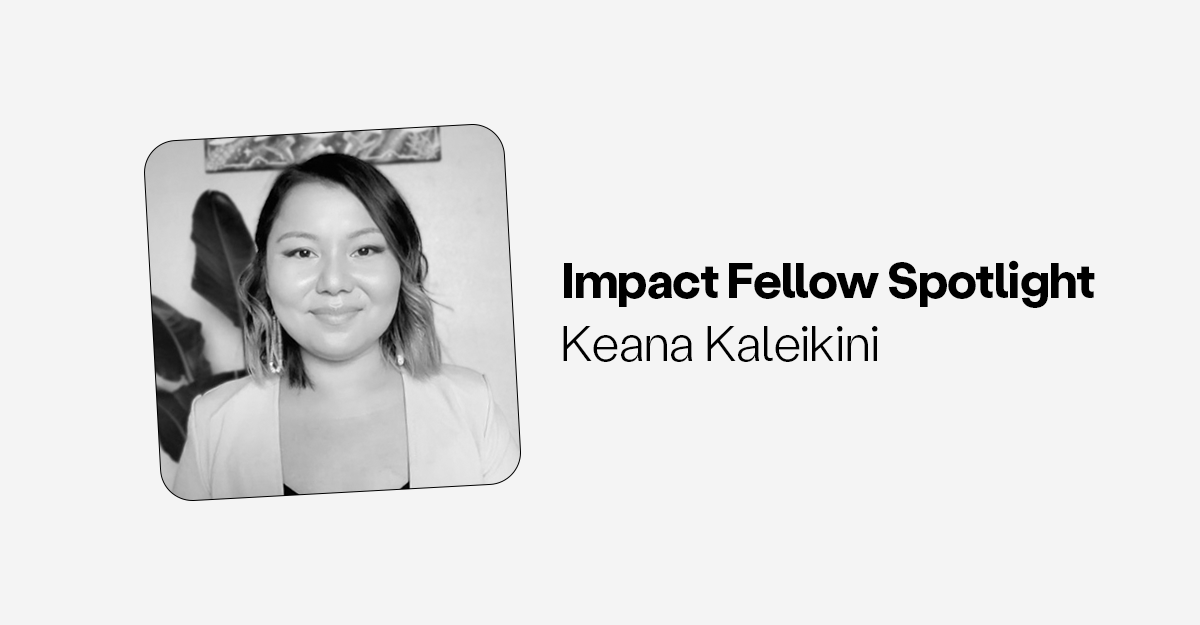
Grounded in Evidence and Driven By Care: Keana Kaleikini Reflects on Her Time as an Impact Fellow
As we enter into “Disaster Season,” shorthand for natural disasters, our teams at FAS are continuing to research prevention methods and advocate for relief efforts for a resilient global community. As FAS thinks about innovative ways to mitigate health and climate issues, we also reflect on the work our current and former Impact Fellows have done to move us closer to a safer world.
One of the over 100 Impact Fellows that has spent time working in the federal government, particularly at the United States Department of Health and Human Services, is Keana Kaleikini. From February 2024 until May 2025, as an Impact Fellow in the Office of the Assistant Secretary for Health (OASH), she provided scientific and policy research across four divisions: the Office of Environmental Justice, the Office of Climate Change and Health Equity, the Office of Science and Medicine, and the Office of the Surgeon General. In this role, she became a trusted advisor on complex scientific and policy topics spanning environmental exposures, chronic disease, and public health preparedness. Her contributions supported international treaty negotiations, informed national strategies, and supported executive briefings for HHS leadership, including senior advisors to the Surgeon General and Secretary of Health.
“I see public health as the space where science, policy, and real lives meet. My job is to make that space honest, human, and useful by always asking questions, listening longer, and following the science. So that our decisions are grounded in evidence and driven by care.”
Keana was awarded a Challenge Coin by Secretary of Health, Xavier Becerra, before his departure in recognition of exceptional contributions in shaping federal climate and environmental justice initiatives.
A fervent advocate for community health and justice, Keana has held roles spanning tribal, county, state, and federal systems – from launching tribal grassroots clean water initiatives to working with federal partners to understand some of the nation’s most complex health topics. Keana holds an MSPH in Environmental Toxicology & Policy and is currently pursuing her Doctor of Public Health degree, both from Johns Hopkins University. She is also a Bloomberg American Health Initiative Fellow and has been recognized by Johns Hopkins with an Outstanding Graduate Award, a Community Service Award, and an induction into the Delta Omega Honorary Society in Public Health.
During her residency with FAS, she authored two articles, Protecting Agricultural Workers in a Changing Climate and OSHA’s Extreme Heat Standard Will Save Lives, which emphasized the need for equitable implementation of federal heat safety regulations and highlighted infrastructure and policy gaps affecting workers like migrant laborers.
Congress should establish a Modeling, Analysis, and Technical Talent for Energy Regulation Hub (MATTER Hub) within the Department of Energy (DOE).
Western states functionally manage trillions in global climate risk (permafrost, forest carbon, etc.) and can do so in ways that drive state economic development.
Implementation will not be easy. Several of the plan’s critical strategies challenge established utility business models.
AI’s high-stakes outputs directly shape American economic, industrial, and technological outcomes. They must not be accepted entirely on the basis of institutional faith rather than verifiable evidence.