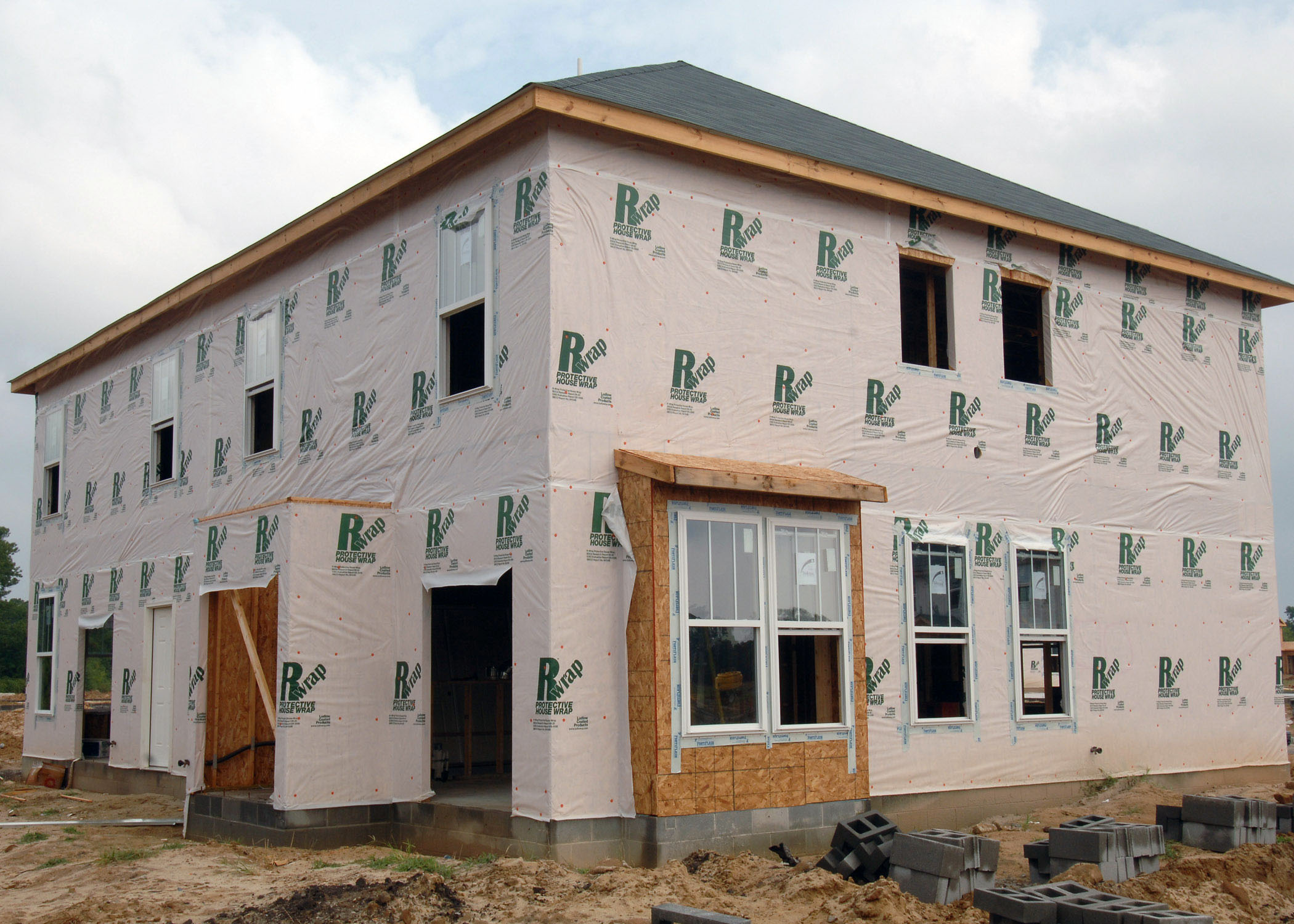
Unlocking Housing Supply is Only the First Step. The Real Opportunity Lies in What, Where, and How We Build.
Housing in America is expensive, and there isn’t enough of it in the places people want to live. The resulting competition among renters and buyers drives up home prices and rents, widening the gap between what people earn and what it costs to keep a roof overhead. Today, roughly 750,000 people are homeless. Teachers, healthcare providers, first responders, and other critical workers are increasingly priced out of the communities they serve, while homeownership — long a primary pathway to building wealth — drifts further out of reach.
Decades of underproduction have led to today’s housing shortage and high home prices and rents. The housing shortage is currently estimated at about 4 million homes; we’ll need to build at least 14 million over the next decade to close this gap and meet additional demand. In our Civic Research Agenda published earlier this year, we at the Federation of American Scientists (FAS) found that tackling the structural, market, and policy factors that most strongly drive housing affordability and shape economic mobility for individuals and families is a top priority for cities and counties across the country.
Fortunately, policymakers are taking notice. Between July 2024 and July 2025, state and local governments passed 124 housing bills across 33 states aimed at increasing housing production – at improving legacy approaches to land use, slow approvals, outdated regulations, and other systemic barriers that have constrained housing for too long. At the federal level, the recently enacted 21st Century ROAD to Housing Act similarly intends to boost supply.
Once these strangleholds loosen, opportunities for ingenuity in housing abound. But it’s not a guarantee that the housing policies that governments enact will be the best policies for getting homes built at the scale, speed, and prices we need. And depending on how we proceed, we may also leave major benefits on the table.
Housing as a force multiplier
A new report from the Housing Multiplier Project and the FAS Center for Regulatory Ingenuity lays out the most impactful policies to stimulate housing production and how these policies can make housing a force multiplier for progress. Recent bipartisan housing reforms share a throughline: They remove the restrictions and barriers that create artificial housing scarcity. Yet as the report points out, unlocking housing supply is only the first step. The best policies recognize how housing connects to other domains.
America’s affordability problem, for instance, is bigger than home prices and rents. How we build affects household costs like insurance and utilities. In Alabama, fortified roofs and stronger building codes are helping bolster the insurance market for new and existing homes alike, while making homes far safer. In Vermont – a state where manufactured homes typically burn expensive fuel oil or propane for heating, new superefficient manufactured homes can cut annual energy bills by about $2,700 per year compared to existing stock. Across the country, building more efficiently can provide relief for the 80 million people struggling to pay their energy bills, while protecting people from the escalating threat of extreme heat.
Where we build influences affordability as well. Pew finds that homes built in established neighborhoods rather than on greenfields save taxpayers an average of $21,000 per home in roads, water, sewer, and utility infrastructure and up to 50% in ongoing maintenance. More new homes near jobs and services also save an average of $700 per person per year in fuel and vehicle costs through shorter commutes and fewer miles driven.
Much undeveloped land is also in areas, such as floodplains or the wildland-urban interface, that are becoming increasingly risky. Disasters – hurricanes, floods, fires – destroy the equivalent of one month’s worth of new home construction in the United States every year. What’s the point of building new homes if those homes are just going to get flattened? Even homes left standing are facing rising insurance costs that simply don’t pencil for most people.
It’s not enough to just build. We must build for benefits. While the systems are complex, the agenda is simple: We need more of the right homes in the right locations, at the lowest costs. The evidence overwhelmingly shows that the following principles should guide where, what, and how we build:
- Where: homes in connected, lower-hazard established neighborhoods with access to jobs and services.
- What: home types that more people can afford, including accessory dwelling units (ADUs), townhomes, duplexes, fourplexes, sixplexes, apartments, single-family starter homes, and manufactured homes.
- How: homes that are better able to withstand disaster, have lower utility costs, reduce pollution, and strengthen the grid rather than strain it.
In some cases, this means new construction; in others, it means repurposing non-residential buildings or adding more units within existing housing. In urban areas, the best opportunities for housing may be near transit and robust public infrastructure; In rural areas, direct proximity to jobs, schools, and other routine needs of daily living may be bigger priorities.
Regardless of geography, the underlying principles remain the same. Ingenuity in housing policy can expand supply and lower costs across the board while simultaneously strengthening resilience and insurance markets; improving state and local fiscal health; protecting open and working lands; lowering energy costs; increasing grid reliability; and reducing emissions by at least 70 million tons per year – equivalent to half the country buying electric vehicles by 2035.
But the full emissions and economic opportunity is even larger. Strategic housing reforms position homes as critical energy infrastructure – they put in motion a built environment that strengthens the grid, optimizes clean energy, and serves as the backbone of the energy transition. Every new home that is built to be grid-interactive, efficient, and with low embodied carbon materials compounds emissions savings, while lowering household utility bills, easing strain on a congested grid, reducing the need for new fossil fuel peaker plants, and maximizing the use of clean energy on the grid. Paired with utility reforms like heat-pump-friendly rates and virtual power plant infrastructure, this can cut utility costs and emissions dramatically by reshaping how tens of millions of new and existing homes are heated and cooled, while easing peak loads on the grid. More homes also feed a positive feedback loop that cuts transportation costs and emissions: more people justify better transit, sidewalks, and bike infrastructure, which further reduces hours spent in the car.
Putting the principles to work
The report focuses on six tactics that localities and states can adopt with limited public dollars to solve the housing shortage faster, more cost-effectively, and with greater benefits to households and communities. They create the conditions for private and public capital to flow faster and more efficiently into homebuilding. These tactics are:
- Cut red tape specifically to allow homes of all shapes and sizes in connected, lower-hazard established neighborhoods.
- Put public land in lower-hazard established neighborhoods to work.
- Simplify public financing so dollars for income-restricted housing and starter homes go further.
- Make disaster-prepared construction the norm.
- Build lower utility costs into new homes from the start and make homes critical energy infrastructure.
- Align utility reforms with housing affordability and grid reliability.
When implemented as a package, these tactics can increase housing production quickly, affordably, and at the scale our current shortage demands. In Colorado, integrated housing reforms aligned with these tactics have legalized more housing of all shapes and sizes and at all budgets in established neighborhoods; strengthened wildfire standards; reformed insurance standards; incentivized efficient, electric construction; developed a new low energy and carbon code; and enabled virtual power plants and fairer electric rates.
In Montana, conservatives who saw overregulation and progressives who saw an affordability emergency converged on the same solution: legalize more homes. The reform package they designed and adopted dismantled regulatory barriers across the board: rewriting local planning procedures; allowing duplex, triplex, and fourplex housing and ADUs as-of-right in single-family zones; legalizing larger apartment buildings in commercial zones and buildings up to six stories; enacting single-stair reforms; capping parking mandates; and making it easier to build manufactured housing.
The window for this work is open now. The pro-homes movement has momentum across regions and parties. The task ahead is to convert that momentum into law and executive actions, improving both housing policy design and implementation in ways that deliver tangible, immediate benefits for Americans (e.g., more affordable and desirable homes) while also making progress on higher-order societal goals (e.g., stabilizing insurance markets and driving down emissions). If we get this right, we won’t just solve a housing shortage. We’ll strengthen the fabric of our nation.
Colorado ranks second-to-last in housing affordability. Blame Colorado’s notoriously slow permitting system. It’s time for an upgrade.
The Department of Housing and Urban Development (HUD), Department of Commerce, and Department of Transportation should jointly develop and manage a data resource—a Housing Production Dashboard—to track housing production within and across states.
The U.S. should establish a national housing loss rate to stand alongside the national unemployment rate as a key indicator of social and economic well-being.
We propose that the federal government use highway funding as a legal mechanism to force states to adopt zoning reform.