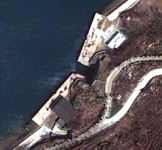
 A long-rumored but never before seen Chinese underground submarine base is shown for the first time in a new article written by analysts from the Federation of American Scientists and Natural Resources Defense Council. The article, published in Imaging Notes, shows newly acquired satellite images of the submarine base, three air bases, and China’s nuclear weapons lab at Mianyang.
A front page article in Washington Times was headlined “Commercial photos show Chinese nuke buildup,” but both the cave and submarines have existed for nearly three decades. Only now, thanks to commercial satellites, can the public see them.
The Imaging Notes article is a snapshot from a larger FAS/NRDC report on US-Chinese nuclear relations scheduled for publication later this spring.
More: Article in Imaging Notes | Analysis and background
It is difficult to assess from photos whether the Sentinel missile is longer or wider overall than the Minuteman, but the Sentinel clearly has a thicker second stage, which could potentially contribute to the missile’s extended range.
This is not the first time Google has agreed to censor imagery at the behest of governments, but be warned: obfuscation at this broad level poses a direct threat to the public’s ability to monitor and scrutinize government operations.
As humans expand our geographic reach, encroach on untouched natural territories, and interact more with animal populations, we will encounter novel zoonotic diseases that threaten the human body. The sooner we act to address these risks, the better.
“One thing became increasingly clear: AI doesn’t simply introduce a new category of risk. It changes the speed, scale, complexity, and interaction of risks that already exist.”