FAS Center for Regulatory Ingenuity and ICLEI USA Launch Local Advisory Council to Build More Connected National Climate Policy
Washington, D.C. – September 2, 2026 From cheaper housing to more reliable energy, people across the nation are clamoring for solutions that make their lives better. The FAS Center for Regulatory Ingenuity (CRI) is building a new, transpartisan vision of government that works – that achieves ambitious goals while adeptly responding to people’s basic, everyday needs.
To further that mission, FAS has partnered with ICLEI USA – the nation’s first and largest local government network dedicated to helping communities achieve their climate and sustainability goals – to launch the CRI Local Advisory Council.
The CRI Local Advisory Council brings together a diverse cohort of leaders with working knowledge and practical experience in energy, housing, and transportation policy or implementation across local governments. Council members will help CRI strengthen connectivity between the federal and local levels by providing expert thought leadership and policy guidance, engaging in cross-sector convenings, and working together with federal counterparts to build creative, ambitious, and functional climate policy at all levels of government. Members will serve one-year terms.
The inaugural Council members are:
- Pam Adams, Regional Planning Director, Centre Region Council of Governments, PA
- Ryan Freed, Climate Action Officer, City of Alexandria, VA
- Amanda Graor, Chief Innovation Officer and Director of Data and Digital Services, Mid-America Regional Council, KS & MO
- Charlotte Lin, Sustainability Manager, Avon, CO
- Kacey Lizon, Deputy Executive Director of Programs, Sacramento Area Council of Governments, CA
- Wilfred Mbah, Councilmember, City of Somerville, MA
- Patrick McGuire, Director of Civic Innovation, City of South Bend, IN
- Emmett Pepper, Councilmember, City of Charleston, WV
- Ryan Schuchard, Councilmember, City of Boulder, CO
- Micki Varney, Councilmember, City of Salem, OR
“Strong climate policy depends on strong connections between the people shaping policy and the communities putting it into practice. By bringing local leaders into the conversation, we can build interconnected solutions that reflect the realities and needs of communities across the country,” says Saharnaz Mirzazad, CEO of ICLEI USA.
FAS CRI leads Hannah Safford and Loren Schulman agree.
“Policymakers and advocates in Washington, D.C. tend to spend too much time talking to each other, rather than people across the country who are on the front lines of climate impacts and climate solutions,” says Dr. Hannah Safford, FAS Associate Director of Climate and Environment. “To write the next chapter of climate policy, federally oriented folks will have to turn their perspectives outwards – and be willing to hand the pen to local partners.”
“Good government isn’t just about drafting the right policy, but also about building the muscle to actually deliver. The local leaders who show up every day to decide where to build new energy projects or keep communities cool during a heat wave are vital resources for designing solutions that meet people’s needs,” says Loren Schulman, FAS Director of Government Capacity.
Earlier this year, FAS CRI published a series of whitepapers, focused on core principles of the next era of federal policy implementation and design. This Council leverages local expertise to complement and strengthen the principles outlined in those whitepapers, continuing to build cross-government coalitions in support of more durable and democratic climate solutions nationwide.
To learn more about CRI, click here or contact Zoë Brouns (zbrouns@fas.org).
To learn more about ICLEI USA, click here or contact Alyssa Wilbur (alyssa.wilbur@iclei.org).
Federation of American Scientists (FAS)
The Federation of American Scientists (FAS) works to advance progress on a broad suite of contemporary issues where science, technology, and innovation policy can deliver transformative impact, and seeks to ensure that scientific and technical expertise have a seat at the policymaking table. Established in 1945, FAS continues to bring scientific rigor and analysis to address national challenges. More information about FAS’s work at fas.org.
ICLEI USA
Since 1991, ICLEI – Local Governments for Sustainability USA (ICLEI USA) has led the nation’s largest network of local governments committed to sustainability and climate action. We are an independent 501(c)(3) nonprofit, founded in Massachusetts and headquartered in Denver, with staff working in communities across the country. As an affiliate office of the global ICLEI network, we connect to more than 2,500 local and regional governments in 125+ countries.
Led by and for local governments, we meet communities where they are and provide the tools, expertise, and peer connections they need to advance their climate and sustainability work forward.
Meet the FAS CRI + ICLEI USA Local Advisory Council
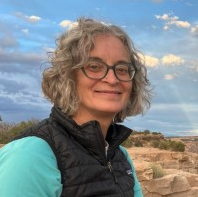 | Pam Adams, Regional Planning Director, Centre Region Council of Governments, State College, PA Pam Adams has 18 years of experience in local government, specializing in regional planning, climate action, and collaborative implementation. She has led community-wide climate planning, regional energy initiatives, and the integration of land use, transportation, housing, and sustainability through the Centre Region Comprehensive Plan. She holds a B.S. in Industrial Engineering from Penn State University. |
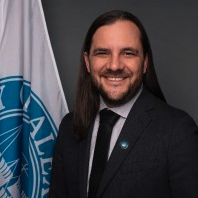 | Ryan Freed, Climate Action Officer, City of Alexandria, VA Ryan Freed serves as the Climate Action Officer for the City of Alexandria, Virginia, leading municipal efforts to advance sustainability, reduce emissions, and implement local environmental policies. Prior to joining the city, he served as the Senior Director for Policy and Programs at the Institute for Market Transformation (IMT), where he focused on building decarbonization and energy efficiency solutions. In his role with Alexandria’s Office of Climate Action, Freed oversees the implementation of the city’s Environmental Action Plan and Energy & Climate Change Action Plan while advocating for residents in regional utility rate interventions and sustainability initiatives. |
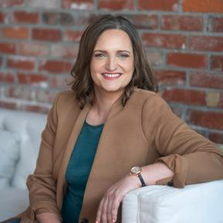 | Amanda Graor, Chief Innovation Officer and Director of Data and Digital Services, Mid-America Regional Council (MARC), KS & MO Amanda Graor has been with MARC for over 18 years with work areas over time including air quality, workforce transportation, energy policy and climate strategy. Amanda also spent time as an Economic Mobility Policy Fellow with the Center for Applied Public Research at Johns Hopkins University and is an advisor to the Evidence for Policy fellows through Stanford Impact Labs. She holds a bachelor’s degree in Earth System Science and Engineering from the University of Michigan, a master’s degree in Public Administration from the University of Kansas and a certificate in infographics and data visualization from Parsons School of Design. |
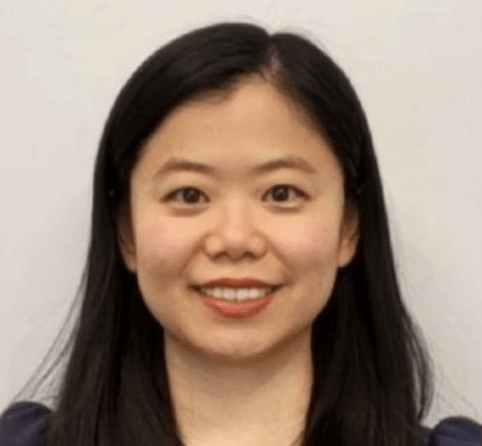 | Charlotte Lin, Sustainability Manager, Avon, CO A former Arctic climate ecologist with international experiences in communications and behavioral science, Charlotte Lin is currently overseeing the implementation of Eagle County’s Climate Action Plan in Avon, Colorado. She’s also completing a Doctorate of Business Administration at the University of Michigan, Flint, on regulatory policies and infrastructure investment in the electricity sector. |
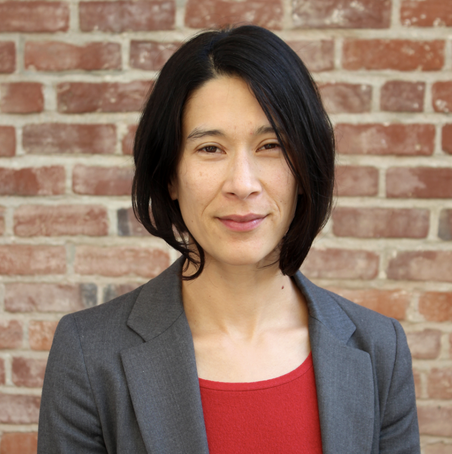 | Kacey Lizon, Deputy Executive Director of Programs, Sacramento Area Council of Governments (SACOG), CA In her role with the Sacramento Area Council of Governments, which serves the 22 cities and six counties of the Sacramento region, Kacey Lizon oversees integration of SACOG’s planning, funding, and technical assistance programs. During her 20+ year tenure at SACOG, Kacey has played an instrumental role in innovations in bottom-up regional planning, which has taken her deep into topics of land use, housing, transportation, transit-oriented development, public engagement, environmental and rural planning. |
 | Wilfred Mbah, Councilmember, City of Somerville, MA Wilfred N. Mbah is an environmental advocate, public servant, and progressive leader based in Massachusetts. Originally from Cameroon, he earned a master’s degree in Sweden before immigrating to the U.S., where he serves as a City Councilor At-Large and Vice President of the Somerville City Council. Focusing his work on affordable housing, climate action, and social equity, Mbah has also served as a Democratic candidate for State Representative in the 34th Middlesex District and works as a Non-Resident Tutor in Humanities and Social Studies at Harvard University’s Quincy House. |
 | Patrick McGuire, Director of Civic Innovation, City of South Bend, IN Patrick McGuire serves as the Director of Civic Innovation for the City of South Bend, Indiana, leading citywide initiatives to integrate technology, data, and research into municipal operations. Drawing on his experience as an enFocus Fellow advancing local digital equity, Patrick now oversees smart city developments, including AI-assisted 311 services and private LTE networks for local schools, while partnering with academic institutions and community leaders to drive equitable civic engagement. |
 | Emmett Pepper, Councilmember, City of Charleston, WV Emmett Pepper serves as an at-large member of the Charleston City Council in West Virginia, a position he has held since his appointment in November 2021. Raised in Charleston, Pepper graduated from George Washington High School before earning a Bachelor’s degree in Political Science from Virginia Tech in 2000 and a Juris Doctor from American University Washington College of Law in 2012. Outside of his public service, he is a practicing attorney specializing in consumer law and bankruptcy at the law firm Pepper & Nason. He also works extensively with Energy Efficient West Virginia, helping promote policy solutions for affordable utility rates and local sustainability. |
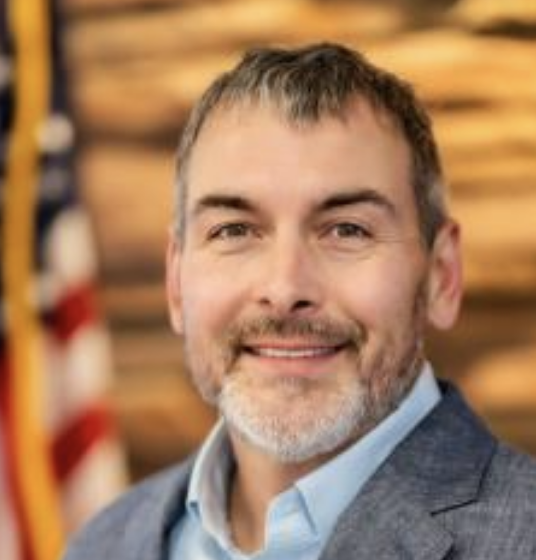 | Ryan Schuchard, Councilmember, City of Boulder, CO Ryan Schuchard serves as a member of the Boulder City Council, having been elected to office to champion climate action, sustainable transportation, and affordable housing. Drawing on over two decades of professional experience in climate strategy, supply chain sustainability, and clean mobility, Schuchard leads initiatives designed to accelerate local environmental solutions and build resilient community infrastructure. Prior to joining the council, he worked extensively with sustainability-focused organizations and corporate advisories, specializing in decarbonization strategies, zero-emission transportation programs, and local policy frameworks aimed at reducing emissions and improving quality of life across Boulder. |
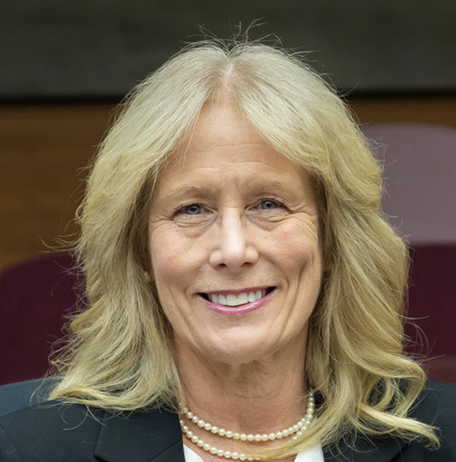 | Micki Varney, Councilmember, City of Salem, OR Councilmember Micki Varney is a 33-year salmon research biologist who built a reputation for solving hard problems by devising new tools and methods to collect and analyze data to increase Pacific Salmon survival and recruitment into fisheries. She served as Oregon’s representative on a standing committee of the US/Canada Pacific Salmon Commission, and her commitment to environmental stewardship dates back to the first Earth Day in 1970, when, at the age of 10, she organized a group of classmates to go pick up litter along the road each week. She chairs Salem’s Climate Action Plan Committee and serves on the League of Oregon Cities’ Energy & Environment Policy Committee, bringing a scientist’s insistence on data and independent verification to municipal climate, housing, and transportation policy. |
FAS is launching the Center for Regulatory Ingenuity (CRI) to build a new, transpartisan vision of government that works – that has the capacity to achieve ambitious goals while adeptly responding to people’s basic needs.
The American administrative state, since its modern creation out of the New Deal and the post-WWII order, has proven that it can do great things. But it needs some reinvention first.
Remaining globally competitive on critical clean technologies requires far more than pointing out that individual electric cars and rooftop solar panels might produce consumer savings.
Rebuilding public participation starts with something simple — treating the public not as a problem to manage, but as a source of ingenuity government cannot function without.