Expand the Fair Housing Initiatives Program to Enforce Federal and State Housing Supply and Affordability Laws
The U.S. Department of Housing and Urban Development’s (HUD) forthcoming Affirmatively Furthering Fair Housing (AFFH) final rule and a recent wave of state housing affordability legislation create mechanisms to substantially increase the nation’s affordable housing supply. However, because local noncompliance with these laws poses a crucial obstacle, successful implementation will require robust enforcement. To ensure local governments’ full compliance with AFFH and state housing affordability legislation, Congress and HUD should expand the Fair Housing Initiatives Program (FHIP) to fund external enforcement organizations.
FHIP is a model for enforcement of complementary federal and state housing laws. A “necessary component” of fair housing enforcement, FHIP funds local nonprofit organizations to investigate and raise legal complaints of discrimination in their communities under the Fair Housing Act. FHIP grantees play a “vital role” in Fair Housing Act enforcement because FHIP-initiated civil actions and complaints to enforcement agencies are more likely to be properly filed and successfully resolved.
FHIP should be expanded to enforce a new generation of federal and state laws that promote housing supply and affordability but are at risk of insufficient enforcement. AFFH will require localities to implement equity plans that reduce residential segregation and increase access to affordable housing in high opportunity areas. HUD is empowered to withhold substantial streams of federal funding from noncompliant jurisdictions. Nonetheless, HUD poorly enforced AFFH’s previous iterations, leading to calls for “external, relatively independent” enforcement mechanisms. At the state level, a raft of recent legislation overrides local exclusionary zoning and streamlines local housing development permitting processes. However, many localities have demonstrated fierce resistance to these state laws with efforts designed to avoid compliance, including constitutional challenges, declarations of entire towns as “mountain lion sanctuar[ies],” and proposals to give up public infrastructure. Understaffed state agencies may be strained to strictly enforce such laws against hundreds of statewide localities.
As independent community institutions with extensive legal expertise in the housing field, FHIP grantees are well situated to tailor innovative enforcement of the emerging housing supply and affordability regime to their communities. Grantees could build on their administrative expertise by filing complaints to HUD under §5.170 of the proposed AFFH rule. In addition, grantees could initiate civil actions under state laws and the federal False Claims and Fair Housing Acts against jurisdictions that shirk their housing obligations. Grantees might also use their expertise to educate local policymakers and stakeholders on their responsibilities under emerging laws.
Congress should:
- Amend the Fair Housing Initiatives Program’s authorizing statute (42 U.S.C. 3616a) to permit the allocation of grants to fair housing enforcement organizations for enforcement of relevant state and local housing supply and affordability laws, as determined by HUD.
HUD should:
- Amend the Fair Housing Initiatives Program regulations (24 C.F.R. 125) to add a new Affirmatively Furthering Fair Housing Enforcement Initiative (AFFH-EI). The initiative would fund fair housing enforcement organizations to enforce localities’ obligations under AFFH.
- Promulgate administrative guidance and administer technical assistance to AFFH-EI grantees to specify how funds should be used. Grantees should investigate local compliance with AFFH, raise administrative complaints of noncompliance, and pursue affirmative litigation against noncompliant jurisdictions under the Fair Housing Act, False Claims Act, and other relevant federal and state statutes.
If successfully implemented, an expanded FHIP would support the full enforcement of the forthcoming AFFH final rule and recent state housing supply and affordability legislation by bringing administrative complaints to HUD and state agencies, initiating civil enforcement actions, and educating local stakeholders. Indeed, these FHIP grantees would hold local governments accountable to their duties to equitably plan for, and remove legal barriers to, the development of affordable housing in high opportunity areas for all.
This idea of merit originated from our Housing Ideas Challenge, in partnership with Learning Collider, National Zoning Atlas, and Cornell’s Legal Constructs Lab. Find additional ideas to address the housing shortage here.
How A Defunct Policy Is Still Impacting 11 Million People 90 Years Later
Have you ever noticed a lack of tree cover in certain areas of a city? Have you ever visited a city and been advised to avoid certain districts or communities? Perhaps you even recall these visual shifts occurring immediately after crossing a particular road or highway?
If so, what you experienced was likely by design:
In the early 20th century, Black communities across the U.S. were subjected to economic constraint and social isolation through housing policies that mandated segregation. Black communities were systematically excluded from the housing benefits offered by President Franklin D. Roosevelt’s New Deal and Homeowners’ Loan Corporation (HOLC). The HOLC served as the basis of the National Housing Act of 1934, which ratified the Federal Housing Authority (FHA).
Housing policy discrimination was further exacerbated by the FHA refusing to insure mortgages near and within Black neighborhoods. The HOLC provided lenders with maps that circled areas with sizeable black populations with red markers—a practice now referred to as redlining. While the systematic practice of redlining ended in 1968 under The Fair Housing Act of 1968, redlining continues to economically impair over 11 million Americans—and less than half are Black.
You are probably thinking (1) how is this possible? (2) How could a defunct 20th-century policy designed to discriminate against Black communities still impact over 11 million—mostly non-Black—Americans today? The answer is the same for both questions: place-based discrimination.
Policies such as redlining are designed to worsen the material conditions of a target group by preventing investment in the places where they live. Over time, this results in physical locations that are systemically denied access to features such as loans, enterprise, and ecosystem services simply due to their location or place. Place-based discrimination is the principal mechanism of redlining effects, and consequently, costs taxpayers millions of dollars per year.
What is the problem?
Starting in the 1990s, during the Clinton Administration, billions of dollars in tax credits were devoted towards community development and economic growth through the use of special tax credits that attract private investments (Table 1). One of the principal agents from this funding to address place-based discrimination was the creation of Community Development Entities (CDEs). According to the New Markets Tax Credit Coalition, CDEs are private entities that have “demonstrated” an interest in serving or providing capital to low-income- communities (LICs) and individuals (LIIs). Once certified, CDEs are eligible to apply for a special tax credit, New Markets Tax Credit (NMTC), through the Community Development Financial Institution (CDFI) Fund.
However, this program, and others like it, have had a negligible impact on addressing the systemic implications of redlining . A recent Urban Institute report found that inequity in capital flow and investment trends within cities (i.e., Chicago) is driven by residential lending patterns. Highlighting the inequalities that exist between investment among neighborhoods with different racial and income demographics, the analysts surmise that redressing economic downturn involves expanding investments into divested neighborhoods. To date, more than $71 billion have been awarded to CDE’s, and yet, historically-redlined areas remain economically desolate. If these programs are intended to economically revitalize historically-redlined areas, then these programs are not doing what they are supposed to do.
One example of this is the city of Philadelphia:
Philadelphia, a city in the top ten for redlined populations, possesses tens of thousands of vacant buildings and lots that are overlaid by redlining and riddled with brownfield sites. According to the Philadelphia Office of the Controller, historically redlined communities of Philadelphia continue to experience disproportionate amounts of poverty, poor health outcomes, limited educational attainment, unemployment, and violent crime compared to non-redlined areas in the city.
By analyzing HOLC assessment grades (1937) and New Market Tax Credit (NMTC) Program Eligibility (i.e., PolicyMap, projects from 2015-2019) for Philadelphia, PA, I found that of the 30+ Qualified Low-Income Community Investments (QLICIs) in historically-redlined areas, totaling over $400 million in tax credits, none are categorized as Community Development Entities (CDEs).
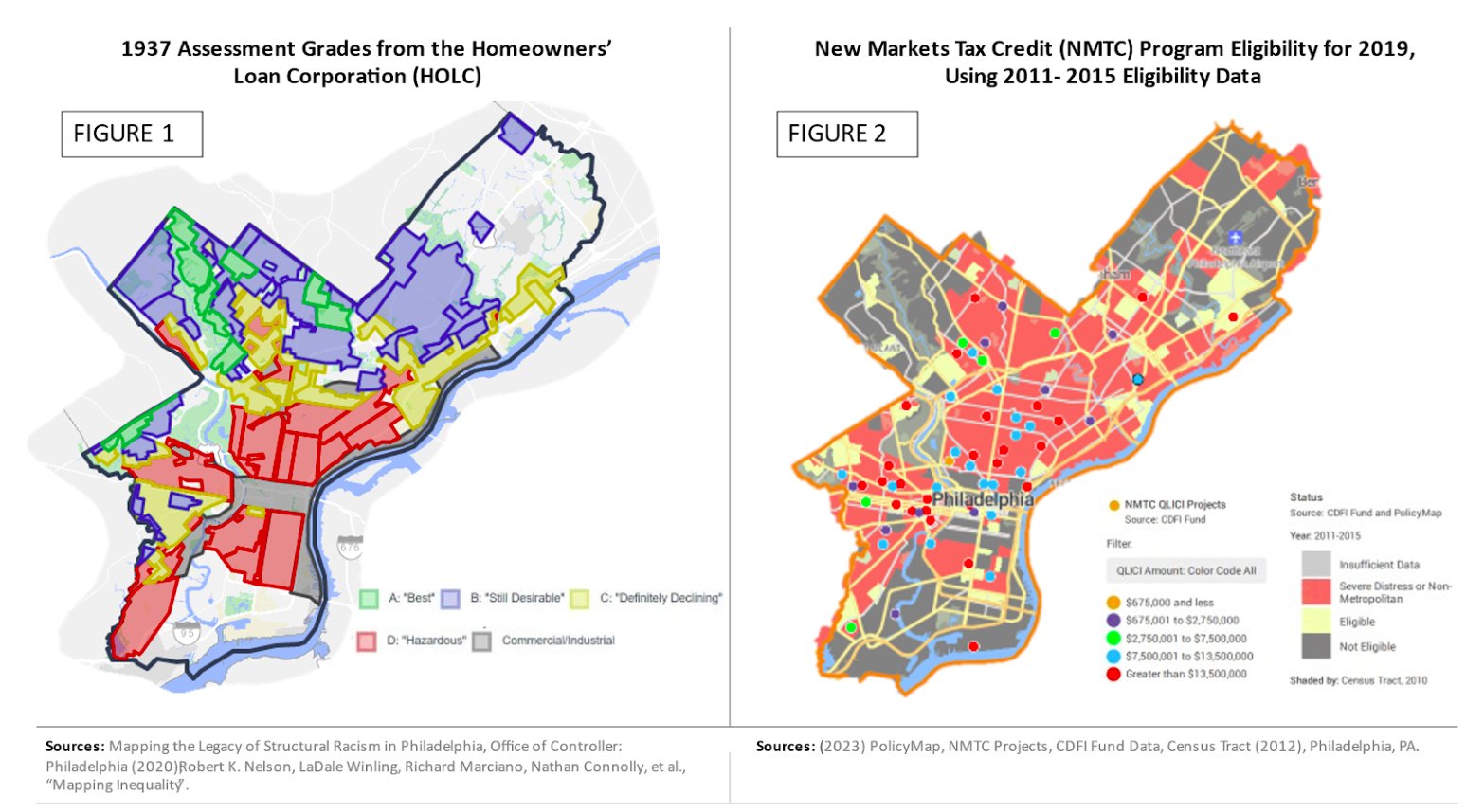
HOLC assessment grades (1937) vs. New Market Tax Credit (NMTC) Program Eligibility
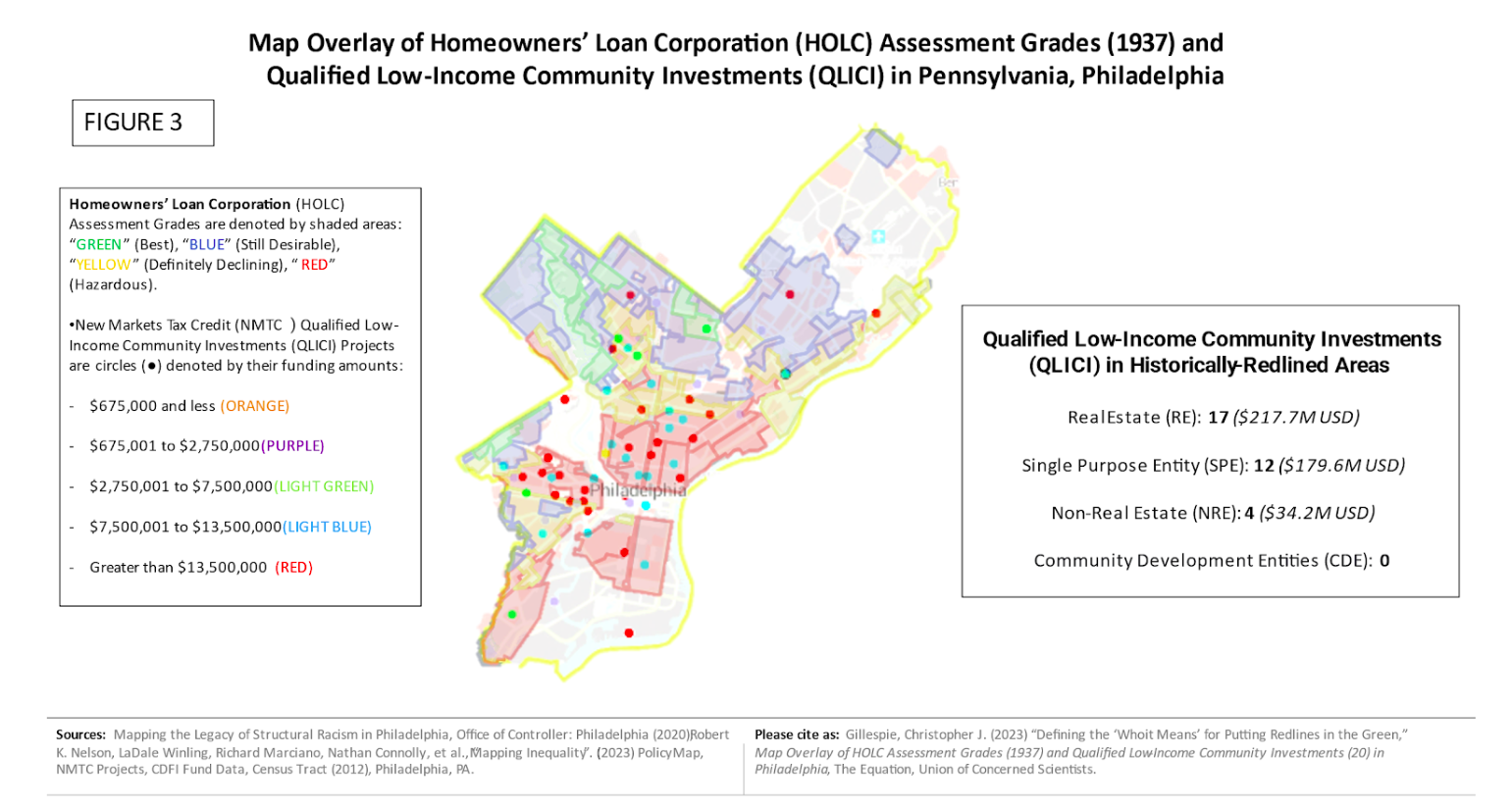
Of the 30+ Qualified Low-Income Community Investments (QLICIs) in historically-redlined areas, totaling over $400 million in tax credits, none are categorized as Community Development Entities (CDEs).
Meanwhile, the Philadelphia City Council just passed a budget that allocates a record $788 million to the Philadelphia Police Department (PPD). Recent studies show that fatal encounters with police are more likely to occur within historically-redlined areas. It appears the nicest buildings in redlined areas may very well be police stations.
Yet, public investment has been more concerned with maintaining systems of oppression than reversing them. Why continue to invest in systems that do not create wealth? No matter your perception of American policing, the following is clear: policing does not create wealth for distressed communities.
Currently, there are 200+ cities and thousands of communities that are, like Philadelphia, enduring the systemic implications of redlining.
What would happen if public investments were allocated towards restorative policy actions within historically-redlined areas?
A federal program that amalgamates the best elements of community-driven inventiveness into a vehicle for innovative and sustainable economic development. That is, a program that promotes economic revitalization of historically-redlined communities through multipurpose, community-owned enterprises called Innovative Neighborhood Markets (INMs).
What is the policy action?
One thing that urban policy initiatives have made clear, is that distressed communities are prime real-estate targets for private developers . A new federal effort could ensure that investment opportunities are also accessible to community members seeking to launch place-based businesses and enterprises. Businesses and enterprises of this sort will not only reduce urban blight in historically-redlined communities, but also serve as avenues for the direct state, local, and private investment needed to address historical inequities.
The Biden-Harris Administration can combat redlining through a placed-based community investment program, coined Putting Redlines in the Green: Economic Revitalization Through Innovative Neighborhood Markets (PRITG), that affords historically-redlined communities the ability to establish their own profitable enterprise before outside parties (i.e., private developers).
These Innovative Neighborhood Markets (INMs) would be resource hubs that provide affordable grocery items (i.e., fresh produce, meats, dairy, etc.); an outlet for residents of the community to market goods and services (i.e., small businesses); and create cross-sector initiatives that build community enterprise and increase greenspace (i.e., Farm to Neighborhood Model [F2NM], parks, gardens, and tree cover). Most importantly, INM’s are community owned. Through community governance, the community elects and authorizes the types of place-based businesses and enterprises that are present within their INM.
Do you remember the Philadelphia example from earlier?
Under PTRIG, a number of those underutilized structures or vacant spaces are transformed into a vested, profitable, and sustainable community resource. The majority of the financial capital remains within the community, and economic gains are partially earmarked for community revitalization (i.e., soil remediation for brownfield sites, community restoration, and construction of greenspace).
All Taxpayers Benefit
By legally and financially empowering communities with ownership, PRITG will incentivize investment and development that can actually reduce taxpayer liability. For example, the INM can generate the funding to invest in more attractive (and expensive) treecover and landscaping that will reduce the impact of heat islands and imperviousness related to redlining, thereby reducing taxpayer liability by more than $308 million dollars per year. Implementation of PTRIG will decrease taxpayer burden through profit-driven and self-supporting community services.
“Fair and Equal” Access
Another beneficial aspect of this policy involves increasing community access to financial provisions without third-party obstacles (i.e., CDEs and CDFIs). Black and Hispanic home loan applicants are charged higher interest rates than White home loan applicants, resulting in Black and Hispanic borrowers paying $765 million in additional interest per year. Discriminatory practices only succeed in worsening community divestment and increasing the resident displacement which disproportionately impact minority residents. Through the economic-agency provided by PRITG, historically-redlined communities would have heightened protection against lending discrimination, gentrification, and displacement.
Moreover, PTRIG would reinforce the Consumer Financial Protection Bureau (CFPB) and the Office of the Comptroller of the Currency (OCC)’s Combating Redlining Initiative in ensuring that formerly redlined neighborhoods receive “fair and equal access” to the lending opportunities that are—and always have been—available to non-redlined, and majority-White, neighborhoods.
While INMs possess aspects of grocery stores, community banks, business improvement districts (BIDs), and farmers markets, they would differ in one particular area: community wealth.
What is Community Wealth?
As someone who grew up in Champaign, Illinois (Douglas Park), and whose family currently lives in a historically-redlined community (Lansing, MI), it brings me peace to reimagine my community with an INM.
Until my early 20’s, I spent most of my life largely unaware of the importance of community wealth on individual empowerment and its impact on the maintenance of cultural identity. For me, reimagining my community with an INM is not just about correcting the past, it is about enriching the uniqueness of what makes our home, Home.
In general, a community wealth building process needs to address the lack of an asset in a way that builds community sustainability. That is the materialization of a communal epicenter(s) that produces a sense of ownership and pride.
So how would INMs build community wealth? Simple. The community, as a whole, would be defined as the ownership group. Each community member would be legally referenced as a shareholder of this newly acquired, financially-appreciating, community-owned enterprise.
Community Ownership Key to Community Wealth
According to Evan Absher, Chief Executive Officer at Folks Capital, there are currently two broad ways of understanding community ownership.
The first type involves community ownership in the form of trusts or fiduciary arrangements between a community entity and an independent financial establishment. This structure creates a community entity that holds the financial wealth and is subject to some form of community governance. This structure includes entities such as Community Investment Trusts, Community Land Trusts, and Mixed-Income Neighborhood Trust. These structures ensure permanent and lasting control of the land and fidelity to charitable purposes. However, these entities often do not increase actual ownership or produce meaningful wealth at the individual or family levels. Further, they are often nonprofits and can struggle with attracting capital and sustainability.
The second type of community ownership is specifically targeted at individuals and families. These are models that focus on financial agency and ownership of land and property by people within communities. This concept includes models such as employee-ownership, Co-operatives, ROC-USA’s model, and Folks Capital’s Neighborhood Equity Model. These models have an advantage in wealth building and agency for the families involved. The benefit of this second concept of community ownership is that community members have the autonomy to (1) choose to sell their ownership share back to the community fund; (2) receive pro rata (dividend) payments; and/or (3) if the community chooses, sell the enterprise to “would-be gentrifiers.”
Regardless, the community receives more empowerment than was ever offered by previous economic revitalization models (i.e., Opportunity Zones) [See Table 1]. However these models sometimes lack the permanence or control of the other models. If not structured thoughtfully, this lack of control poses a risk of further gentrification.
Regardless of the approach, all models should seek first to center communities and people in the governance and benefits of the model. Institutionalizing models is not the objective. Closing the wealth gap and ending disparities in economic, health, and education outcomes are the ultimate goal.
However, an important question is raised by this policy: who counts as community—especially when talking about the ownership of an individual building?
Are multiple communities expected to be consolidated into one community for the sake of ease? Would that be fair to those communities?
The challenge is making ownership meaningful. Understandably, a resident may possess more pride if their stake in an INM is $1000 opposed to 20 cents.
Thus, communities that are smaller in size may be most benefited by the establishment of an INM. This is not to say that large historically-redlined areas do not stand to gain from INM establishment. Quite the contrary. INMs are designed to not only enfranchise the local communities , but also revitalize the place through restorative, economic, and environmental justice.
Nevertheless, if PTRIG is to provide communities with tools that guarantee full community empowerment, then factors of community ownership should be considered.
Now, one final question remains, and it can only be answered by those within historically-redlined communities: “Who is your community?”
We need to address the housing supply crisis
Housing costs have ballooned, far outpacing the broader cost of living in the U.S. Renters devote more and more of their already limited budget to housing costs and home ownership feels out of reach for many Americans. One key reason for this is the dwindling housing supply across the US.
Addressing the housing crisis is a bipartisan issue. Officials at all levels of government want to ensure that the communities and families they represent have a chance to feel secure in their own home and future. FAS launched our housing policy challenge to uplift ideas that can tackle the crisis and boost housing supply across the country.
The causes of the housing supply crisis are many. Local regulations against density are the main barrier, but there are a host of other important factors. To list a few:
- the difficulties of constructing and organizing public transit systems,
- incentive misalignment for project developers,
- a scarcity of available land in urban areas,
- underfunding of public housing resources,
- lack of access to financing options,
- supply being snatched up by large institutional investors,
- a lack of support for novel arrangements like ADUs and manufactured homes,
- the persistent effects of redlining, and many more.
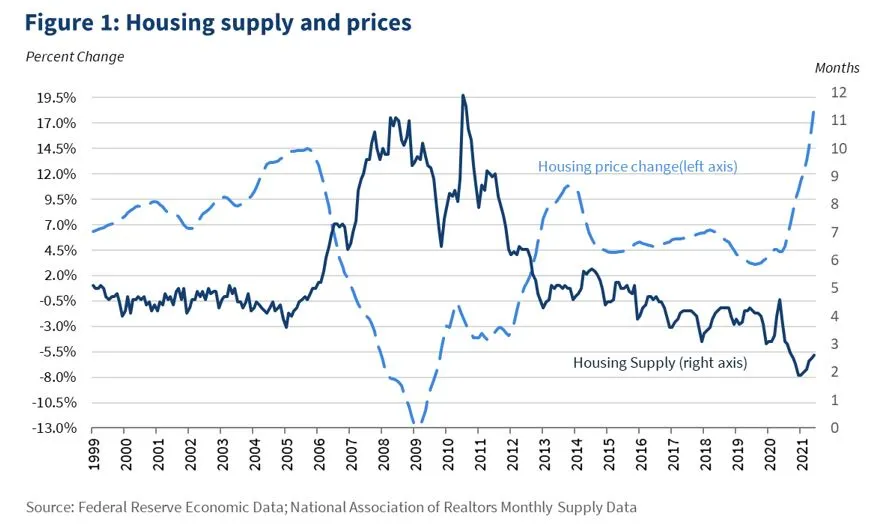
These challenges to home supply are some of the areas where creative policy thinking could have a meaningful impact. We think the federal government is poised to do more on this issue, and that bipartisan agreement is possible across a range of housing policies. We’re turning to YOU—experts, non-experts, home owners, renters, and neighbors to crowdsource ideas for boosting housing supply.
Creative thinking to boost housing supply
We highlighted the main areas we’re interested in for this challenge but ultimately we’re relying on you to get creative. If you think a given overlooked policy lever could have an impact on housing supply we want to hear about it.
Here are some areas we are excited and motivated by, and there’s always more to discuss.
Construction Innovation
Construction innovation has gotten more attention in recent years. While such innovation only matters if you can build more housing in the first place, construction efficiencies will only grow in importance. Brian Potter of the Institute for Progress writes about the overlooked roles of modular housing, the rise and fall of the mail order home, and building components. Novel ideas on how best to alter restrictive building codes will also be important. The Center for Building in North America has been doing much original work on this subject.
The limited rise of Accessory Dwelling Units (ADUs) is promising, but it seems like more remains to be done to promote familiarity with the opportunity they provide. Are there ways to incentivize folks across urban areas to take advantage of ADUs?
Financing Innovation
Federal financing is another area where creative arrangements, properly designed and communicated, could massively help everyday people. The White House already sought to make Construction to Permanent loans more widely available. Efforts to reform the Low Income Housing Tax Credit (LIHTC) and improve the housing enterprises’ ‘Duty to Serve’ underserved mortgage markets are underway. What other financing needs can be met at the federal level?
Public Land Innovation
The scarcity of available land, especially in urban areas, seems like an insurmountable barrier. However, a closer accounting of public lands and facilities can reveal opportunities and assets that cities may not have realized they could take advantage of to do things like build housing or transit. The Putting Assets to Work initiative is helping cities better account for the value of their physical assets. How can we incentivize locales to assess and use their assets most efficiently?
Effective Measurement
What gets measured gets done. Ways to improve or introduce new federal data resources to measure the housing crisis are critical. There’s a wide range of datasets available from FHFA, Census Bureau, the Federal Reserve, HUD, and more agencies. Organizations like the National Low-Income Housing Center also provide key information . But are there key things like home loss rate that we’re not fully tracking?
Finally, what incentives to boost home supply are we not thinking about in any form right now? We are not looking for the federal government to get directly involved in local zoning issues; instead we want to hear about other productive paths you can help us identify to increase the national housing supply.
To submit an idea, head over to our challenge page.
Smarter Zoning for Fair Housing
Summary
Exclusionary zoning is damaging equity and inhibiting growth and opportunity in many parts of America. Though the Supreme Court struck down expressly racial zoning in 1917, many local governments persist with zoning that discriminates against low-wage families — including many families of color.1 Research shows that has connected such zoning to racial segregation, creating greater disparities in measurable outcomes.2
By contrast, real-world examples show that flexible zoning rules — rules that, for instance, that allow small groups to opt into higher housing density while bypassing veto players, or that permit some small areas to opt out of proposed zoning reforms — can promote housing fairness, supply, and sustainability. Yet bureaucratic and knowledge barriers inhibit broad implementation of such practices. To facilitate zoning reform, the Department of Housing and Urban Development should (i) draft model smarter zoning codes, (ii) fund efforts to evaluate the impact of smarter zoning practices, (iii) support smarter zoning pilot programs at the state and local levels, and (iv) coordinate with other federal programs and agencies on a whole-of-government approach to promote smarter zoning.
Challenge and Opportunity
Economists across the political spectrum agree that restrictive zoning laws banning inclusive, climate-friendly, multi-family housing have made housing less affordable, increased racial segregation and damaged the environment. Better zoning would enable fairer housing outcomes and boost growth across America.
The Biden-Harris administration is actively working to eliminate exclusionary zoning in order to advance the administration’s priorities of racial justice, respect for working-class people, and national unity. But in many states with unaffordable housing, local politics have made zoning reform painfully slow and/or precarious. In California, for instance, zoning-reform activists have garnered significant victories. But a recently launched petition to limit state power over zoning might undo some of the progress made so far. There is an urgent need for strategies to overcome political gridlock limiting or inhibiting zoning reform at the state and local levels.
Fortunately, a suite of new smarter zoning techniques can achieve needed reforms while alleviating political concerns. Consider Houston, TX, which faced resistance in reducing suburban minimum lot sizes to allow more housing. To overcome political obstacles, the city gave individual streets and blocks the option to opt out of the proposed reform. That simple technique reduced resistance and allowed the zoning measure to pass. The powerful incentives from increased land value meant that although opt outs reached nearly 50% in one neighborhood, they were rare in many others.3 The American Planning Association similarly published a proposal to allow opt-ins for upzoning at a street-by-street level — a practice that would allow small groups to bypassing those who currently block reform in order capture the huge incentives of upzoning.
In fact, opt-ins and opt-outs are proven methods of overcoming political obstacles in other policy fields, including parking reform and “play streets” in urban policy. Opt-ins and opt-outs reduce officials’ and politicians’ concerns that a vocal and unrepresentative group will blame them for reforms. While reformers may fear that allowing exemptions may weaken zoning reforms, the enormous increase in land value created by upzoning in unaffordable areas provides powerful incentives for small groups of homeowners to choose upzoning of their own lots. And by offering a pathway to circumvent opposition, flexible smarter zoning reforms can expedite construction of abundant new affordable housing that substantially improves equity, opportunity, and quality of life for working-class Americans.
Absent action by HUD to encourage trials of innovative techniques, the pace of reform will continue to be much slower than it needs to be. Campaigners at state and local government level will continue to face opposition and setbacks. The pace of growth and innovation will be damaged, as bad zoning continues to block the benefits of mobility and opportunity. And disadvantaged minorities will continue to suffer the most from unjust and exclusionary zoning rules.xc
Plan of Action
The Department of Housing and Urban Development (HUD) should take the following steps to facilitate zoning reform in the United States:
1. Create a model Smarter Zoning Code
HUD’s Office of Policy Development and Research, working with the Environmental Protection Agency (EPA)’s Office of Community Revitalization, should produce a model Smarter Zoning Code that state and local governments can adopt and adapt. The Smarter Zoning Code would provide a variety of options for state and local governments to minimize backlash against zoning reforms by reducing effects on other streets or blocks. Options could include:4
- Allowing a street or block to opt-in to upzoning by filing a verified petition signed by a qualified majority of the registered voters residing on that street or block.
- If the petition is filed by the residents of a block of houses surrounded by streets, development pursuant to the upzoning should be required to leave untouched the fronts of the houses facing those streets (to minimize impact on residents whose lots are not included in the upzoning).
- Residents can be given the option to attach a design code to their petition.
- Anti-displacement rules. Although most development through smarter zoning will likely happen in neighborhoods dominated by owner-occupied single-family homes, all resident renters should be protected by rules that preserve existing anti-eviction and rent-control provisions. Rules should additionally ensure that no development pursuant to smarter zoning can proceed unless renters are protected, and should include provisions to prevent evasion by landlords.5
- Height restrictions and angled light planes to protect sunlight to other blocks.
- Setback rules that can be waived by adjacent homeowners to allow development of townhouses or multifamily units.
- Compensation payable by a developer to adjoining residents who are adversely affected by development permitted under zoning reform.
- Establishment of controlled parking districts surrounding a street or block that votes to upzone, with free parking stickers issued to residents of adjoining streets to protect their parking access.
- Impact fees, tax increment local transfers6, community-benefit agreements, or other methods to address spillover effects of new developments.
- Where appropriate, provisions to allow each local government to mitigate the scale of change. For example, local governments could limit opt-in upzoning to no more than four floors of housing in areas that are currently zoned exclusively for single-family homes.
A draft of a model Smarter Zoning Code could be developed for $1 million and could be tested by seeking views from a range of stakeholders for $5 million. The model code should be highlighted in HUD’s Regulatory Barriers Clearinghouse.
2. Collect and showcase evidence on effectiveness and impacts of smarter zoning practices
As part of the list of policy-relevant questions in its systematic plan under the Foundations for Evidence-Based Policymaking Act of 20187, HUD should include the question of which types of zoning approaches, including smarter zoning, can best (i) help to address or overcome political and other barriers to meeting fair-housing standards, and (ii) support plentiful supplies of affordable housing to address equity and other issues.
HUD should also provide research grants under the Unlocking Possibilities Program8, once passed, to evaluate the impact of Smarter Zoning techniques, suggest improvements to the model Smarter Zoning Code, and prepare and showcase successful case studies of flexible zoning.
Finally, demonstrated thought leadership by the Biden-Harris Administration could kickstart a new wave of innovation in smarter zoning that helps address historic equity issues. HUD should work with the White House and key stakeholder groups (e.g., the American Planning Association, the National League of Cities, the National Governors’ Association) to host a widely publicized event on Planning for Opportunity and Growth. The event would showcase proven, innovative zoning practices that can help state and local government representatives meet housing and growth objectives.
3. Launch smarter-zoning pilot projects
Subject to funding through the Unlocking Possibilities Program, the HUD Secretary should direct HUD’s Office of Technical Assistance and Management to launch a collection of pilot projects for the implementation of the model Smarter Zoning Code. Specifically, HUD would provide planning grants to help states, local governments, and potentially other groups improve skills and technical capacity needed to implement or promote Smarter Zoning reforms. The technical assistance to help a local government adopt smarter zoning, where possible under existing state law, should cost less than $100,000; technical assistance for a state to enable smarter zoning on a state-wide basis should cost less than $500,000.
4. Promote federal incentives and coordination around smarter zoning
Model codes, evidence-based practices, and planning grants can help advance upzoning in areas that are already interested. The federal government could also provide stronger incentives to encourage more reluctant areas to adopt smarter zoning. It is lawful to condition a portion of federal funds upon criteria that are “directly related to one of the main purposes for which [such funds] are expended”, so long as the financial inducement is not “so coercive as to pass the point at which ‘pressure turns into compulsion’”.9 For instance, one of the purposes of highway funds is to reduce congestion in interstate traffic. Failure to allow walkable urban densification limits the opportunities for travel other than by car, which in turn increases congestion on federal highways. It would therefore be constitutional for the federal government to withhold 5% of federal highway funds from states that do not enact smarter zoning provisions. Similarly, funding for affordable home care proposed under the Build Back Better Act will be less effective in areas where exclusionary zoning makes it less affordable for carers to live. A portion of such funding could be withheld from states that do not pass smarter zoning laws. Similar action could be taken on federal funds for education, where unaffordable housing affects the supply of teachers, and on federal funds to fight climate change, because sprawl driven by single-family zoning increases carbon emissions.
HUD’s Office of Fair Housing and Equal Opportunity should consult with other federal bodies on what federal funding can be made conditional upon participation by state and local governments in smarter zoning programs, as well as on when implementing such conditions would require Congressional approval. HUD should similarly consult with other federal bodies on creative opportunities to incentivize smarter zoning through existing programs. If Congress does not wish to amend the law, it may be possible for other agencies to condition funding upon implementation of smarter zoning provisions at state or local level. Although smarter zoning will also benefit existing residents, billions of dollars of incentives may be needed for the most reluctant states and local governments to overcome existing veto players to get more equitable zoning.
Conclusion
Urgent reform is needed to address historic damage caused to equity by zoning rules, originally explicitly racist in language, that remain economically exclusionary in intent and racially discriminatory in impact. By modeling smarter zoning practices, demonstrating their benefits, providing financial and technical assistance for implementation, and conditioning federal funding upon adoption, HUD can accelerate and expand adoption of beneficial flexible zoning reforms nationwide.
Many proposed zoning reforms that, if implemented, would go the furthest to improve equity and provision of fair housing have encountered considerable political challenges in areas where exclusionary zoning is most prevalent and damaging. Flexible zoning reforms may have apparently less sweeping impacts than traditional zoning reforms, but are also far more feasible in practice. Providing additional ideas to help overcome those political barriers may be a powerful way to unlock improvements in equity.
To be clear, there is no suggestion to give small groups the power to opt into zoning that is more restrictive than current rules. Flexible zoning reform can often be more powerful than traditional zoning reform. Members of the Squamish Nation recently demonstrated the enormous power of economic incentives to upzone when 87% voted to approve the construction of 6,000 new homes on their territory. Similarly, a large fraction of the residents of Houston — recognizing that upzoning could make their properties more valuable — did not choose to opt their blocks out of recent zoning reform. Incentives for apartment owners to vote for redevelopment under the TAMA 38 scheme in Israel accounted for 35% of the new homes built in Tel Aviv in 2020.
If no individual landowners wanted to gain the economic benefits of being permitted to develop their lots, there would be no demand from others for zoning rules to stop development from proceeding. Most existing processes governing upzoning give disproportionate weight to the opinions of vocal but unrepresentative groups who want no change, even in areas where a large majority would otherwise support reform. Direct democracy at very small scales can let small groups of residents bypass those veto players and capture the economic benefits of allowing more housing.
Many state and local leaders are aware of the enormous equity and growth benefits that better, more inclusionary zoning can deliver. However, such leaders are often frustrated by political and public resistance to simple upzoning attempted via traditional zoning processes. Smarter zoning techniques can allow upzoning to proceed in the many blocks and streets where it is popular, without being frustrated by the resistance from the few residents among whom it is not.
Smarter zoning proposals are designed to supplement and assist traditional zoning reforms, not replace them. “Opt-in” zoning mechanisms are designed to allow opt-ins only to more equitable upzoning, not to more exclusionary zoning, so they cannot make matters worse. Similarly, “opt-out” mechanisms only apply where the promoters of an ambitious new pro-equity reform want a way to overcome strong political resistance to that specific reform.
Another objection is that smarter zoning might be seen to perpetuate local zoning control. But existing local zoning processes are structured to block change and empower local veto players. By contrast, smarter zoning techniques are designed so that groups who wish to capture the economic benefits of upzoning can use direct democracy to bypass existing veto players, in a way that has proven successful in other fields. Where smarter zoning is imposed by state law, it can hardly be said to be entrenching local control. And in any case, existing state powers to override local zoning will remain, as will the potential for future federal action on zoning.
Not if designed correctly. As explained above, smarter zoning codes can and should include strong provisions to protect renters.
An initial draft of a model Smarter Zoning Code could likely be produced within three months. Testing with stakeholders should take no more than six months, meaning that a final code could be published by HUD within one year of the effort beginning.
- Officials wedded to traditional zoning processes may not wish to try innovative methods to improve equity, but smarter zoning proposals have been published by the American Planning Association and have little risk of harm.
- Resistance will arise from some residents of areas with exclusionary zoning. However, such resistance will be less than the resistance to universal upzoning mandates. And this resistance will be counterbalanced and often outweighed by the support of the many residents drawn by the economic benefits of upzoning for them and their families.
- Advocates of aggressive zoning reform may complain that smarter zoning is not sufficiently assertive. One response to this objection is that federal powers to impose such upzoning are highly constrained by political gridlock and partisanship. Smarter zoning is a politically feasible way to advance equitable zoning in the near term, while the campaign for broader national zoning reform continues in the long term.
A Draft Executive Order to Ensure Healthy Homes: Eliminating Lead and Other Housing Hazards
Summary
Over 23 million homes in America have significant lead paint hazards and more than 200,000 children have unsafe levels of lead in their blood. Lead poisoning causes significant decreases in math and reading scores and a host of other health problems, all of which are preventable.
The urgent need for homes that support good health has never been clearer: the COVID-19 pandemic has meant more time in our residences, bringing healthy housing to the fore as a national priority. Inadequate housing conditions—such as exposure to lead paint, radon, mold and moisture, pest infestations, structural instability, and fire hazards—cause or exacerbate asthma, allergies, poisonings, falls and injuries, cancer, cardiovascular problems and other preventable illnesses. They needlessly burden our hospitals, schools, communities, and housing finance institutions, exacerbating the housing affordability crisis. Sustainable healthy housing is essential to economic vitality, climate change mitigation, and children’s futures.
This Executive Order establishes a cabinet-level Presidential Task Force on Lead Poisoning Prevention and Healthy Housing to coordinate the nation’s response to lead paint and other housing-related diseases and injuries under the Biden administration. Led by the Secretary of Housing and Urban Development, this Task Force will recommend new strategies, regulations, incentives and other actions that promise to conquer these avoidable problems. With strategic leadership and concerted action, the Task Force can eliminate childhood lead poisoning as a major public health problem and ensure that all American families have healthy homes.