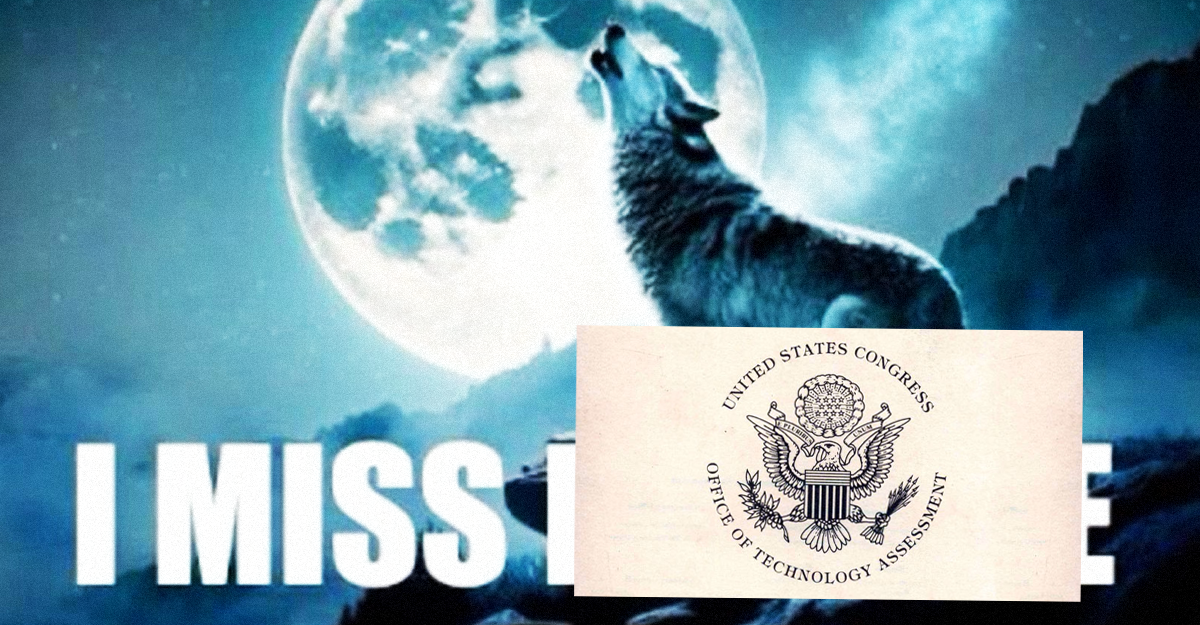
For months, artificial intelligence giants have been asking – practically begging – for someone, anyone, to regulate them. How many times does your model have to break containment and hack into a rival company, or sneak into Australia’s national healthcare database, or commit any number of incidents which are neatly collated on a “2026 cyberattacks by rogue OpenAI agents” Wikipedia article, before Congress steps in? How many whistleblowers does it take for lawmakers to admit that we are in the midst of a revolutionary-level technological challenge the likes of which we have not seen since the space race?
Whatever the magic number is, we’re at it. The pressure to pass legislation to address AI’s explosive growth is starting to leave bruises. Recent reporting from Politico pulls back the curtain: lawmakers like Rep. Sam Liccardo (D-CA) admits “we need to dramatically increase the base knowledge of Congress if we’re going to legislate meaningfully.” While we have always offered technical assistance to lawmakers (or dozens of free pret-a-porter policy recommendations they can pick up and turn into bills any time it pleases them), the scale and speed of the AI revolution is a bit much for our small but mighty AI policy team.
There exists a constellation of efforts to provide Congress with the raw material necessary to regulate AI: fellowships like TechCongress place technologists in Congressional offices, while lobbyists from AI giants are shopping draft bills (one of which includes a startling provision that “would let the government block a model’s release or use only if it poses a foreseeable, imminent risk of more than $1 billion in damages, or of killing or seriously injuring more than 50 people” – emphasis mine) around the Hill. The former is a good start, while the latter is worthy of healthy skepticism. The people who write and pass laws are so strapped for technical expertise and understanding that a $390B industry stands ready to get away with writing its own rules.
Regardless of the content of the dozens and dozens of AI proposals, they should be evaluated objectively on their true merits with the risks and benefits clearly outlined for the American public. Laws are crafted by democratically-elected lawmakers after examination and deliberation by experts. If they need help understanding the risks and rewards of a piece of technology, they shouldn’t have to rely solely on the sparknotes from a salesman. The rub is much simpler: Congress needs nerds.
A brief history of the Office of Technology Assessment
Let’s take it back to the 60s. The Supremes were the biggest girl group in the world (in my mind anyway), and San Francisco wasn’t yet grinding out an app a minute. Space was the final frontier, and the United States was going to do whatever it took to show the Soviets we could go the distance. Federal R&D spending was climbing, and the legislative committees overseeing it were relying on the executive branch’s expert witnesses – who were also the people who would spend the money. The White House had a gaggle of geniuses tucked away in the National Science Foundation, NASA, GAO, and in dozens of other offices. Congress had… the same people the White House did, when the White House was kind enough to let them get some face time.
For Reps. Emilio Daddario (D-CT) and Charles Mosher (R-OH) this would not do. As Mosher put it, Congress was “outmanned and outgunned” by executive agency expertise. And executive agencies have their own agendas. They had priorities. They reported to the president. Daddario and Mosher believed Congress should have its own source of advice. So they spent years building support for a Congressional agency that would fill this gap: the Office of Technology Assessment. It launched in 1972.
OTA, as the office would come to be known, was custom built for Congress’s needs: it would be led by a board of twelve members of Congress, six from each chamber, split evenly by party, and it would work for the committees at their request. Despite being bespoke, OTA had a rough start: by 1977 the founding director had resigned, the Republican vice chair had quit, Senators had placed their own aides inside the agency, and Senator Ted Kennedy was up to something. Anyone’s guess. But! These problems are all fixable. And thusly they were fixed: the board stepped back from hiring and from choosing advisory panels, delegating that power to the director. John Gibbons, director from 1979, described his job as keeping the agency “relevant to the political process” but avoiding partisan biases. Each study had a panel of experts and stakeholders who disagreed with one another. OTA did not ask them to agree. Reports were not to endorse recommendations, but to lay out options for how lawmakers might move forward given a shared set of expert analysis. This approach could withstand pressure. When the Pentagon asked OTA to withdraw its 1984 paper on missile defense, OTA refused.
In its 23-year history OTA published a whopping 750+ studies across everything. Here are a few I pulled from the OTA Archive hosted at ota.fas.org:
- Do Insects Transmit AIDS? (September 1987)
- The Big Picture: HDTV and High-Resolution Systems (June 1990)
- Passive Smoking in the Workplace: Selected Issues (May 1986)
- The Health of the Scientific and Technical Enterprise: An Advisory Panel Report to the Office of Technology Assessment (October 1978)
- A Preliminary Analysis of the IRS Tax Administration System (March 1977)
- Fish Passage Technologies: Protection at Hydropower Facilities (September 1995)
Let’s take a quick look at the “Fish Passage Technologies” report, just to see how OTA shines. The foreword opens with a clear acknowledgement of commission: that “the House Committee on Merchant Marine and Fisheries requested that the Office of Technology Assessment (OTA) examine the role of fish passage and protection technologies in addressing the adverse effects of hydropower development on North American fish populations.” The second page lists the advisory council, composed of federal scientists, industry veterans, and representatives across energy, conservation, fisheries, hydrology, and Canada for good measure. The report itself enumerates the points of contention (“The need for entrainment protection and passage for riverine fish is very controversial,” “The acceptability of turbine passage for anadromous fish is site-specific and controversial,” and “Turbine mortality studies must be interpreted with caution.”) and offers – this is the special sauce – high level recommendations that leave the details to lawmakers. Lots of “Congress could,” no “Congress should.”
For all its utility (OTA’s reports were consistently the Government Printing Office’s best-sellers), OTA was caught in the cross-fire of the Gingrich revolution. Rep. George Brown’s retort that OTA was Congress’s “defense against the dumb” wasn’t enough to save it, and the Office of Technology Assessment was shuttered with dozens of reports mid-draft. Despite its passing over 30 years ago, OTA’s praises are still sung in DC – across the aisle. Amo Houghton, a nine-term Congressional Republican praised the agency before his retirement, saying “it helped us to … better oversee the science and technology programs within the federal establishment.” But it was easy to kill because it was redundant.
Why OTA and why now?
The answer to the first is simple – Congressional Research Service and the Government Accountability Office can move fast-ish, but they lack a bipartisan governance board. This is OTA’s main asset: it was affirmatively bi-partisan, rather than squishy non-partisan. CRS reports can be commissioned by single members, and as my colleague Dr. Erica Goldman explained, they are more like a help desk for Congress – almost like a ChatCRS. GAO could cover topics like fish passage technology in detail, but turning a report around takes a year. AI is moving faster than GAO can handle, and with more technical complexity than CRS can fit into a single CRS report. The issues at stake – who is liable if/when an AI agent commits a crime? How do we ensure proprietary models conform with our legal and ethical standards? Who can sell and buy personally-identifying data and what shape does that data take? What happens if a rogue agent hacks an ally? Or worse: an adversary? – require expert analysis, and non-binding recommendations from these same experts. If more money for government nerds gives you agita, consider we are in the exact opposite problem where the people that stand to profit the most are the ones currently in the ears of lawmakers.
The answer to the second is quite like the first: the AI industry is moving fast and breaking things to the tune of billions, and lawmakers are asking for unbiased advice. Congress and its current research bodies are not equipped to sort through the volume of information about what this technology can do and who can abuse it. The information they have access to is contradictory, technical, uncertain, outdated, and biased. Something has got to change or we will see more AI companies hawking their bespoke bills (by the way: the primary regime structuring frontier AI regulation is entirely voluntary and the public isn’t allowed to know who gets to access these models and why). Nerds can’t sit this one out.
Rumor (alright, Politico reporting) has it that Rep. Mark Takano (D-CA) and Rep Jay Obernolte (R-CA) are soon to introduce a bipartisan-backed bill that would revive OTA, reborn as the Congressional Office of Technology. We have some suggestions:
- Emphasize bipartisan trust. Get experts who disagree together. Have them find common ground. Let them diverge when it comes to advice, not facts.
- Do the work out in the open. Be transparent about who gets to request reports, who staffs them, and who they are for. Get results out fast.
- Build demand. By 1995, Congressional staff had taken OTA for granted, making it easy to get rid of. Show them what they were missing.
And for those concerned about regulation breaking innovation, you’ll be comforted by this comment from a 1975 look at what OTA accomplished in its first year: “the activities of the new office have proved less of a brake on new technology than expected, and more of a force for thinking in unexpected ways about complex problems.”
If Congress needs help understanding the risks and rewards of a piece of technology, they shouldn’t have to rely solely on the sparknotes from a salesman. The rub is much simpler: Congress needs nerds.
If we set up the new OTA to do its job well, members will see it as the first stop to see what issues are lurking around the corner. They will bring their questions early. And they will keep coming back for more.
Even the best-designed policy rests on assumptions about who will staff it, how it will be funded, whether the responsible institutions have ever coordinated, and if the goals are achievable.
Congress should establish a Modeling, Analysis, and Technical Talent for Energy Regulation Hub (MATTER Hub) within the Department of Energy (DOE).