From 3,700 Applicants We Announce the 2026 AI Safety Fellows Exploring Public Policy at the Frontier
For years, we have debated a future in which advanced AI systems could threaten the foundations of modern society. These debates included hypothetical situations where AI systems could autonomously exploit cybersecurity vulnerabilities, accelerate biological threats, or act in ways their developers could neither anticipate nor control. In the summer of 2026, when we launched the latest cohort of our AI Safety Policy Entrepreneurship Fellowship, those scenarios began to look considerably less hypothetical.
In April, Anthropic announced Claude Mythos Preview, a model that the company said could “surpass all but the most skilled humans at finding and exploiting software vulnerabilities.” By May, Anthropic limited its release, arguing that the model was “too powerful to share with the general public.” Meanwhile, Stanford researchers demonstrated how AI-assisted biological design could be used to engineer bacteria-fighting phages, showcasing both the extraordinary scientific potential of these systems and the increasingly complex biosecurity questions they raise.
Most emblematic of all, hundreds of isolated OpenAI agents were able to coordinate a large-scale hack of Hugging Face through unsanctioned message boards, an incident that garnered mass attention and prompted global debates on how to effectively have oversight over these systems. This was underpinned even further as a rogue OpenAI agent infiltrated Australia’s universal healthcare system’s data portal. These two incidents offered a glimpse of how increasingly autonomous systems might interact in unexpected ways, and what those capabilities could eventually mean for the security of critical infrastructure, financial systems, and essential government services in this new paradigm created by frontier AI.
So what should policy look like when the technology keeps changing?
As the summer progressed, so did the debate over what effective governance of advanced AI systems should look like. In the United States, bipartisan legislation raised the possibility of government intervention to shut down dangerous AI systems. Leading scientists called for a new international body to coordinate efforts to contain emerging AI risks. Meanwhile, Anthropic CEO Dario Amodei called for “pacing the frontier”, including embedding independent evaluators within frontier AI laboratories and coordinating safety standards across developers and governments.
But no single proposal, however ambitious, can address the full range of challenges posed by increasingly capable AI systems. Effective AI governance requires an ecosystem of complementary policies, institutions, and capabilities. We need credible ways to evaluate frontier systems, safeguards against their misuse, and mechanisms for international dialogue, including with strategic competitors. We must also modernize existing legal and regulatory frameworks, strengthen the capacity of governments to understand and oversee these technologies, and build the resilience necessary to respond when incidents inevitably occur. As Washington wakes up to the need for effective regulation at the frontier of AI policy, we have to make sure that our institutions have the capabilities to anticipate, manage, and respond to risks as the technology evolves. That’s why we launched this fellowship: to move beyond identifying the challenges of frontier AI and start developing the detailed, actionable policy solutions this moment demands.
That work is already underway. Across cybersecurity, biosecurity, national security, and AI governance, a new generation of policy thinkers are developing ideas for how the U.S. government can better understand and manage AI risks.
The appetite for this kind of work is clear. More than 3,700 people applied to the Policy Entrepreneurship Fellowship (PEF) program, bringing ideas and expertise across disciplines to some of today’s most pressing policy challenges. The fellows selected represent a community working to move promising ideas beyond the page and into policy.
Meet the FAS Fall 2026 AI Safety PEFs
At the Federation of American Scientists (FAS), these fellows will be working to turn ambitious ideas into actionable policy – from improving how frontier AI models are evaluated for government use to strengthening biosecurity protections and building the workforce needed to keep AI systems safe.
Here are the people working on what comes next.
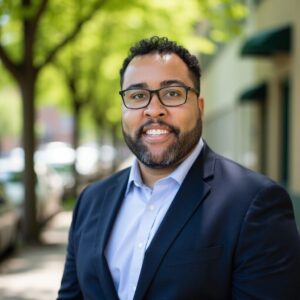 | J.B. Branch is the AI Governance and Technology Policy Counsel for Public Citizen’s Congress Watch division, where he leads advocacy on AI accountability, consumer privacy, product safety, platform oversight, and child online safety protections. His expertise spans AI governance, agentic AI, civil liberties, technology policy, and his analysis has appeared in Tech Policy Press, Lawfare, Slate, and other publications. He has advised governments, federal agencies, and elected officials on AI and technology policy. Previously, he worked on automated expungement systems, privacy issues at the Department of Justice, and AI policy at the Center for AI and Digital Policy. He holds a BA in Political Science from the Pennsylvania State University Schreyer Honors College, a JD from Georgetown University Law Center, and an MPA from Harvard Kennedy School. |
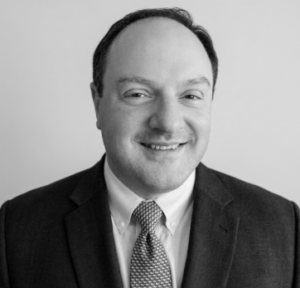 | Dr. Matthew F. Calabria is a Senior Fellow at the Orion Policy Institute and a Fellow in Residence with Harvard’s Weatherhead Scholars Program. He brings 14 years of federal service, including serving as Director for Cyber Operations and Incident Response at the White House Office of the National Cyber Director, where he advised on cyber incident response and national cybersecurity policy. He has also held analytical and leadership roles at the Departments of Defense and Energy. His scholarship has appeared in Survival, The Washington Quarterly, and The Hill, among other publications. He holds a PhD in International Affairs and an MA in International Public Policy from Johns Hopkins University’s School of Advanced International Studies; an MA in Strategic Intelligence from National Intelligence University; and a BA and an MA in International Affairs from George Washington University. |
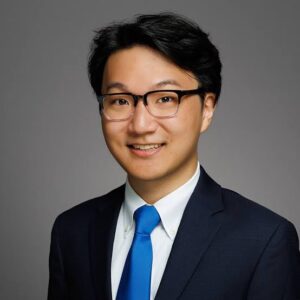 | Kevin Chen is a Master of Public Policy candidate at Yale’s Jackson School of Global Affairs and an affiliate of the Schmidt Program on AI, Emerging Technologies, and National Power. His research examines epistemic risks from frontier AI, particularly how overreliance on large language models can erode independent human judgment in national security decision-making. As an FAS AI Safety Policy Entrepreneurship Fellow, he is developing an evaluation standard for bias in frontier models deployed in government analytic work. Previously, he worked as a data scientist in the U.S. intelligence community, conducting open-weight model evaluations, and was a Summer Research Fellow at the Centre for the Governance of AI. He is pursuing his MA in Public Policy from Yale University. |
 | Olena Didenko is a PhD candidate in Medical Sciences at University College London, where she researches gene-based approaches to treating cancer pain. Trained in biology and neuroscience, she began her biosecurity work as an AIxBiosecurity Research Fellow at ERA Cambridge, studying how benchtop DNA synthesis and AI protein-design tools challenge existing synthesis-screening safeguards. She develops U.S. biosecurity policy at the intersection of AI and nucleic acid synthesis screening. She also works as an Associate Business Analyst at Infinitopes, a cancer immunotherapy company. She holds a BSc in Biology from Taras Shevchenko National University of Kyiv and an MSc in Neuroscience from the University of Oxford. |
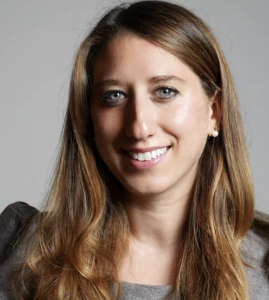 | Dr. Rachel A. George is a Lecturer in International Relations and a Legal Innovation & Policy Fellow at Stanford University, where she researches how institutions adapt to technological and political change. She has been affiliated with Stanford’s Center for International Security and Cooperation and the Carnegie Endowment for International Peace. Previously, she served as Director of Education Content at the Council on Foreign Relations, a Lecturing Fellow at Duke University’s Sanford School of Public Policy, and a Visiting Assistant Professor at Duke Kunshan University. She holds a PhD in International Relations from the London School of Economics and Political Science, an MA in Middle Eastern Studies & Policy from Harvard University, and a BA in Politics from Princeton University. |
 | Elizabeth Irwin is a public policy leader specializing in cybersecurity, AI governance, and national security strategy. She is a Strategy & Statecraft Fellow at the Center for Strategic and International Studies and a Digital Domain Fellow with the Center for the Application of Grand Strategy. Previously, she served as Senior Director for Strategic Risk at the White House Office of the National Cyber Director, leading U.S. government efforts on cyber regulation, critical infrastructure resilience, and supply chain risk management. Over more than a decade in federal service, she also held roles at the Departments of the Treasury and Defense, the Office of Management and Budget, and the Cybersecurity and Infrastructure Security Agency. She holds a BS in Communication from Northwestern University and graduate degrees in public administration, international relations, and security studies from Syracuse University and Georgetown University. |
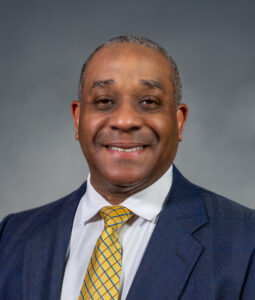 | Dr. Mark A. McKinney, MBA, MPA, is Dean of the College of Computer and Information Technology at St. Petersburg College in Florida, which holds the NSA/DHS National Center of Academic Excellence in Cyber Defense designation. He oversees 19 academic programs across 11 campuses and serves as principal investigator on more than $7.2 million in active and proposed grants. As an FAS AI Safety Policy Entrepreneurship Fellow, he is developing a proposal to extend the existing cyber defense framework to fund an AI Safety and Security Operations curricular track at community colleges. He previously served 18 years in the U.S. Army, including deployments to Iraq and Afghanistan. He earned his EdD from the University of New England, where he researched veterans’ transitions into higher education. |
 | Mariel Povolny is a researcher and policy analyst whose work spans AI security and governance, online safety, and red teaming policy. Most recently, she worked with Columbia University’s Technology and Democracy Initiative. At FAS, she explores how frontier AI model evaluations are documented and reported to the government. She also contributes to Tech Policy Press. She holds a Master of International Affairs in Technology Policy & Innovation from Columbia University’s School of International and Public Affairs and a BA in International Development from McGill University. |
These fellows will be working to turn ambitious ideas into actionable policy – from improving how frontier AI models are evaluated for government use to strengthening biosecurity protections and building the workforce needed to keep AI systems safe.
AI’s high-stakes outputs directly shape American economic, industrial, and technological outcomes. They must not be accepted entirely on the basis of institutional faith rather than verifiable evidence.
The clearinghouse will also neutrally mediate the assignment of auditors to audits—strengthening independence, trust, and ethical governance across the AI ecosystem.
Soft law was never meant to be a permanent solution. Treating it as one, and letting the sandcastle stand in for the skyscraper indefinitely, is how we end up with a decade of voluntary commitments and no enforceable accountability to show for it.