British Parliament Report Criticizes Government Refusal to Participate in Nuclear Deterrent Inquiry
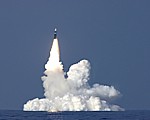 Although the British government has promised a full and open public debate about the future of Britain’s nuclear deterrent, it has so far failed to explain what decisions need to be made, failed to provide a timetable for those decisions, and has refused to participate in a House of Commons Defence Committee inquiry on the future of Britain’s nuclear deterrent, according to a British parliamentary report. The report partially relies on research conducted by the FAS Nuclear Information Project for the SIPRI Yearbook.
Online overview of British nuclear forces
It is difficult to assess from photos whether the Sentinel missile is longer or wider overall than the Minuteman, but the Sentinel clearly has a thicker second stage, which could potentially contribute to the missile’s extended range.
This is not the first time Google has agreed to censor imagery at the behest of governments, but be warned: obfuscation at this broad level poses a direct threat to the public’s ability to monitor and scrutinize government operations.
As humans expand our geographic reach, encroach on untouched natural territories, and interact more with animal populations, we will encounter novel zoonotic diseases that threaten the human body. The sooner we act to address these risks, the better.
“One thing became increasingly clear: AI doesn’t simply introduce a new category of risk. It changes the speed, scale, complexity, and interaction of risks that already exist.”