The B61 Life-Extension Program: Increasing NATO Nuclear Capability and Precision Low-Yield Strikes
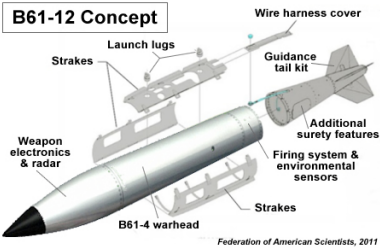
A modified U.S. nuclear bomb currently under design will have improved military capabilities compared with older weapons and increase the targeting capability of NATO’s nuclear arsenal. The B61-12, the product of a planned 30-year life extension and consolidation of four existing versions of the B61 into one, will be equipped with a new guidance system to increase its accuracy. As a result, the U.S. non-strategic nuclear bombs currently deployed in five European countries will return to Europe as a life-extended version in 2018 with an enhanced capability targets.
This is not the first time Google has agreed to censor imagery at the behest of governments, but be warned: obfuscation at this broad level poses a direct threat to the public’s ability to monitor and scrutinize government operations.
As humans expand our geographic reach, encroach on untouched natural territories, and interact more with animal populations, we will encounter novel zoonotic diseases that threaten the human body. The sooner we act to address these risks, the better.
“One thing became increasingly clear: AI doesn’t simply introduce a new category of risk. It changes the speed, scale, complexity, and interaction of risks that already exist.”
In the current environment of declining trust and magnifying strategic competition, banning debris-creating tests is a concrete step towards stability that favors interests of all states seeking to conduct space activities.