North Korea’s military “uses tactics based on former Soviet or current Russian doctrine, Chinese developments, lessons learned, and observation of recent military actions,” according to a new US Army manual on the subject.
“While North Korea maintains large amounts of military equipment, much of it is outdated making it quantitatively superior to most armies but qualitatively inferior,” the new manual said. See North Korean Tactics, Army Techniques Publication (ATP) 7-100.2, 24 July 2020.
But North Korea has proved resourceful in other areas, including offensive cyber warfare.
“The primary organization responsible for computer warfare in North Korea is Bureau 121, which fielded at least 1,000 elite hackers in 2010 who focused on other countries’ computer systems. This number is likely much higher now” and includes “cyberspace teams [deployed] in foreign countries.”
And not least of all, “The country’s possession of a nuclear arsenal and its pursuit of missile technology are attempts to ensure that external powers do not interfere with its internal affairs for fear of a nuclear reprisal,” the Army manual said.
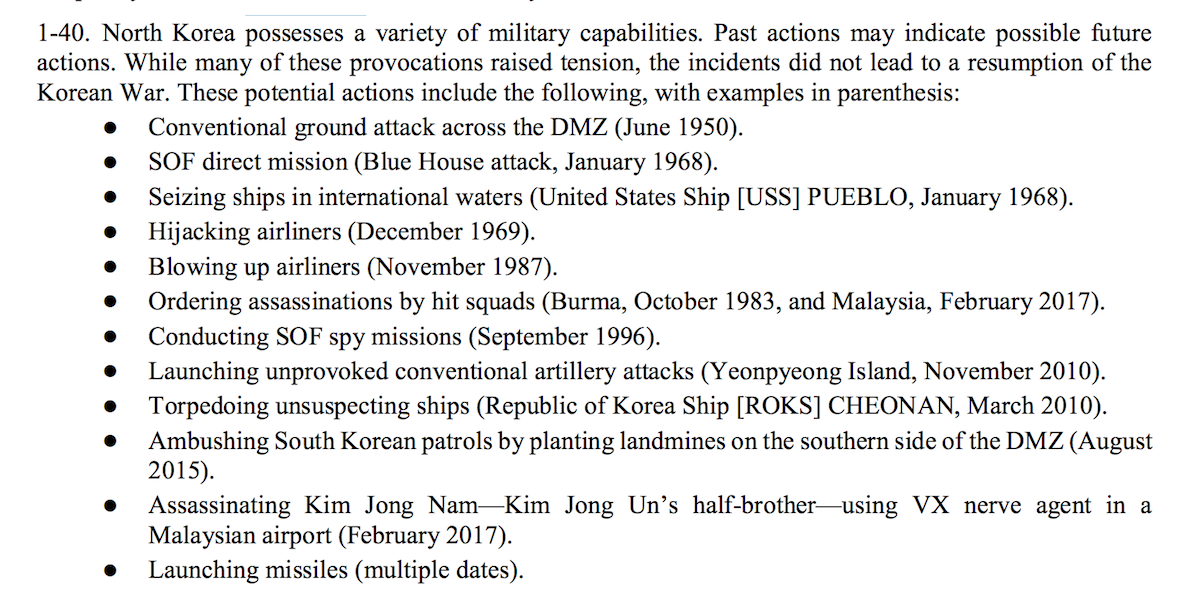
“North Korea is constantly adapting and evolving its capabilities,” the Army said.
We won’t solve the cost-of-living crisis without improving the capacity of state public utility commissions to protect customers, find and implement new solutions to meet rising demand, and realign broken utility incentives.
Public service commissions should require utilities to quantify avoided healthcare costs, reduction in pollution exposure, and improvements in population health alongside traditional metrics.
California just took an important step toward making electric trucks more affordable and easier for businesses to buy.
In 2023 alone, more than 2,300 people died in the United States directly from extreme heat. Expanding access to residential air conditioning could reduce heat-attributable deaths and adult emergency department.