Scaling Team Science is the Important Experiment We Need
A tumultuous period for federal research funding would seem like precisely the wrong moment to experiment with new funding models. But that’s wrong.
Federal research funding is a cornerstone of U.S. competitiveness and national security – and one that is facing an unprecedented moment of uncertainty. Navigating this uncertainty will require experimentation with new models that can accelerate scientific progress. The National Science Foundation’s (NSF) new X-Labs program, which encompasses roughly just two percent of the funding institution’s overall research budget, is exactly that.
X-Labs build on promising early results from a recent proliferation of philanthropically-supported independent lab models, and in particular, Focused Research Organizations (FROs) that catalyze capital and harness team science to unlock entirely new fields of scientific inquiry. These ambitious and high-leverage research infrastructure investments have already delivered tremendous breakthroughs: the largest map of drug-target interactions ever built, a global atlas of ocean alkalinity enhancement to aid in carbon dioxide removal, and reductions in the cost of proteomics twenty-seven-fold that can accelerate biomedical research.
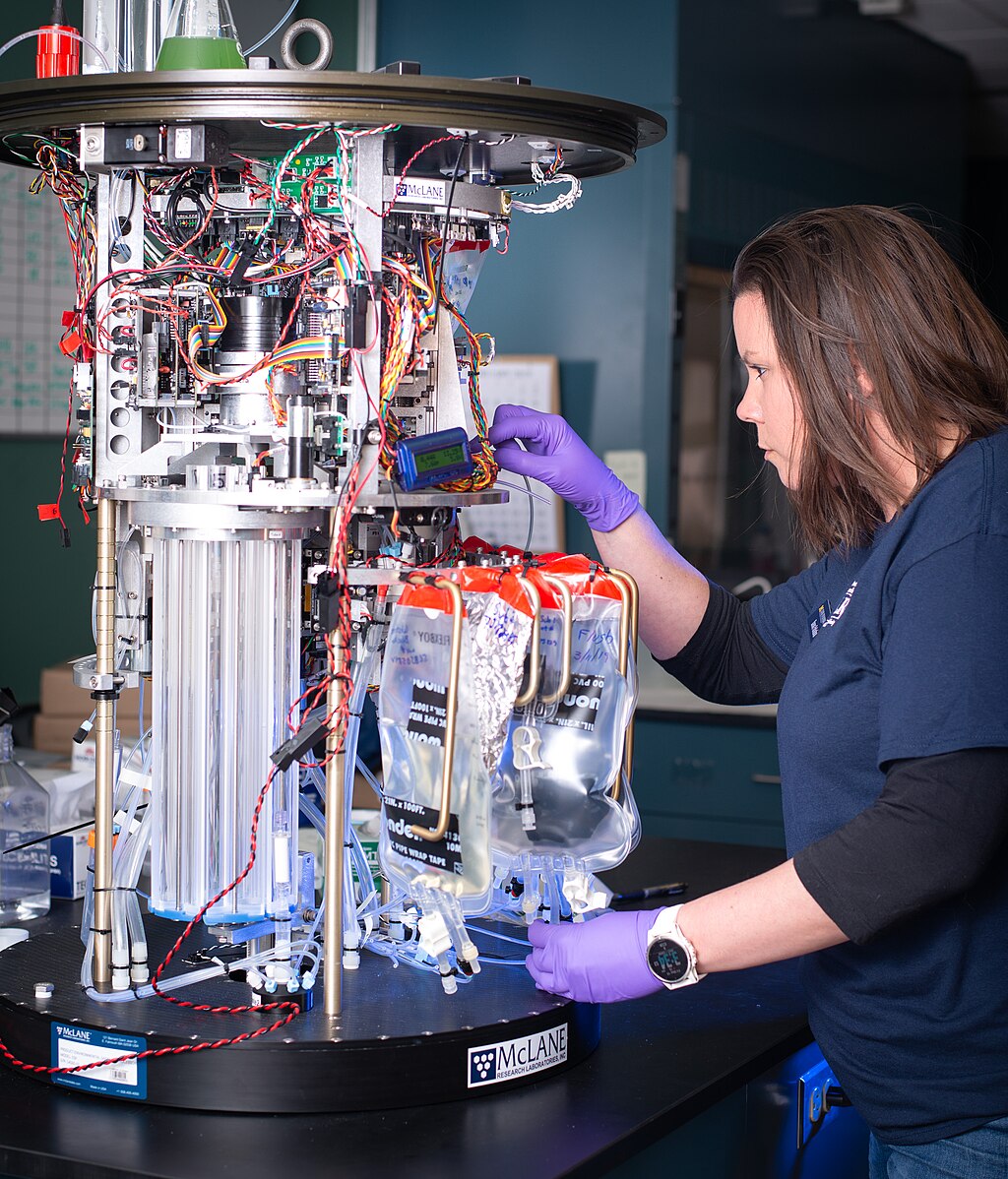
As impressive as early FRO results have been, they just scratch the surface of the model’s potential. There are many more possible breakthroughs, significantly beyond the capacity of philanthropic resources to support. Yet team-based, goal-oriented science has always been a difficult fit for the dominant federal funding models organized around research project grants. That’s why what’s truly novel about X-Labs is that NSF has found a way to achieve scale: up to $1.5 billion in funding structured around milestones, giving teams an opportunity to work on problems that lend themselves to a different set of incentives than academia typically requires.
Not everyone is excited. In a recent essay in Science, Pierre Azoulay of MIT makes a careful case for skepticism that government funding is the right model for scaling independent labs. Others have highlighted the potential zero sum funding dynamics facing academic institutions, based on recent Science reporting, though the perception that NSF is diverting resources from academic research funding to X-Labs is inaccurate. Still others have expressed concerns about public accountability, given X-Labs’ substantial operational independence at a moment when the Trump administration seeks to assert greater political control of grantmaking.
The harsh reality is that academic institutions are at a crossroads; the modern research university runs on a fraying cross-subsidy model that has hidden the real price of doing research. With simultaneous pressure on federal grants, indirect cost recovery, tuition and endowment returns, the path forward will require experimentation with alternative models at the institutional level.
NSF has explicitly framed X-Labs as an opportunity for academic institutions, giving them the license to create a platform for their researchers to engage in goal-oriented team science with less internal administrative burden and absent the proposal and publishing treadmills. For some institutions, this opportunity will prove a golden one. And in the spirit of a true experiment, some of what works in this sandbox – intellectual property, team structure, novel metrics – may be worth broader adoption as institutions find their way past the crossroads.
I see X-Labs as the culmination of two significant developments in how research is conducted.
The first is the bipartisan mandate handed to NSF by Congress when it created the Technology, Innovation, and Partnerships (TIP) Directorate through the CHIPS and Science Act. Some architects of this legislation, and the Endless Frontier Act on which it was based, were explicit that formidable and growing competition from China meant that our research institutions would need to evolve, and their intent was to provide NSF the latitude to fund targeted priorities differently. As always, diagnosing unified Congressional intent is difficult, but what Congress codified was the creation of the first new NSF directorate in over 30 years, one with the flexibility to deploy flexible “Other Transactions Authority” for nontraditional grantmaking – not as a substitute, but as a supplement and translational accelerant to NSF’s core research funding mission.
This bet is already delivering unexpected results. In 2022, few thought NSF was well-suited or capable of successfully driving the regional impact of translational research. But four years later, patience is paying off: $135M of TIP investment in nine regional hubs through the Regional Innovation Engines program has catalyzed more than $2B in matching commitments – an impressive 15x multiplier on taxpayer dollars.
Like the Engines program, X-Labs is an experiment being undertaken with TIP’s own budget, not with funds siphoned from other directorates that would otherwise be used for research project grants, as recent reporting has suggested. And X-Labs’ initial focus on scientific instrumentation directly feeds discovery science across NSF’s core research domains. For the community that championed CHIPS and Science, these kinds of experiments are exactly what we had hoped to see.
Second, X-Labs follow strong, decades-long precedent for the federal research enterprise to embrace and scale models that philanthropy has de-risked. Examples abound.
For years, the Howard Hughes Medical Institute (HHMI) has provided stable, investigator-centered institutional funding as a means to enable transformative research by insulating extraordinarily promising PIs from the constraints of grant-based funding. Azoulay’s own pioneering research on the HHMI model — which funded ‘people not projects’ — found this model had a significant role in generating novel research. Inspired by the example, the National Institutes of Health has since added pathways to its funding portfolio – such as the Transformative Research Award – to bet on extraordinary people rather than their projects.
In 2003, philanthropist Paul Allen put $100 million into a new brain science institute built on the premise that a tightly coordinated team focused on an ambitious goal – creating an atlas of gene expression in the mouse brain – could deliver success where a series of traditional research grants wouldn’t. This team-based model succeeded, delivering the foundational infrastructure on which significant subsequent federal efforts such as the BRAIN Initiative ultimately relied to scale.
Recent years have lent the philanthropically-supported independent lab model more significant momentum. Since 2021, the Arc Institute in Palo Alto – a university-affiliated biomedical research organization – has organized researchers into teams in pursuit of breakthrough research outside of a traditional academic structure. And in 2020, I helped champion Adam Marblestone’s and Sam Rodriques’ original FRO concept for independent, team-based and time-bound nonprofits aimed at problems that sit in the gap between what academia rewards and what industry will fund. The original proposal targeted federal research agencies, but I saw firsthand that these institutions weren’t ready for the experiment without some fundamental questions answered through philanthropic de-risking. That day has come: Convergent Research, with hundreds of millions in philanthropic support, has since launched ten FROs in domains as distinct as brain mapping, ocean carbon modeling, and software for mathematics, with significant proof points.
Now, nudged by some sharp policy thinking from Caleb Watney at Institute for Progress on how the government can scale the approach, X-Labs seek to expand on what FROs have shown is possible: the generation of foundational infrastructure for entire new fields of research science. The vision for X-Labs is appropriately as a tool of portfolio diversification – as announced, just two percent of NSF budget – rather than a means to replace or indirectly reform the dominant funding model of research program grants. And as with any true experiment that pushes scientific boundaries, there will be learning and evolution along the way. X-Labs funding will be time-bound, and as institutions they should wind down when they’ve reached their goals. Some will surely fail altogether, and some will unlock whole new fields of scientific inquiry, and with that economic competitiveness and growth.
On this path forward, NSF will also need to strike a difficult balance between autonomy and accountability. Its decision to fund X-Labs through TIP’s Other Transaction Authority – a flexible contracting mechanism simply defined by what it’s not – should not mean an absence of accountability. But accountability mechanisms must be fit for purpose – lightweight, public-facing, and outcome-oriented (i.e., does the public know what was funded and what it produced?) -– rather than process-heavy and approval-based. The initial X-Labs solicitation offers encouraging indications of results-oriented accountability (milestone payments) and IP management plans, but the details are very much in execution to come.
I’m bullish. At a tumultuous moment for research, we need more experiments like X-Labs, not fewer.
As humans expand our geographic reach, encroach on untouched natural territories, and interact more with animal populations, we will encounter novel zoonotic diseases that threaten the human body. The sooner we act to address these risks, the better.
This report serves as a landscape assessment and toolbox from which local governments can negotiate an informed position when it comes to the levers available to them and includes a first-of-its kind analysis of eight executed community benefits agreements.
When a hurricane hits, it’s all hands on deck – that goes for federal data, too. Pulling back from our investments in timely, accurate, and accessible public data will only make us less prepared and put us all at greater risk.
This is bigger than a singular elimination of race and ethnicity questions. It could accelerate the second wave of widespread reductions to demographic data, leaving public health officials with even less information to deliver better health outcomes for all Americans.