The Affordability and Climate Agendas Run Through State Regulators. It’s Time to Rethink Their Roles.
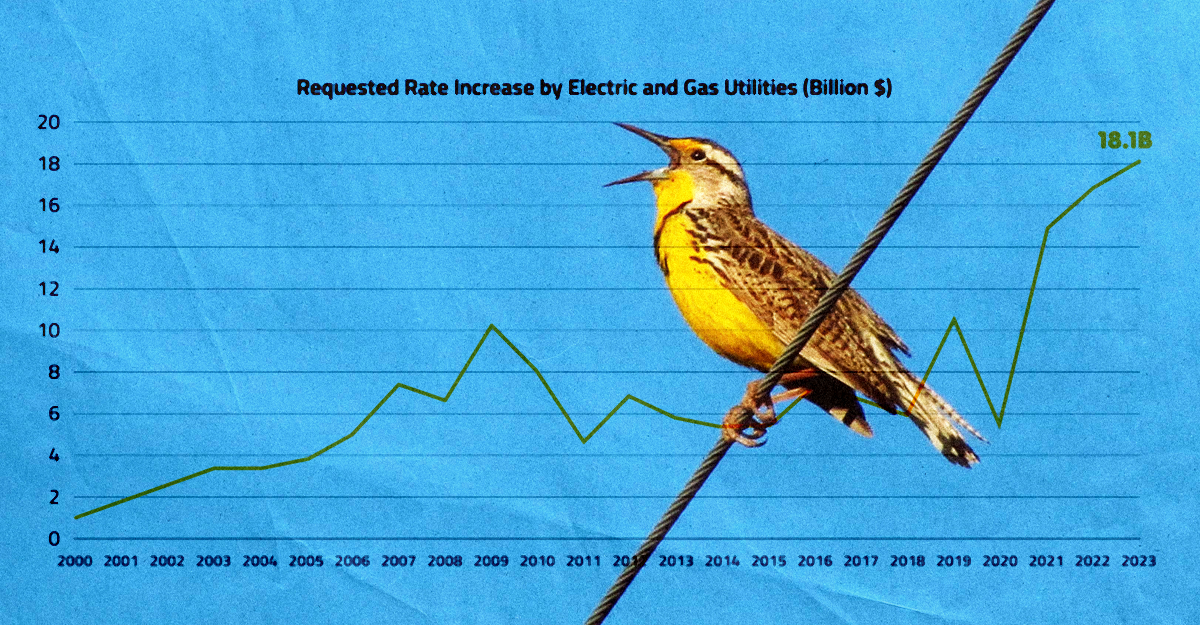
Skyrocketing utility bills and rapid growth in electricity demand from data centers are sparking a wave of new affordability policies and commitments from state and federal leaders. Successful implementation of many of these policies will hinge on a state institution that rarely makes it into the public eye: the Public Utility Commission, or PUC.
PUCs are the primary government entity responsible for setting rates for electricity and heating fuel. Together, U.S. PUCs oversee $200 billion a year in utility spending and determine what technologies and strategies utilities should pursue, what expenses are justified and should be passed onto customers, and how much profit utilities should make.
And their role is expanding. PUCs were originally designed to lead ratemaking proceedings and keep utilities in check. Now they are being asked to do so much more—expand customer-owned resources and aggregate them to benefit the grid, integrate new technologies, engage customers in new ways, manage massive impacts of data centers and other large loads, accelerate electrification and manage the transition away from gas, handle major mergers, and more. When state legislatures enact new policies—like those intended to protect households from data center impacts or unlock more customer-owned resources—PUCs are responsible for implementation.
Despite their importance, most PUCs are understaffed and ill-equipped to handle their new and expanded responsibilities. Like many aspects of government, we are asking old institutions to solve modern problems without changing the tools at their disposal.
To build an affordable, modern grid powered by clean energy, we need more than the right policies; we must also upgrade—and, in some cases, redesign—PUCs to regulate in the public interest and effectively implement new policies.
This blog post lays out a vision for modernizing PUCs and enhancing their capacity. FAS is developing additional resources to help states implement this vision. If you want to get involved, reach out to Arjun Krishnaswami, akrishnaswami@fas.org.
What exactly is going wrong?
Several features of PUC design are limiting states’ efforts to rein in utility bills and making it harder to implement new policies.
Often the NPC, Rarely the Main Character
PUCs are reactive by design. Utilities drive planning and ratemaking processes—from submitting proposals to kick off proceedings to dictating timelines by choosing when to file rate increases. PUCs then evaluate those proposals, weighing them against evidence submitted by other intervenors, such as consumer advocacy groups or nonprofits. This reactive posture – to use video game lingo here, being the non-player character (NPC) – sets PUCs up for failure when it comes to finding opportunities for savings, such as through increased scrutiny on utility-proposed grid spending, consideration of alternatives, and more integrated planning across different parts of the energy system.
Our failure to build a more proactive muscle at PUCs also makes them less prepared for the expanded responsibilities associated with modern energy policy. The new wave of affordability policies—including novel sophisticated requirements on data centers, standards to improve grid utilization, smart operation of customer-owned resources like rooftop solar and batteries, improved grid flexibility, realigning utility incentives, and more—require PUCs to step in more forcefully and proactively on key grid planning decisions.
PUCs can be more proactive by scrutinizing utility spending proposals, pushing for consideration of alternatives, and launching and driving new initiatives on specific topics rather than waiting for utility action. For example, in 2019 the Connecticut PUC (Public Utilities Regulatory Authority) launched the Equitable Modern Grid Initiative to investigate solutions in 11 topic areas, including affordability, interconnection, distributed energy resources, and more. Most PUCs are not currently equipped to effectively manage these new responsibilities.
Bringing a Knife to a Gun Fight
Electricity regulation is a battle between the utility’s interests to maximize shareholder profit and the PUC’s responsibility to protect customers and ensure a reliable grid, and PUCs are consistently outgunned. Utilities have the advantage on every front: they have teams of technical, legal and engineering staff to engage with proceedings and the money to attract top talent; they can hire consultants specialized in ratemaking and planning to provide bespoke analysis and legal support; and they have more data on their system than PUC staff or other intervenors. In contrast, PUCs have limited staff working across many proceedings and a constrained budget to conduct bespoke independent analysis to challenge utility proposals and present alternatives. The Commissioners themselves have even fewer resources and staff to evaluate proposals and make decisions. And public interest intervenors, such as state consumer advocates or independent organizations advocating on behalf of customers, also have fewer resources and less information than utilities.
Insufficient PUC resourcing is already a barrier to regulators effectively fulfilling their baseline responsibilities to interrogate utility proposals and protect customers. But this problem will only get worse as we add more to their plate.
As one example, a legislative commission in Texas found that the PUC needed more staff and resources to be able to independently analyze utility sector data. Additionally, the Texas PUC had its mandate expanded to include regulating telecommunications on top of the wastewater and electric utilities they already regulate—without hiring additional staff. The Wisconsin PUC also recently got approval for 23 new staff to keep up with increased workload to evaluate new generation and transmission projects.
Old Procedures for New Problems
The statutes governing utility regulation are old. They were enacted long before customers could help power the grid through rooftop solar, batteries, and smart appliances; before the electric and gas industries started to fiercely compete with each other to heat homes and power factories; and before utilities became the biggest political spenders in state politics. Relying on these statutes and the resulting regulatory frameworks we have been using for the past century is making it harder for states to solve modern problems and make peoples’ lives better.
How to Upgrade PUCs for Today’s Problems
To address these issues with PUC design and support strong policy implementation, policymakers must explore answers to a new set of questions, including:
- What is the PUC’s mandate? How proactive or reactive can a PUC be in addressing affordability or clean energy deployment?
- What decision-making processes and procedural rules are still serving us, and which can we throw away or rewrite?
- What capabilities, such as independent analysis, public engagement, data collection, and more, are missing?
- How can new funding models help fill resource gaps?
- What tools do PUCs need to attract and retain talent?
- How can we prevent political capture and political influence from impeding PUCs role to represent the public?
These questions don’t have ready-made, robust answers, as we haven’t redesigned most of these century-old institutions since they were founded. The time is ripe for energy professionals and government capacity experts to work together to develop a new playbook for ingenious PUC design.
In the meantime, state and federal leaders can take steps now to start improving PUC capacity and testing potential solutions to these problems. Below are four no-regrets near-term steps policymakers should take.
Main Character Energy: Provide New Direction to PUCs
PUCs need the authority, direction, and top cover to open proactive proceedings, fill in gaps in existing processes and re-think approaches to electrification, grid flexibility, and interconnection. Governors and legislators can direct PUCs to open proactive investigations and processes to develop new solutions outside of traditional processes. For example, New Jersey Governor Sherill directed the state’s Board of Public Utilities to proactively review utility business models and evaluate their alignment with affordability.
Use Federal Resources to Support State PUCs
When it comes to PUC capacity concerns, the federal government has been MIA. While the Inflation Reduction Act and the Bipartisan Infrastructure Law sent hundreds of billions of dollars to state agencies (including State Energy Offices, transportation departments, and air agencies), they provided zero dollars for state PUCs, which were tasked with overseeing and approving all the grid upgrades and new clean energy projects that resulted from these new laws.
The federal government could inject new energy into PUCs immediately through:
- Formula grants for PUCs, potentially split out by purpose (PUC staff, Commissioner staff, certain types of analysis, etc.);
- Fellowship programs to build a talent pipeline for PUCs in particular emerging areas, such as virtual power plants, distributed energy resource interconnection, grid flexibility, and performance-based regulation; and
- Shared resource hubs that PUCs can draw upon for little to no cost (e.g., a modeling hub at a National Lab that PUCs can tap into for independent modeling of utility proposals in a rate case).
Bolster the PUC’s Affordability Arsenal
States must expand funding for PUCs to hire additional staff, bring in new types of capacity, and modernize PUC analytical capabilities. Currently, PUCs are funded through customer bills, state budgets, or a combination of the two. States can consider raising additional funding through state appropriations or charging fees on some large customers (like data centers) to account for additional PUC capacity needs as a result of these customers. In addition to increasing the budget, states can help equip PUCs with their own analytical tools by leveraging state agency resources and expertise. States can also upgrade PUC hiring authority to make key roles more competitive and improve talent retention, including through competitive salaries, remote work, and empowering staff to get things done.
Upgrade Public Engagement and Participation
Intervening in a PUC proceeding is expensive and time consuming, making it difficult for many organizations to engage, let alone individuals. Some states have attempted to address these barriers through intervenor compensation funds that reimburse intervenors for their involvement in regulatory proceedings. However, only 16 states have authorized interventor compensation programs, and of those 16 states, a measly eight have active programs that the public can utilize.
Beyond improving intervention, PUCs can expand their engagement with the broader public. PUC efforts directly impact peoples’ lives through energy bills for families and businesses and the ability for customers to access cost-saving resources like rooftop solar, distributed storage, and energy efficiency. PUCs can do a better job telling the story of their work and soliciting broader public input on priorities.
America’s affordability problem is bigger than home prices and rents. The best housing policies make it easier to build homes, and recognize how housing connects to other domains.
America’s affordability problem, for instance, is bigger than home prices and rents. How we build affects household costs like insurance and utilities.
FAS has partnered with ICLEI USA to launch the CRI Local Advisory Council.
We sat down with Dr. Max Moritz and Chief Rob Hazard to discuss how communities use time, money, and data to reduce the risk that wildfires pose.