The Pentagon’s (Slimmed Down) 2025 China Military Power Report
On Tuesday, December 23rd, the Department of Defense released its annual congressionally-mandated report on China’s military developments, also known as the “China Military Power Report,” or “CMPR.” The report is typically a valuable injection of information into the open source landscape, and represents a useful barometer for how the Pentagon assesses both the intentions and capabilities of its nuclear-armed competitor.
This year’s report, and particularly the nuclear section, is noticeably slimmed down relative to previous years; however, this is because the format of the report has changed to focus on newer information, rather than repeating and reaffirming older assessments. As a result, this year’s report includes no mention of China’s ballistic missile submarines and their associated missiles, and includes only cursory mention of China’s air-based nuclear capabilities. It also excludes analyses of several types of land-based missiles entirely. However, this does not reflect changed assessments on the part of the Pentagon, but rather a lack of new information to report. Going forward, this means that analysts will need to read multiple years of CMPR reports in order to ensure that they are accessing the complete range of available information.
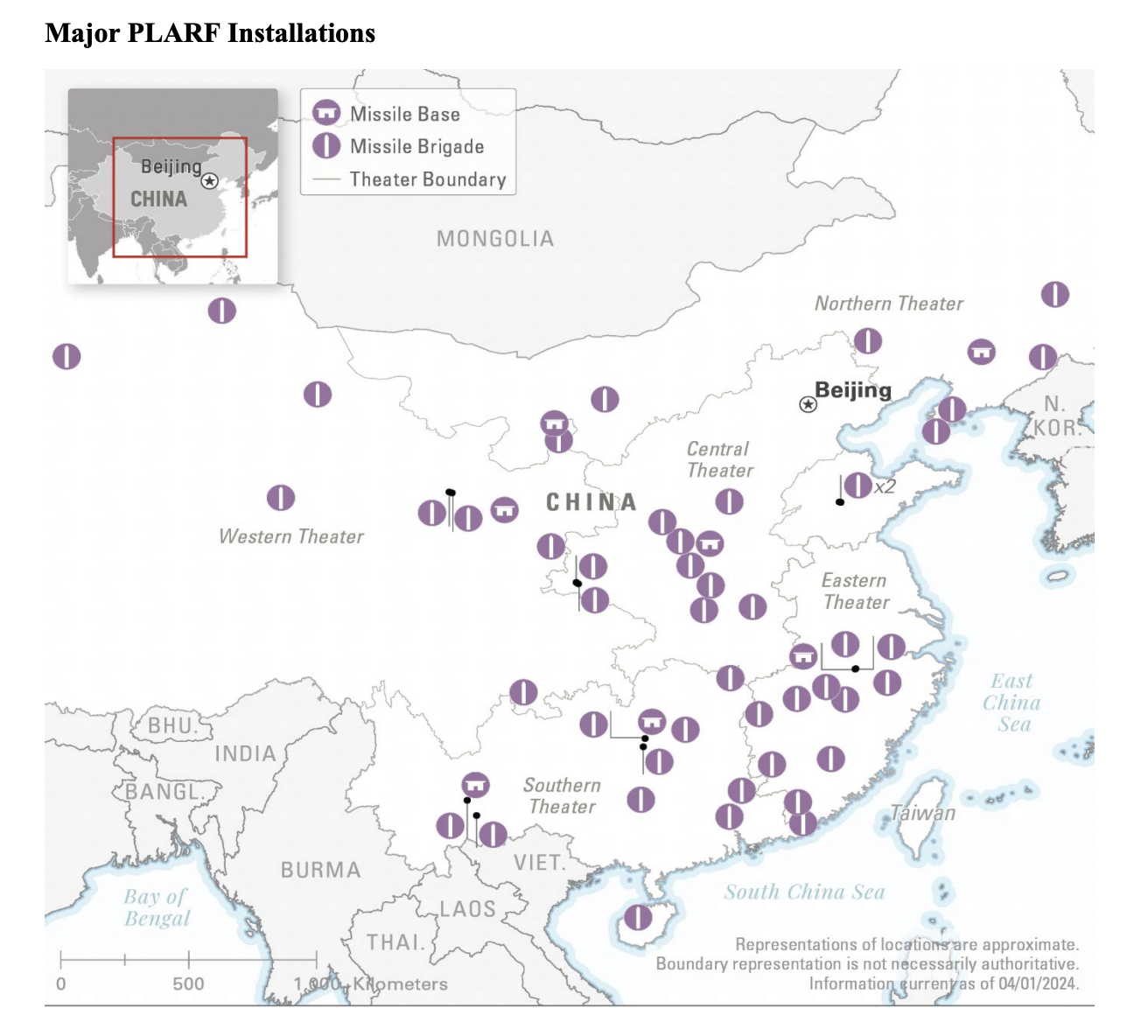
In addition, this year’s CMPR did not include any mention of China’s September 2025 Victory Day parade––which featured multiple new weapon systems––as the parade took place too recently; it will very likely be analyzed in next year’s report. The maps of missile base and brigade locations also appear to be out of date: the information is listed as “current as of 04/01/2024.”
While this year’s report did not include any earth-shattering headlines with regards to China’s nuclear forces, it provides additional context and useful perspectives on various events that took place over the past 12 months.
Stockpile growth
The CMPR states that China’s nuclear stockpile “remained in the low 600s through 2024, reflecting a slower rate of production when compared to previous years.” However, it reaffirmed previous years’ assessments that China “remains on track to have over 1,000 warheads by 2030.” China’s nuclear expansion over the past five years is now making this projection increasingly plausible, although even if it came to pass, China would still maintain several thousand warheads fewer than either the United States or Russia. Previous CMPRs had assessed that if China’s modernization pace continued, it would likely field a stockpile of about 1,500 warheads by 2035; however, this assessment has not been included in the CMPR since the 2022 iteration.
The dramatic expansion of China’s stockpile is primarily being prompted by the large-scale development and modernization of China’s next-generation intercontinental ballistic missile (ICBM) forces. In 2021, multiple non-governmental organizations (including our team at the Federation of American Scientists) publicly revealed the existence of three new ICBM silo fields capable of hosting up to 320 launchers for solid-propellant DF-31 class ICBMs. China is also more than doubling its number of silos for its liquid-fuel DF-5 class ICBMs, which the Pentagon assessed in its 2024 CMPR will likely yield about 50 modernized silos. Many of these missile types will be capable of carrying multiple warheads.

While the previous year’s CMPR indicated that China “has loaded at least some ICBMs into these silos,” the 2025 edition offers a valuable update: that China has now “likely loaded more than 100 solid-propellant ICBM missile silos at its three silo fields with DF-31 class ICBMs.” Our team continues to regularly monitor developments at the three silo fields using commercial satellite imagery and has not yet found sufficient evidence to corroborate this assessment; however, it is possible that the Pentagon’s assessment is primarily derived from other sources of intelligence, including human (HUMINT) and/or signals intelligence (SIGINT).
If China plans to continue its nuclear expansion, it will likely require additional fissile material, as China does not currently have the ability to produce large quantities of plutonium. The Pentagon assesses that China’s ongoing construction and planned commissioning of two new CFR-600 sodium-cooled fast breeder reactors at Xiapu “will reestablish China’s ability to produce weapons-grade plutonium.” However, the 2025 CMPR assesses that the first unit “is probably still undergoing testing,” and that “the second reactor unit is still under construction.” It is possible that this information is now out of date, as recent commercial satellite imagery now suggests that the first reactor unit may be operational.
Low-yield warheads
Previous editions of the CMPR had indicated that China was “probably” seeking low-yield warheads for escalation control during periods of small-scale nuclear crisis and/or conflict; however, the 2025 iteration is the first to offer an estimated yield value for such weapons, of “below 10 kilotons.” A recent technical history by Hui Zhang offers highly valuable data points for historical Chinese nuclear weapons tests, and suggests that China likely has the ability to produce smaller, low-yield warheads. Additionally, recent open-source reporting by Renny Babiarz with Open Nuclear Network (ONN) and researchers from the Verification Research Training and Information Center (VERTIC) found that China has been overhauling and expanding its warhead component manufacturing capabilities. Coupled with the expansion of the Lop Nur test site, this could indicate plans to upgrade China’s existing warheads, improve its ability to build more, or both.
The CMPR notes that the DF-26 intermediate-range ballistic missile (IRBM) and the air-launched ballistic missile (ALBM) carried by the H-6N bomber “are both highly precise theater weapons that would be well suited for delivering a low-yield nuclear weapon.” While the DF-26 had previously been identified as a likely carrier for a low-yield warhead, this is the first time that the H-6N’s ALBM has also been listed as a potential carrier.
Missile designations
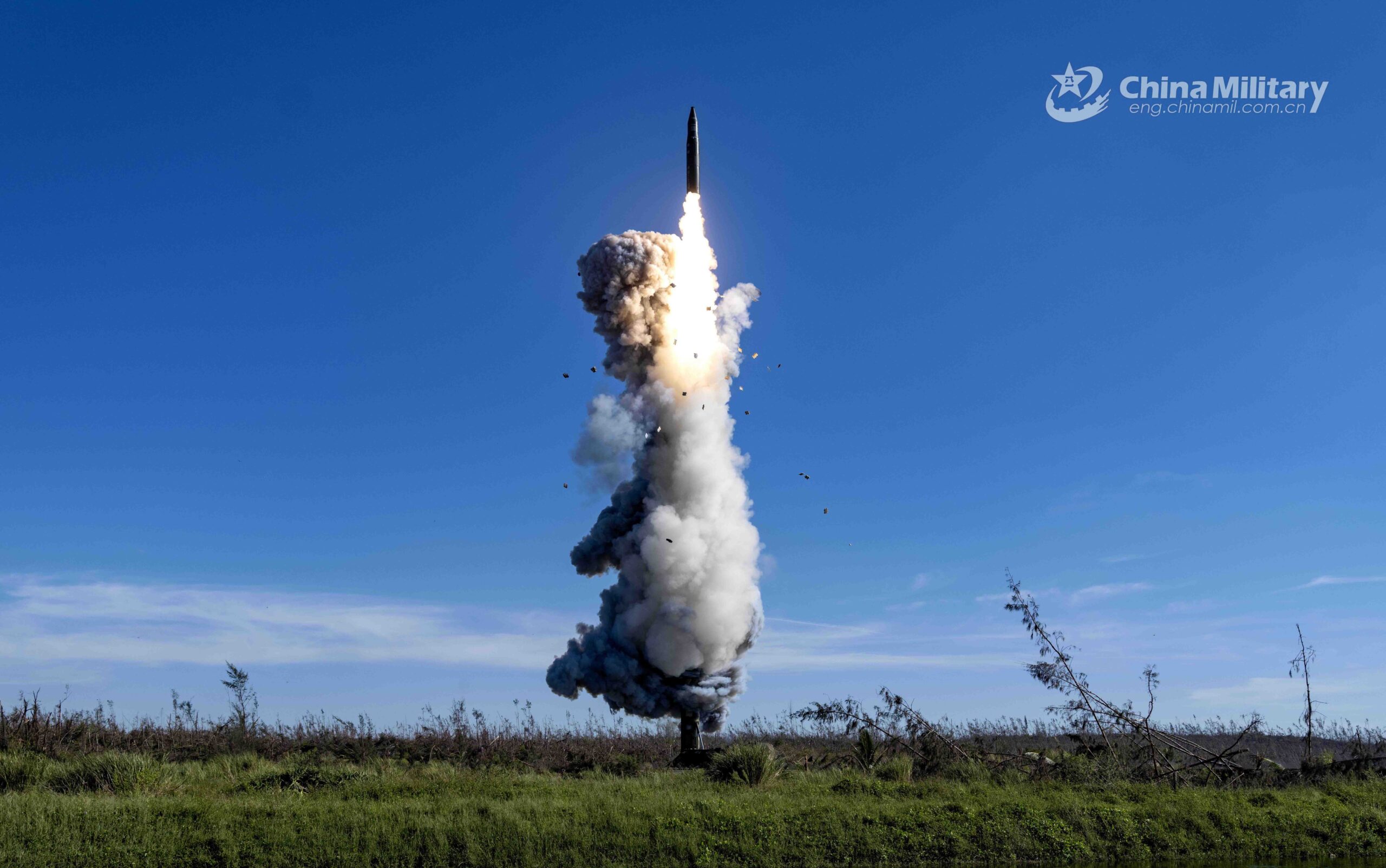
It is often a complex endeavor to try and match China’s own missile designations to the names that are given to various systems by the Pentagon. This year’s CMPR, however, provides valuable confirmations for some of these missile designations. In particular, it confirms that both the DF-31A and DF-31AG ICBM are known to the Pentagon as CSS-10 Mod 2, which aligns with our understanding that both systems carry the same missile. It also strongly hints at the alignment between the CSS-18 and the DF-26 IRBM, as well as the CSS-10 Mod 3 and the DF-31B ICBM––a missile that was confirmed in the 2025 CMPR as the same missile that was launched from Hainan Island into the Pacific Ocean in September 2024 for the first time since 1980. This was the first mention of the DF-31B in the CMPR since the 2022 edition, and the first time that the missile’s existence under that designation has been confirmed.
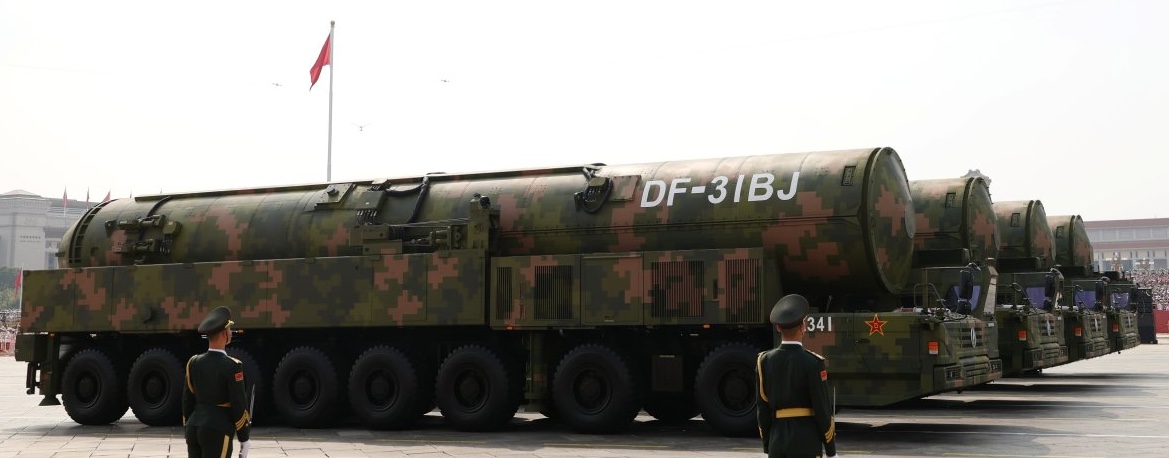
The acknowledgement of the DF-31B’s existence coincides with the recent reveal of a likely silo-based version of the same missile during China’s September 2025 military parade. During that event, China unveiled a vehicle carrying a canister with the designation “DF-31BJ;” it is possible that the vehicle was a missile loader and the “J” likely indicates a silo basing mode, as the Chinese character “井” or “jing” means “well” and is used by the PLA to describe silos. We can therefore assume that the DF-31B ICBM has both a mobile and a silo basing mode, with the latter adding the J suffix to its designation.
Doctrinal shifts, arms control, and early warning
Beyond tweaks to China’s force posture and nuclear stockpile, the CMPR also offers some additional details with regards to its assessment of China’s nuclear doctrine. In particular, it expands on its previous assessments of China’s pursuit of an “early warning counterstrike (EWCS) capability,” which it calls “similar to launch on warning (LOW), where warning of a missile strike enables a counterstrike launch before an enemy first strike can detonate.” For the first time, the CMPR offers details into the capabilities of China’s early warning systems, stating that “China’s early warning infrared satellites [Tongxun Jishu Shiyan (TJS), also known as Huoyan-1] can reportedly detect an incoming ICBM within 90 seconds of launch with an early warning alert sent to a command center within three to four minutes.”
It also notes that China’s ground-based, large phased-array radars “probably can corroborate incoming missile alerts first detected by the TJS/Huoyan-1 and provide additional data, with the flow of early warning information probably enabling a command authority to launch a counterstrike before inbound detonation.” If this is accurate, it would appear that China is developing an early warning capability that functions in a similar manner to those of the United States and Russia, which rely on dual phenomenology to confirm the validity of incoming attacks before authorizing retaliatory launches.
The report also notes that “Beijing continues to demonstrate no appetite for pursuing […] more comprehensive arms control discussions,” including those related to a potential US-China bilateral missile launch notification mechanism.
Corruption
The CMPR focuses quite a bit on China’s ongoing measures to combat corruption, which has led to the removal of dozens of senior officials from their posts across the PLA Air Force, Navy, and Rocket Force. The report notes that “[c]orruption in defense procurement has contributed to observed instances of capability shortfalls, such as malfunctioning lids installed on missile silos”––a story which Bloomberg first reported in January 2024. The report notes that “these investigations very likely risk short term disruptions in the operational effectiveness of the PLA.”
Missiles and delivery systems
The 2025 report included a detail that in December 2024, “the PLA launched several ICBMs in quick succession from a training center into Western China.” Contrary to the launch from Hainan Island, there was very little public reporting about this salvo launch.
The CMPR also indicates an estimated growth in China’s ICBM and IRBM launchers by 50 each, although it is unclear whether these numbers include both finished launchers as well as those still under construction.
The following graph indicates the growth of China’s launchers and missiles, as assessed by the Pentagon, over the past 20 years. It is important to note that many of these missiles, including China’s short- and medium-range ballistic missiles and its ground-launched cruise missiles (GLCMs), are not nuclear-capable.
Our 2025 overview of China’s nuclear arsenal can be freely accessed here.
The Nuclear Information Project is currently supported with generous contributions from the Carnegie Corporation of New York, the New-Land Foundation, Ploughshares, the Prospect Hill Foundation, and individual donors.
While advanced Chinese language proficiency and cultural familiarity remain irreplaceable skills, they are neither necessary nor sufficient for successful open-source analysis on China’s nuclear forces.
On September 3, 2025, China showcased its military power in a parade commemorating the 80th Anniversary of the end of World War II. The parade featured a large number of new military weapons and equipment, including new and modified nuclear systems that had not been previously publicly displayed. This parade was also the first time […]
China is NOT a nuclear “peer” of the United States, as some contend.
China’s total number of approximately 600 warheads constitutes only a small portion of the United States’ estimated stockpile of 3,700 warheads.
Satellite imagery has long served as a tool for observing on-the-ground activity worldwide, and offers especially valuable insights into the operation, development, and physical features related to nuclear technology.