Digital Product Passports: Transforming America’s Linear Economy to Combat Waste, Counterfeits, and Supply Chain Vulnerabilities
The U.S. economy is being held back by outdated, linear supply chains that waste valuable materials, expose businesses to counterfeits, and limit consumer choice. American companies lose billions each year to fraudulent goods—everything from fake pharmaceuticals to faulty electronics—while consumers are left in the dark about what they’re buying. At the same time, global disruptions like the COVID-19 pandemic revealed just how fragile and opaque our supply chains really are, especially in critical industries. Without greater transparency and accountability, the U.S. economy will remain vulnerable to these risks, stifling growth and innovation while perpetuating inequities and environmental harm.
A shift toward more circular, transparent systems would not only reduce waste and increase efficiency, but also unlock new business models, strengthen supply chain resilience, and give consumers better, more reliable information about the products they choose. Digital Product Passports (DPP) – standardized digital records that contain key information about a product’s origin, materials, lifecycle, and authenticity – are a key tool that will help the United States achieve these goals.
The administration should establish a comprehensive Digital Product Passport Initiative that creates the legal, technical, and organizational frameworks for businesses to implement decentralized digital passports for their products while ensuring consumer ownership rights, supply chain integrity, and international interoperability. This plan should consider which entities provide up-front investment until the benefits of a digital product passport (DPP) are manifested.
Challenge and Opportunity
The United States faces an urgent sustainability challenge driven by its linear economic model, which prioritizes resource extraction, production, and disposal over reuse and recycling. This approach has led to severe environmental degradation, excessive waste generation, and unsustainable resource consumption, with marginalized communities—often communities of color and low-income areas—bearing the brunt of the damage. From toxic pollution to hazardous waste dumps, these populations are disproportionately affected, exacerbating environmental injustice. If this trajectory continues, the U.S. will not only fall short of its climate commitments but also deepen existing economic inequities. To achieve a sustainable future, the nation must transition to a more circular economy, where resources are responsibly managed, reused, and kept in circulation, rather than being discarded after a single use.
At the same time, the U.S. is contending with widespread counterfeiting and fragile supply chains that threaten both economic security and public health. Counterfeit goods, from unsafe pharmaceuticals to faulty electronics, flood the market, endangering lives and undermining consumer confidence, while costing the economy billions in lost revenue. Furthermore, the COVID-19 pandemic exposed deep weaknesses in global supply chains, particularly in critical sectors like healthcare and technology, leading to shortages that disproportionately affected vulnerable populations. These opaque and fragmented supply chains allow counterfeit goods to flourish and make it difficult to track and verify the authenticity of products, leaving businesses and consumers at risk.
Achieving true sustainability in the United States requires a shift to item circularity, where products and materials are kept in use for as long as possible through repair, reuse, and recycling. This model not only minimizes waste but also reduces the demand for virgin resources, alleviating the environmental pressures created by the current linear economy. Item circularity helps to close the loop, ensuring that products at the end of their life cycles re-enter the economy rather than ending up in landfills. It also promotes responsible production and consumption by making it easier to track and manage the flow of materials, extending the lifespan of products, and minimizing environmental harm. By embracing circularity, industries can cut down on resource extraction, reduce greenhouse gas emissions, and mitigate the disproportionate impact of pollution on marginalized communities.
One of the most powerful tools to facilitate this transition is the digital product passport (DPP). A DPP is a digital record that provides detailed information about a product’s entire life cycle, including its origin, materials, production process, and end-of-life options like recycling or refurbishment. With this information easily accessible, consumers, businesses, and regulators can make informed decisions about the use, maintenance, and eventual disposal of products. DPPs enable seamless tracking of products through supply chains, making it easier to repair, refurbish, or recycle items. This ensures that valuable materials are recovered and reused, contributing to a circular economy. Additionally, DPPs empower consumers by offering transparency into the sustainability and authenticity of products, encouraging responsible purchasing, and fostering trust in both the products and the companies behind them.
In addition to promoting circularity, digital product passports (DPPs) are a powerful solution for combating counterfeits and ensuring supply chain integrity. In 2016, counterfeits and pirated products represented $509B and 3.3% of world trade. By assigning each product a unique digital identifier, a DPP enables transparent and verifiable tracking of goods at every stage of the supply chain, from raw materials to final sale. This transparency makes it nearly impossible for counterfeit products to infiltrate the market, as every legitimate product can be traced back to its original manufacturer with a clear, tamper-proof digital record. In industries where counterfeiting poses serious safety and financial risks—such as pharmaceuticals, electronics, and luxury goods—DPPs provide a critical layer of protection, ensuring consumers receive authentic products and helping companies safeguard their brands from fraud.
Moreover, DPPs offer real-time insights into supply chain operations, identifying vulnerabilities or disruptions more quickly. This allows businesses to respond to issues such as production delays, supplier failures, or the introduction of fraudulent goods before they cause widespread damage. With greater visibility into where products are sourced, produced, and transported, companies can better manage their supply chains, ensuring that products meet regulatory standards and maintaining the integrity of goods as they move through the system. This level of traceability strengthens trust between businesses, consumers, and regulators, ultimately creating more resilient and secure supply chains.
Beyond sustainability and counterfeiting, digital product passports (DPPs) offer transformative potential in four additional key areas:
- First, they enhance compliance and regulatory oversight by providing clear, accessible records of a product’s materials, production methods, and supply chain journey, helping industries meet environmental, labor, and safety standards.
- Second, DPPs strengthen supply chain risk mitigation and resilience by improving real-time visibility and accountability, allowing businesses to detect and address disruptions or vulnerabilities faster.
- Third, they empower informed consumer choices and consumer protection by offering transparency into a product’s origin, sustainability, and authenticity, enabling people to make ethical, safe purchasing decisions.
- Finally, DPPs fuel data-driven innovation and new business models by generating insights that can inform better product design, maintenance strategies, and circular economy opportunities, such as take-back programs or leasing services. In these ways, DPPs act as a versatile tool that not only addresses immediate challenges but also positions industries for long-term, sustainable growth.
Plan of Action
The administration should establish a comprehensive Digital Product Passport Initiative that creates the legal, technical, and organizational frameworks for businesses to implement decentralized digital passports for their products while ensuring consumer ownership rights, supply chain integrity, and international interoperability. This plan should consider which entities provide up-front investment until the benefits of DPP are realized.
Recommendation 1. Legal Framework Development (Lead: White House Office of Science and Technology Policy)
The foundation of any successful federal initiative must be a clear legal framework that establishes authority, defines roles, and ensures enforceability. The Office of Science and Technology Policy is uniquely positioned to lead this effort given its cross-cutting mandate to coordinate science and technology policy across federal agencies and its direct line to the Executive Office of the President.
- Draft executive order establishing federal DPP program authority
- Coordinate with Department of Commerce (DOC) and Environmental Protection Agency (EPA) to identify rulemaking authority, engaging Congress as needed
- Define enforcement mechanisms and penalties
- Coordinate with DOC to define legal requirements for DPP data portability
- Establish liability framework for DPP data accuracy
- Create legal framework for consumer DPP ownership rights, engaging Congress as needed
- Identify the role of Congress, if needed; for example, in defining rulemaking authorities, DPP data probabilities, and consumer DPP ownership rights
- Timeline: First 9 months
Recommendation 2. Product Category Definition & Standards Development (Lead: DOC/NIST)
The success of the DPP initiative depends on clear, technically sound standards that define which products require passports and what information they must contain. This effort must consider the industries and products that will benefit from DPPs, as goods of varying value will find different returns on the investment of DPPs. NIST, as the nation’s lead standards body with deep expertise in digital systems and measurement science, is the natural choice to lead this critical definitional work.
- Establish an interagency working group led by NIST to define priority product categories
- Develop technical standards for DPP data structure and interoperability
- Timeline: First 6 months
Recommendation 3. Consumer Rights & Privacy Framework (Lead: FTC Bureau of Consumer Protection)
A decentralized DPP system must protect consumer privacy while ensuring consumers maintain control over the digital passports of products they own. The FTC’s Bureau of Consumer Protection, with its statutory authority to protect consumer interests and experience in digital privacy issues, is best equipped to develop and enforce these critical consumer protections.
- Define consumer DPP ownership rights and transfer mechanisms
- Establish privacy standards for DPP data
- Develop consumer access and control protocols
- Create standards for consumer authorization of third-party DPP access
- Define requirements for consumer notification of DPP changes
- Timeline: 12-18 months
Recommendation 4. DPP Architecture & Verification Framework (Lead: GSA Technology Transformation Services)
A decentralized DPP system requires robust technical architecture that enables secure data storage, seamless transfers, and reliable verification across multiple private databases. GSA’s Technology Transformation Services, with its proven capability in building and maintaining federal digital infrastructure and its experience in implementing emerging technologies across government, is well-equipped to design and oversee this complex technical ecosystem.
- Define methodology for storing and verifying DPPs
- Develop API standards for industry integration
- Ensure cybersecurity protocols meet NIST standards
- Implement blockchain or distributed ledger technology for traceability
- Develop standards for DPP transfer between product clouds
- Create protocols for consumer DPP ownership transfer
- Establish verification registry for authorized product clouds
- Define minimum security requirements for private DPP databases
- Timeline: 12-18 months
Recommendation 5. Industry Engagement & Compliance Program (Lead: DOC Office of Business Liaison)
Successful implementation of DPPs requires active participation and buy-in from the private sector, as businesses will be responsible for creating and maintaining their product clouds. The DOC Office of Business Liaison, with its established relationships across industries and experience in facilitating public-private partnerships, is ideally suited to lead this engagement and ensure that implementation guidelines meet both government requirements and business needs.
- Create industry advisory board with representatives from key sectors
- Develop compliance guidelines and technical assistance programs
- Establish pilot programs with volunteer companies
- Partner with trade associations for outreach and education
- Develop guidelines for product cloud certification
- Create standards for DPP ownership transfer during resale
- Establish protocols for managing orphaned DPPs
- Timeline: Ongoing from months 3-24
Recommendation 6. Supply Chain Verification System (Lead: Customs and Border Protection)
Digital Product Passports must integrate seamlessly with existing import/export processes to effectively combat counterfeiting and ensure supply chain integrity. Customs and Border Protection, with its existing authority over imports and expertise in supply chain security, is uniquely positioned to incorporate DPP verification into its existing systems and risk assessment frameworks.
- Integrate DPP verification into existing Customs and Border Protection systems
- Develop automated scanning and verification protocols
- Create risk assessment frameworks for import screening
- Timeline: 18-24 months
Recommendation 7. Sustainability Metrics Integration (Lead: EPA Office of Pollution Prevention)
For DPPs to meaningfully advance sustainability goals, they must capture standardized, verifiable environmental impact data throughout product lifecycles. The EPA’s Office of Pollution Prevention brings decades of expertise in environmental assessment and verification protocols, making it the ideal leader for developing and overseeing these critical sustainability metrics.
- Define required environmental impact data points
- Develop lifecycle assessment standards
- Create verification protocols for environmental claims
- Timeline: 12-18 months
Recommendation 8. International Coordination (Lead: State Department Bureau of Economic Affairs)
The global nature of supply chains requires that U.S. DPPs be compatible with similar initiatives worldwide, particularly the EU’s DPP system. The State Department’s Bureau of Economic Affairs, with its diplomatic expertise and experience in international trade negotiations, is best positioned to ensure U.S. DPP standards align with global frameworks while protecting U.S. interests.
- Survey and coordinate with similar efforts around the world (e.g., European Commission’s Digital Product Passport initiative)
- Engage with WTO to ensure compliance with trade rules
- Develop framework for international data sharing
- Develop protocols for cross-border DPP transfers
- Establish international product cloud interoperability standards
- Timeline: Ongoing from months 6-24
Recommendation 9. Small Business Support Program (Lead: Small Business Administration)
The technical and financial demands of implementing DPPs could disproportionately burden small businesses, potentially creating market barriers. The Small Business Administration, with its mandate to support small business success and experience in providing technical assistance and grants, is the natural choice to lead efforts ensuring small businesses can effectively participate in the DPP system.
- Create technical assistance programs
- Provide implementation grants
- Develop simplified compliance pathways
- Timeline: Launch by month 18
Conclusion
Digital Product Passports represent a transformative opportunity to address two critical challenges facing the United States: the unsustainable waste of our linear economy and the vulnerability of our supply chains to counterfeiting and disruption. Through a comprehensive nine-step implementation plan led by key federal agencies, the administration can establish the frameworks necessary for businesses to create and maintain digital passports for their products while ensuring consumer rights and international compatibility. This initiative will not only advance environmental justice and sustainability goals by enabling product circularity, but will also strengthen supply chain integrity and security, positioning the United States as a leader in the digital transformation of global commerce.
The DOE Office Already Unleashing American Energy Dominance
President Trump’s executive order “Unleashing American Energy” promises an American economic revival based on lower costs, bringing back our supply chains, building America into a manufacturing superpower again, and cutting reliance on countries. Within this order he tasks the Secretary of Energy to prioritize programs to onshore critical mineral processing and development. Luckily, a little-known office at the Department of Energy (DOE) – the Office of Manufacturing and Energy Supply Chains (MESC) – is already at the heart of that agenda.
MESC and the Manufacturing Renaissance
Energy manufacturing in the U.S. is experiencing a historic momentum, thanks in large part to the Department of Energy. Manufacturing was the backbone of the 20th century U.S. economy, but recent decades have seen a dramatic offshoring of domestic supply chains, in particular to China, that has threatened U.S. economic and national security. With the global supply chain crises of the early 2020s, driven by COVID and Russia’s invasion of Ukraine, Congress finally took note. Through the Bipartisan Infrastructure Law, CHIPS and Science Act, and Inflation Reduction Act (IRA), lawmakers gave the federal government first-of-a-kind tools to reassert U.S. leadership in global manufacturing. This included creating, in 2021, a program (MESC) at the DOE that focuses on critical energy supply chains, including critical minerals.
Created in 2022 after the Bipartisan Infrastructure Law that infused DOE with new funds to reshore advanced energy manufacturing, the Office of Manufacturing and Energy Supply Chains (MESC) has been hard at work executing on reshoring manufacturing. Since inception, MESC has achieved a remarkable impact on the energy supply chain and manufacturing industry in the US. It has resulted in over $39 billion of investments from both the public and private sector into the American energy sector in companies that have created over 47,000 private sector jobs. Many of these jobs and companies that have been funded are for critical minerals development and processing.
MESC will be central to the energy dominance mission at the core of President Trump’s playbook along with Energy Secretary Chris Wright.
Why MESC is Crucial for Energy Dominance
MESC’s funding for energy infrastructure will be critical to American energy dominance and to address the energy crisis declaration that Trump signed on day one in office. Projects funded through this office include critical minerals and battery manufacturing necessary to compete with China, and grid modernization technology to ensure Americans have access to reliable and affordable power. For example, Ascend Elements was awarded two grants totaling $480M to build new critical minerals and battery recycling programs in Hopkinsville, Kentucky. This grant will yield an estimated $4.4 billion in economic activity and over 400 jobs for Hopkinsville. Sila Technologies was granted $100M for a silicon anode production facility in Moses Lake, Washington, which will be used in hundreds of thousands of automobiles, and strengthening the regional economy
The Trump administration can build on these successes and break new ground along the way:
- Work with congress to permanently establish MESC with statutory authority and permanent appropriated funds.
- Continue funding projects that will result in a resilient domestic energy supply, including projects to update our grid infrastructure and those that will create new jobs in energy technologies like critical minerals processing and battery manufacturing.
- Use DOE’s Other Transaction Authority (OTA) to ensure prices for critical minerals and other energy manufacturing technologies that are primarily created or manufactured in China or other foreign entities of concern are profitable for companies, and affordable for customers.
Cost-conscious citizens should enthusiastically support these efforts because MESC has already proven its capability to punch above its weight. By making funding more permanent, Congress can 10x or more the speed and scale with which we assert energy dominance.
MESC is small but mighty. Its importance to continuing U.S. dominance in energy manufacturing cannot be overstated. Despite that, its funding in the budget is not permanent. The Trump administration has an opportunity to supercharge American energy dominance through MESC, but they must come together with Congressional leaders to permanently establish MESC and its mission. 2025 is an opportunity for new leaders to invest in creating American manufacturing jobs and spur innovation in the energy sector.
Protecting U.S. Critical Infrastructure with Resilience Caches of Reusable Respirators
To help protect U.S. critical infrastructure workers from future pandemics and other biological threats, the next presidential administration should use the federal government’s grantmaking power to ensure ample supplies of high-quality respiratory personal protective equipment (PPE). The administration can take five concrete actions:
- The Office of Pandemic Preparedness and Response Policy (OPPR) can coordinate requirements for federal agencies and recipients of federal emergency/disaster preparedness funding to maintain access to at least one reusable respirator per critical employee.
- The Department of Labor’s Occupational Safety and Health Administration (OSHA) can initiate an occupational safety rule on reusable respirator resilience caches.
- The Department of Health and Human Services’ Administration for Strategic Preparedness and Response (ASPR) can require PPE manufacturers receiving federal funding to demonstrate their robustness to extreme pandemics.
- ASPR’s Strategic National Stockpile can start stockpiling reusable respirators.
- The Federal Emergency Management Agency (FEMA) can leverage its public outreach experience to increase “peacetime” adoption of reusable respirators.
These actions would complete the Biden Administration’s existing portfolio of efforts to reduce the likelihood of dangerous PPE shortages in the future, reaffirming executive commitment to protecting vulnerable workers, building a resilient national supply chain, and encouraging innovation.
Challenge and Opportunity
The next pandemic could strike at any time, and our PPE supply chain is not ready. Experts predict that the chance of a severe natural epidemic could perhaps triple in the next few decades, and advances in synthetic biology are increasing the risk of deliberate biological threats. As the world witnessed in 2020, disposable PPE can quickly become scarce in a crisis. Inadequate stockpiles left millions of workers with insufficient access to respiratory protection and often higher death rates than the general public—especially the critical infrastructure workers who operate the supply chains for our food, healthcare, public safety, and other essential goods and services. In future pandemics, which could have a 4% to 11%+ chance of occurring in the next 20 years based on historical extrapolations, PPE shortages could cause unnecessary infections, deaths, and burnout among critical infrastructure workers.
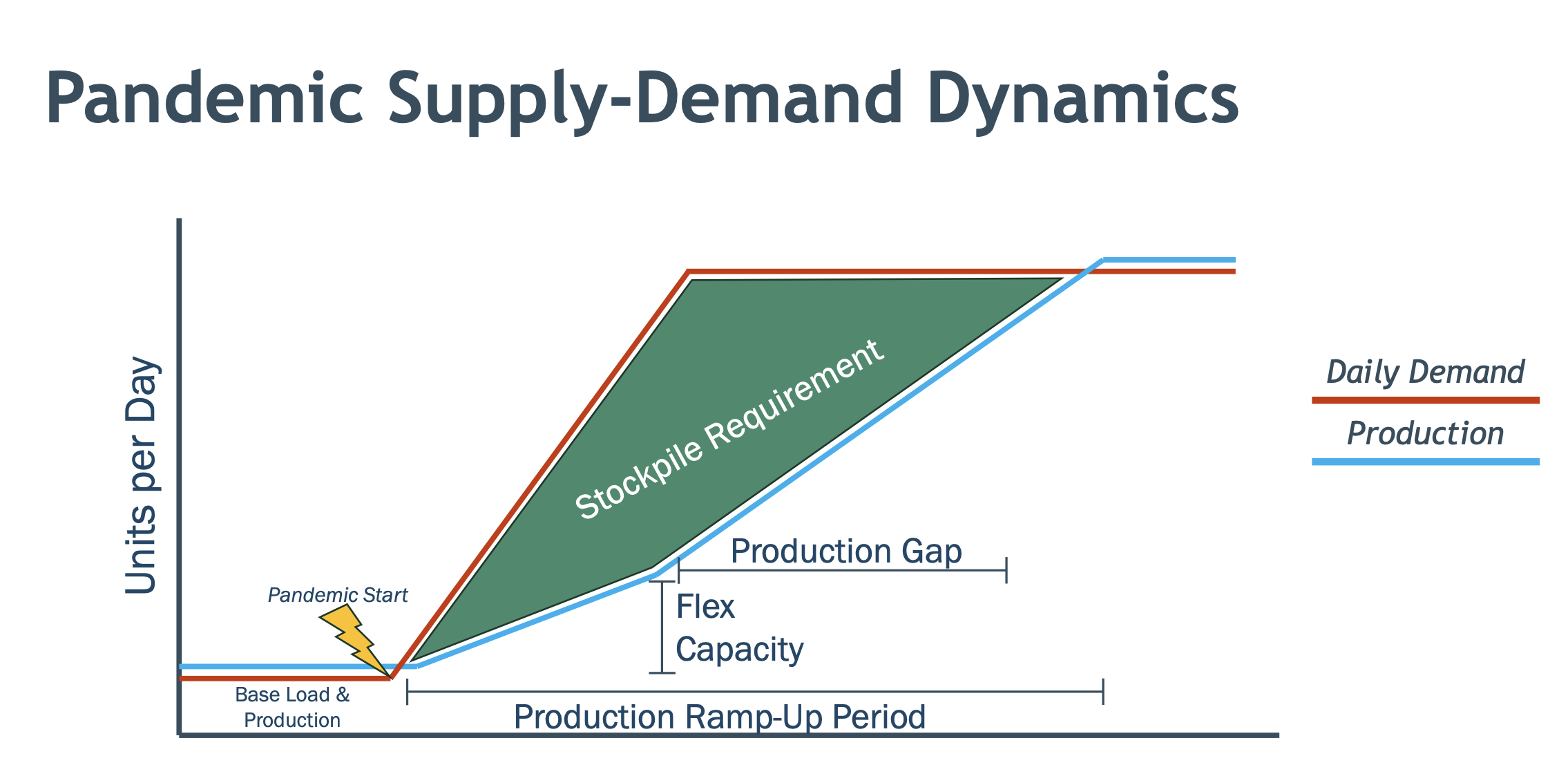
Figure 1. Notional figure from Blueprint Biosecurity’s Next-Gen PPE Blueprint demonstrating the need for stockpiling PPE in advance of future pandemics.
Recognizing the vulnerability of our PPE supply chain to future pandemics, Section 3.3 of the National Biodefense Strategy and Implementation Plan directs the federal government to:
Establish resilient and scalable supply and manufacturing capabilities for PPE in the United States that can: (a) enable a containment response for; and (b) meet U.S. peak projected demand for healthcare and other essential critical infrastructure workers during a nationally or internationally significant biological incident.
At a high level, securing the supply of PPE during crises is already understood as a national priority. However, despite the federal government’s past efforts to invest in domestic PPE manufacturing, production capacity will still take time to ramp up in future scenarios. Our current stockpiles aren’t large enough to bridge that gap. Some illustrative math: there are approximately 50 million essential workers in the United States, but as of 2022 our Strategic National Stockpile only had about 540 million disposable N95 respirators. This is barely enough to last 10 days, assuming each worker only uses one per day. (One per day is even a stretch: extended use and reuse of disposable N95s often leads to air leakage around wearers’ faces.) State- and local-level stockpiles may help, but many states have already started jettisoning their PPE stocks as purchases from 2020 expire and the prudence of paying for storage becomes less visible. PPE shortages may happen again.
Fortunately, there is existing technology that can reduce the likelihood of shortages while also protecting workers better and reducing costs: reusable respirators, like elastomeric half-mask respirators (EHMRs).
A single EHMR typically costs between $20 and $40. While the up-front cost of an EHMR is higher than the ~$1 cost of a disposable N95, a single EHMR can reliably last a worker for thousands of shifts over the entirety of a pandemic. Compared to disposable N95s, EHMRs are also better at protecting workers from infection, and workers prefer them to disposable N95s in risky environments. EHMR facepieces often have a 10-year shelf life, and filter cartridges typically have the same five-year shelf life of a typical disposable N95. A supply of EHMRs also takes up an estimated 1.5% of the warehouse space of the equivalent supply of disposable N95s.
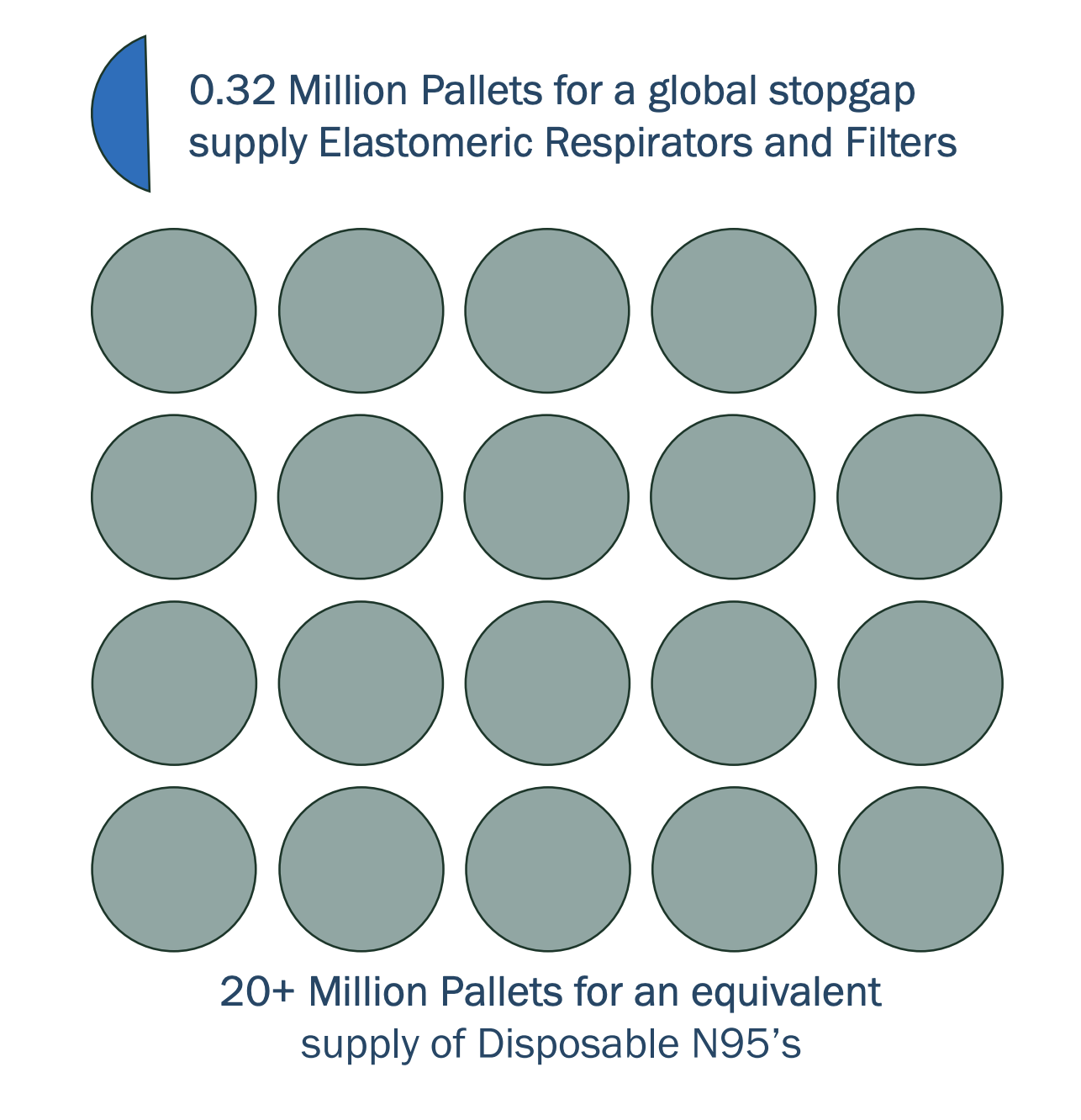
Figure 2. The relative size of equivalent PPE stockpiles. Source: Blueprint Biosecurity’s Next-Gen PPE Blueprint.
Some previous drawbacks of EHMRs were their lack of filtration for exhaled air and the unclear efficacy of disinfecting them between uses. Both of those problems are on their way to being solved. The newest generation of EHMRs on the market (products like the Dentec Comfort-Air Nx and the ElastoMaskPro) provide filtration on both inhalation and exhalation, and initial results from ongoing studies presented by the National Institute for Occupational Safety and Health (NIOSH) have demonstrated that they can be safely disinfected. (Product links are for illustrative purposes, not endorsement.)
Establishing stable demand for the newest generation of EHMRs could drive additional innovation in product design or material use. This innovation could further reduce worker infection rates by eliminating the need for respirator fit testing, improving comfort and communication, and enabling self-disinfection. It could also increase the number of critical infrastructure workers coverable with a fixed stockpile budget by increasing shelf lives and reducing cost per unit. Making reusable respirators more protective, ergonomic, and storable would improve the number of lives they are able to save in future pandemics while lowering costs. For further information on EHMRs, the National Academies has published studies that explore the benefits of reusable respirators.
The next administration, led by the new OPPR can require critical infrastructure operators that receive federal emergency/disaster preparedness funding to maintain resilience caches of at least one reusable respirator per critical infrastructure worker in their workplaces—enough to protect those workers during future pandemics.
These resilience caches would have two key benefits:
- Because many U.S. critical infrastructure operators, from healthcare to electricity providers, receive federal emergency preparedness funds, these requirements would bolster our nation’s mission-critical functions against pandemics or other inhalation hazards like wildfire smoke. At the same time, the requirements would be tied to a source of funding that could be used to meet them.
- By creating large, sustainable private-sector demand for domestic respirators, these requirements would help substantially grow the domestic industrial base for PPE manufacturing, without relying on future warm-basing payments like those that Congress recently rescinded.
By taking action, the next administration has an opportunity to reduce the future burden on taxpayers and the federal government, help keep workers safe, and increase the robustness of domestic critical infrastructure.
Plan of Action
Recommendation 1. Require federal agencies and recipients of federal emergency/disaster preparedness funding to maintain access to at least one reusable respirator per critical employee.
OPPR can coordinate a process to define the minimum target product profile of reusable respirators that employers must procure. To incentivize continual respirator innovation, OPPR’s process can regularly raise the minimum performance standards of PPE in these resilience caches. These standards could be published alongside regular PPE demand forecasts. As products expire every 5 or 10 years, employers would be required to procure the new, higher standard.
OPPR can also convene representatives from each agency that administers emergency/disaster preparedness funding programs to critical infrastructure sectors and can align those agencies on language for:
- Requiring funding recipients to maintain access to resilience caches of enough PPE.
- Explicitly including “maintaining access to PPE resilience caches” as an acceptable and encouraged use of funding.
The Cybersecurity and Infrastructure Security Agency (CISA) within the Department of Homeland Security (DHS) can update its definition of essential workers and set guidelines for which employees would need a reusable respirator.
FEMA’s Office of National Continuity Programs can recommend reusable respirator stocks for critical staff at federal departments and agencies, and the Centers for Medicare and Medicaid Services (CMS) can also set a requirement for healthcare facilities as a condition of participation for receiving Medicare reimbursement.
Recommendation 2. Initiate an occupational safety rule on reusable respirator resilience caches.
To cover any critical infrastructure workplaces that are not affected by the requirements in Recommendation 1, OSHA can also require employers to maintain these resilience caches. This provision could be incorporated into a broader rule on pandemic preparedness, as a former OSHA director has suggested.
OSHA should also develop preemptive guidance on the scenarios in which it would likely relax its other rules. In normal times, employers are usually required to implement a full, costly Respiratory Protection Program (RPP) whenever they hand an employee an EHMR. An RPP typically includes complex, time-consuming steps like medical evaluations that may impede PPE access in crises. OSHA already has experience relaxing RPP rules in pandemics, and preemptive guidance on when those rules might be relaxed in the future would help employers better understand possible regulations around using their resilience caches.
Recommendation 3. Require PPE manufacturers receiving federal funding to demonstrate their robustness to extreme pandemics.
The DHS pandemic response plan notes that workplace absenteeism rates during extreme pandemics are projected to be to 40%.
U.S. PPE manufacturers supported by federal industrial base expansion programs, such as the investments managed by ASPR, should be required to demonstrate that they can remain operational in extreme conditions in order to continue receiving funding.
To demonstrate their pandemic preparedness, these manufacturers should have:
- An on-site stockpile of enough reusable respirators for the maximum number of workers they might hire during a manufacturing surge.
- A comprehensive pandemic response plan that addresses workplace transmission protection.
- Regular exercises and independent evaluations of their pandemic response plans.
Recommendation 4. Start stockpiling reusable respirators in the Strategic National Stockpile.
Inside ASPR, the Strategic National Stockpile should ensure that the majority of its new PPE purchases are for reusable respirators, not disposable N95s. The stockpile can also encourage further innovation by making advance market commitments for next-generation reusable respirators.
Recommendation 5. Leverage FEMA’s public outreach experience to increase “peacetime” adoption of reusable respirators.
To complement work on growing reusable respirator stockpiles and hardening manufacturing, FEMA can also help familiarize the workforce with these products in advance of a crisis. FEMA can use Ready.gov to encourage the general public to adopt reusable respirators in household emergency preparedness kits. It can also develop partnerships with professional groups like the American Industrial Hygiene Association (AIHA) or the Association for Health Care Resource & Materials Management (AHRMM) to introduce workers to reusable respirators and instruct them in their use cases during both business as usual and crises.
Conclusion
Given the high and growing risk of another pandemic, ensuring that we have an ample supply of highly protective respiratory PPE should be a national priority. With new reusable respirators hitting the market, the momentum around pandemic preparedness after the COVID-19 pandemic, and a clear opportunity to reaffirm prior commitments, the time is ripe for the next administration to make sure our workers are safe the next time a pandemic strikes.
This action-ready policy memo is part of Day One 2025 — our effort to bring forward bold policy ideas, grounded in science and evidence, that can tackle the country’s biggest challenges and bring us closer to the prosperous, equitable and safe future that we all hope for whoever takes office in 2025 and beyond.
PLEASE NOTE (February 2025): Since publication several government websites have been taken offline. We apologize for any broken links to once accessible public data.
Yes. Throughout COVID-19, critical infrastructure worker unions have consistently advocated for EHMRs. Examples include the New York State Nurses Association (NYSNA) and the Service Employees International Union (SEIU) 121rn.
Unions have also been at the forefront of broader calls for securing PPE access in future pandemics; the California Nurses Association was the driving force behind California’s most recent PPE stockpiling laws.
Studies have also shown that workers prefer reusable respirators to disposable N95s in risky environments.
Not in the long run. As a single employee infection can cost $340 per day, it is more cost-effective for most employers to spend around $3 per critical employee per year for reusable respirators. For hospitals in states like California or New York, which mandate one- to three-month PPE stockpiles, switching those stockpiles to reusable respirators would likely be cost-saving, as demonstrated by past case studies. Most of these hospitals are still meeting those requirements with disposable N95s largely because of slow product choice re-evaluation cycles.
Managing these resilience caches would also pose a minimal burden on employers. Most EHMRs can be comfortably stored in most indoor workplaces, taking up around the volume of a large coffee mug for each employee. Small workplaces with fewer than 50 employees could likely fit their entire resilience cache in a cardboard box in a back closet, and large workplaces will likely already have systems for managing emergency products that expire, like AEDs, first-aid kits, and fire extinguishers. As with other consumables like printer ink cartridges, PPE manufacturers can send reminders to employers when the products they purchased are about to expire.
To put this into perspective, fire alarm units should generally be replaced every 10 years for $20 to $30 each, and typically require new batteries once or twice per year. We readily accept the burden and minor cost of fire alarm maintenance, even though all U.S. fire deaths in the last 10 years only accumulate to 3% of COVID-19’s U.S. death toll.
While EHMRs fit most workers, there may be some workers who aren’t able to wear them due to religious norms or assistive devices.
Those workers can instead wear another type of reusable respirator, powered air-purifying respirators (PAPRs). While PAPRs are even more effective at keeping workers safe than EHMRs, they cost significantly more and can be very loud. Employers and government stockpiles can include a small amount of PAPRs for those workers who can’t wear EHMRs, and can encourage eventual cost reductions and user-experience improvements with advance market commitments and incremental increases in procurement standards.
Yes, but they reduce the risk of any lags in PPE access. Every day that workers are exposed to pathogens without adequate PPE, their likelihood of infection goes up. Any unnecessary exposures speed the spread of the pandemic. Also, PPE manufacturing ramp-up could be slowed by employee absences due to infection or caring for infected loved ones.
To accommodate some employers’ reluctance to build physical stockpiles, the administration can enable employers to satisfy the resilience cache requirement in multiple ways, such as:
- On-site resilience caches in their workplaces
- Agreements with distributors to manage resilience cache inventory as a rotating supply bubble
- Agreements with third-party resilience cache managers
- Purchase options with manufacturers that have demonstrated enough capacity to rapidly manufacture resilience cache inventory at the start of a pandemic
Purchase options would function like a “virtual” resilience cache: they would incentivize manufacturers to build extra warm-base surge capacity and test their ability to rapidly ramp up manufacturing pace. However, it would increase the risk that workers will be exposed to infectious disease hazards before their PPE arrives. (Especially in the case of a severe pandemic, where logistics systems could get disrupted.)
Yes. Employers could use respirators from their resilience cache to protect workers from localized incidents like seasonal flu outbreaks, wildfires, or smog days, and put them back into storage when they’re no longer needed.
Yes. Federal emergency/disaster preparedness funding could be tied to other requirements, like:
- Installing the capacity to turn up workplace air ventilation or filtration significantly
- Maintaining and regularly exercising pandemic response protocols
- Investing in passive transmission suppression technology (e.g., germicidal ultraviolet light)
The next time there’s a pandemic, having these requirements in place could help ensure that any post-emergency funding (e.g., Hazard Mitigation Assistance Program grants) will be spent on innovative PPE that aligns with the federal government’s broader PPE supply chain strategies.
If the Strategic National Stockpile receives additional post-emergency funding from Congress, it could also align its purchases with the target product profiles that critical infrastructure operators are already procuring to.