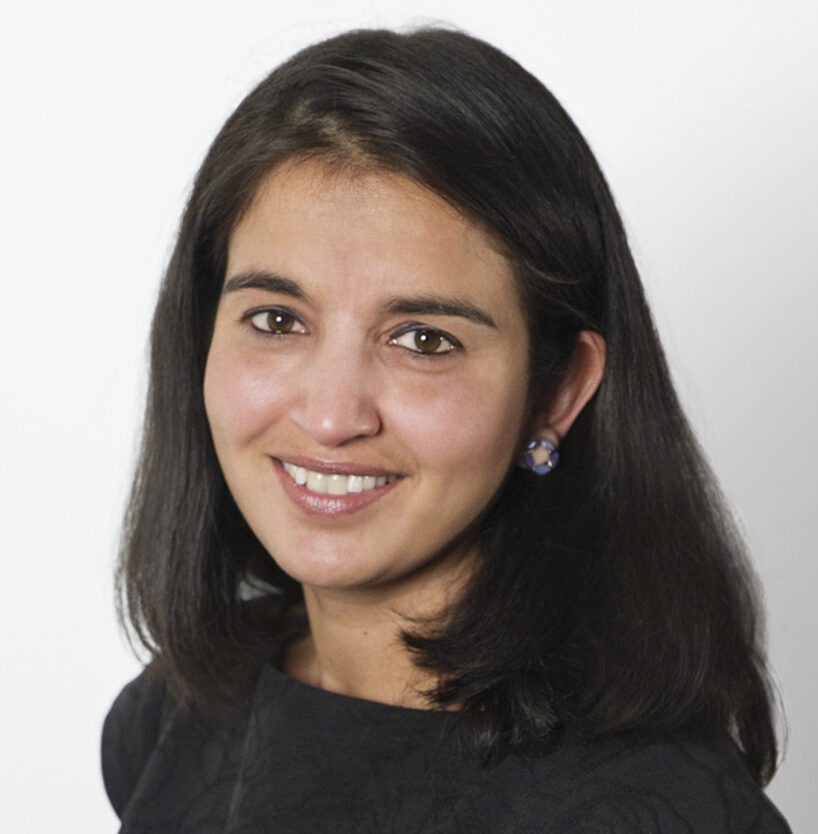
Harshini Mukndan leads the chemical and biological technologies program portfolio at Lawrence Berkeley, and is a senior scientist and department chair in the Biosciences Division. Harshi is also director of convergence@LBL, a strategic initiative focused on developing scientific solutions at the intersection of disciplines – especially AI/ML and bio. Before joining LBL, Harshi was the group leader for physical chemistry and applied spectroscopy at the Los Alamos National Laboratory, where she led the development of diagnostics and surveillance technologies for global health and national security. Her research has focused on developing pathogen-agnostic strategies, modeled after innate immune recognition, to ensure preparedness against emerging outbreaks – natural or otherwise. She has focused on using AI/ML to understand and unravel the complexity in biological systems, while ensuring physiological relevance. She has published > 100 manuscripts, and is an inventor on 8 provisional and issued patents. Her technologies have received four R&D 100 awards, including a gold award for corporate social responsibility. She has briefed the National Security Council, the Office of Science and Technology Policy, and other White House offices. She also serves as a reviewer/advisor for the Defense Threat Reduction Agency and Defense Advanced Research Projects Agency, on study sessions for NIH and NSF, and as a program reviewer for the FDA, among others. Harshi is an AAAS Fellow, an IF/THEN Ambassador, and a recipient of the Women In Technology award. She has been honored in the Smithsonian Exhibit of Women in STEM, and featured in television shows such as CBS’s Mission Unstoppable. She is the secretary of the Sensor Division of the Electrochemical Society. She has served on several National Academy of Sciences, Engineering, and Medicine (NASEM) committees, including recently on AI*Bio and horizon scanning activities. She is a non-resident affiliate of UC Berkeley (Berkeley Risks and Security Laboratory), an adjunct professor at the University of New Mexico School of Medicine, a visiting scientist at Los Alamos National Laboratory, and a senior policy advisor for the Council on Strategic Risks.