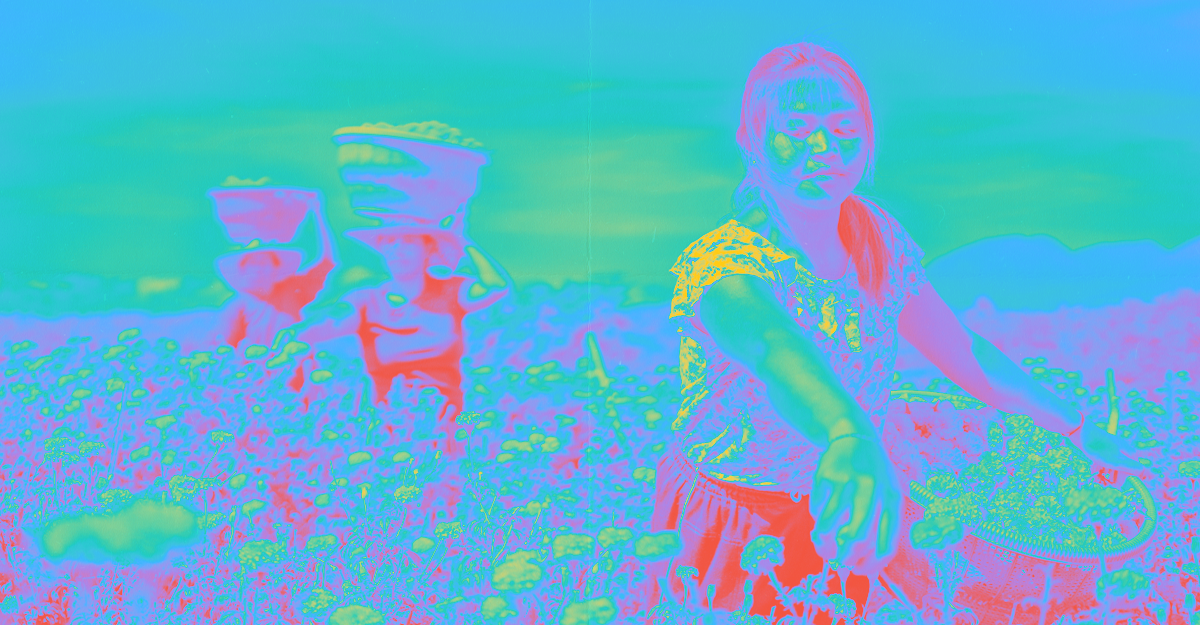
2026 Is Year of the Female Farmer. We Spoke to Five Who Are Also Technologists.
According to the 2022 Census of Agriculture taken by the U.S. Department of Agriculture’s (USDA) National Agricultural Statistics Service (NASS), the United States has 1.2 million female producers, or farmers, which accounts for 36% of the 3.4 million producers nationwide. The producers hail from all over the country, but the state with the most female producers was Texas, a state FAS Impact Fellow Jodie McVane knows well.
Jodie, a Texas resident, has served as the Smart Agriculture and Forestry Impact Fellow at the USDA’s Natural Resources Conservation Service (NRCS) since 2024. Within NRCS, Jodie evaluates additions and modifications to the list of existing Smart Agriculture and Forestry practices which includes summarizing and presenting recommendations to NRCS and Farm Production and Conservation (FPAC) mission area leadership.
“People who aren’t in agriculture ask me what work we do at the Ecological Science Division of the Natural Resources Conservation Service. I explain that we are taking traditional agricultural practices and developing and implementing new technologies to assess and treat soil, water, air, plant, animal, and energy resource concerns. So I was really excited to be a FAS Impact Fellow doing a tour of service at the USDA. It has allowed me to expand my knowledge of emerging science as it applies to farming, and gave me an opportunity to work with others passionate about American farmers.”
Conversations with Female Farmers
Jodie’s work utilizing the latest technology and evaluating the best practices don’t happen in isolation. Part of Jodie’s day job as an Impact Fellow consists of building relationships with other agriculturists and farmers across the country. So she was thrilled to facilitate a conversation with female farmers Hannah Breckbill (Decorah, IA), Jess D’Souza (Mt. Horeb, WI), Corrie Scott (Benson, IL), and Lauren Reedy (Ben Lomond, CA), about what brought them to farming and what drives their passion for the field today
Although some farmers, like Hannah and Lauren, nurtured an interest in agriculture from early childhood by playing farmer or spotting (and identifying) plants and flowers during their daily soybean walks, other farmers like Corrie Scott (Lauren’s sister) and Jess D’Souza didn’t find their passion for farming until they were adults. Jess didn’t even start thinking about farming until her early twenties. She told Jodie, “I started reading some books that had me questioning where my food comes from. I started farming in my own backyard. Then I started thinking about how exciting it would be to feed other people!”
Meanwhile, Corrie, who grew up with Lauren on their family’s homestead, never thought she would go into farming. “I didn’t actually enjoy the farm stuff when we were little. I wanted to go out and see the world, and not stay close to home.” Corrie did in fact leave home, and it wasn’t until she spent time in Hawaii after college and started noticing that the state heavily relied on exports, that she wanted to be more intentional about learning where her food was coming from.
Building Community is Crucial to Success
The idea that one should be connected to how and where their food is grown is common among the group. All agreed that one of the vital ways to learn – and teach – was by building community, and as Jodie noted “women are good at that.” Corrie and Lauren actually found community by first realizing that although they don’t look like stereotypical farmers, they’re farmers all the same. “We’ve gotten more connected to other farmers,” Corrie said, “We don’t grow it all, we don’t want to grow it all. We’ve really been able to build a network of fellow farmers that start to connect in ways that candidly I wasn’t fully aware of.”
Hannah’s story is similar. “As a first generation farmer…I didn’t even imagine I could access land ownership, but then my community made it happen.” The land was up for auction and Hannah’s neighbors were concerned about potential future landowners exploiting the land or taking it out of agricultural use. They approached the previous owner as a group, asked her to name a price, and bought the land to prevent that from happening. State and local policies build on these community driven efforts by setting aside funding for farmland access through programs, like the The Farmland Protection Policy Act (1981), and other conservation programs, grants, and cooperative ownership models. These investments help reduce barriers for first generation and historically excluded farmers while keeping land in sustainable, community centered use.
Although Hannah found a community she can rely on – they are currently all pooling their money to buy additional farmland together – she still understands the strength in her unique identity. “When I talk about being a woman farmer, or a queer farmer, I am thinking a lot about how those identities inform the farming that I do. I farm in an intentionally sustainable and diverse way and that is, by nature, really different that the farming that is around me. Being a queer person helps me think up different ways of doing things. Being a woman means that I’m excluded from a lot of systems and mainstream ways of thinking about farming. That gives me a lot of freedom to do something different and do something in alignment with my values.”
Jess works a state away but she agrees. “There is a robust agricultural community around me, and it has changed over the years to become more diverse in the people who manage farms. There is a change in what it has been and what it is becoming. This area has done well on addressing development and has set limits to protect agricultural lands. People are understanding the benefits of diverse farms.”
Public policy and investment in agricultural innovation, like USDA’s new Regenerative Pilot Program reinforce this shift. These efforts not only help protect farmland but also strengthen local economies, improve food access, and build more resilient communities. As technologies evolve, many are incorporated into farming practices.
Planting the Next Generation of Farmers
All four farmers agree that they have benefitted from their communities, but they also take the role of giving back and providing innovation for the future of their communities very seriously. One area of particular interest is community health. “That is a big heart issue,” Lauren says, “We are in the beginnings of our involvement with a food as medicine project that is starting in the state of Illinois with a few major players like OSF Healthcare.” This is near and dear to both Lauren and Corrie as they’ve watched family members develop neurological disintegration. The women attribute this to previous farmland chemical use. In addition to diversifying farm products and responsible use of chemicals, there is renewing interest in smaller scale, regenerative agricultural practices.
Another sentiment Jodie, Jess, Hannah, Corrie, and Lauren agree on? Agriculture is its own culture. “There is a big social aspect to agriculture, and we should never forget that,” said Jodie. Lauren immediately agreed saying, “Christa Barfield, the CEO of FarmerJawn in Philadelphia, is a friend of mine and her tagline is, ‘Agriculture is the culture.’ I think that circles back to everything we’ve said already. Agriculture is the culture because it is our food culture. It is our health culture. It is our social culture. Everything comes back to the soil.”
With 2026 being the International Year of the Woman Farmer (IYWF) and International Women’s Month being celebrated throughout March, it felt more than appropriate to highlight the experiences of women farmers in America.
Western states functionally manage trillions in global climate risk (permafrost, forest carbon, etc.) and can do so in ways that drive state economic development.
Implementation will not be easy. Several of the plan’s critical strategies challenge established utility business models.
We won’t solve the cost-of-living crisis without improving the capacity of state public utility commissions to protect customers, find and implement new solutions to meet rising demand, and realign broken utility incentives.
Public service commissions should require utilities to quantify avoided healthcare costs, reduction in pollution exposure, and improvements in population health alongside traditional metrics.