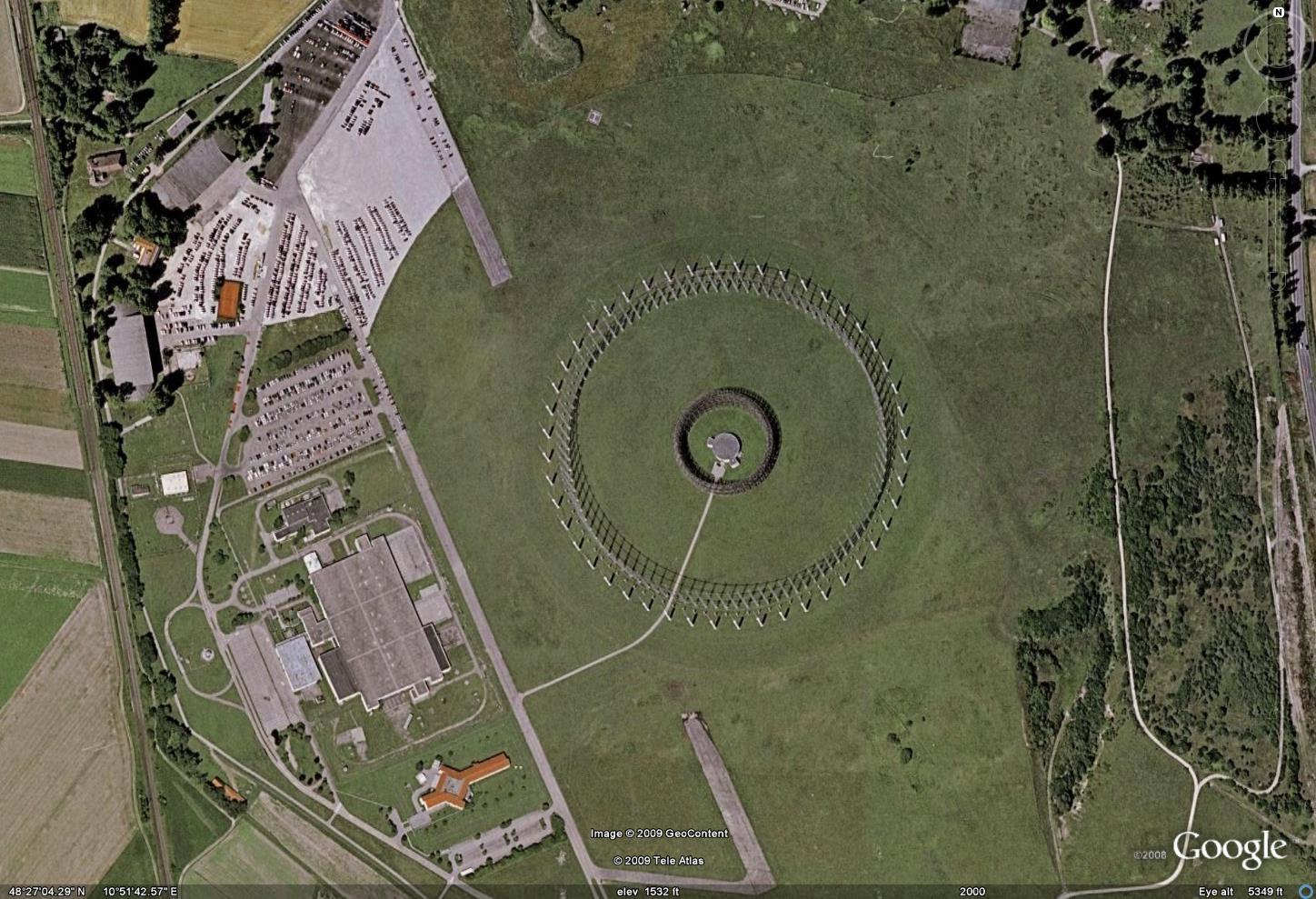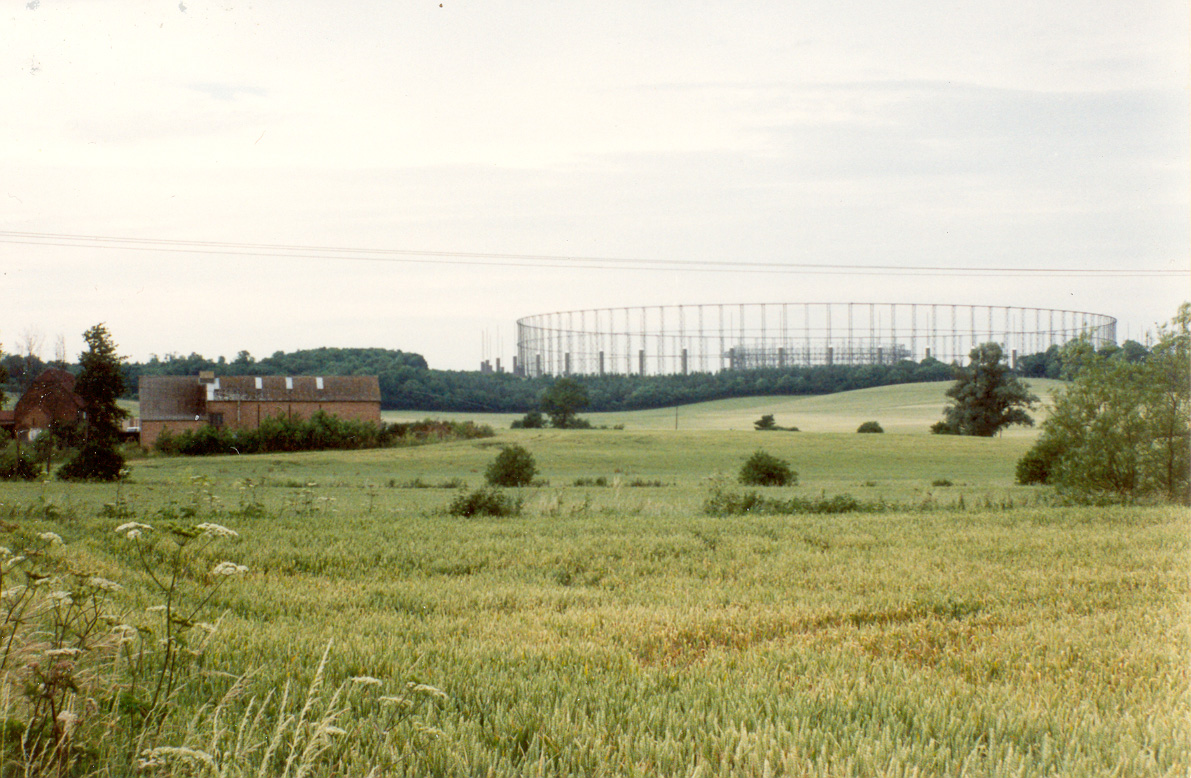
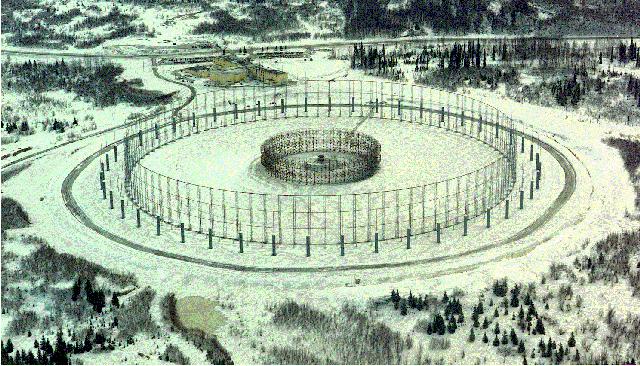
 The AN/FLR-9, operated by the Air Intelligence Agency, is part of the DOD World Wide High Frequency Direction Finding System. High-frequency radio communication signals travel to receivers over the horizon by bouncing off the ionosphere. The shell of ionised particles which surrounds the earth refracts the signals so that they return to earth rather than disappear out into space. The clarity of the signal received depends on atmospheric and topographical conditions.
HF-DF stations detect radio signals from aircraft or ships, and calculate the direction, or line of bearing, of the radio transmitter from the direction finding antenna. When the same signal is received by two or more antennae, the intersection of the lines of bearing mark the transmitter's location, using either precision single station location (SSL) capability, or in a network of DF stations using both multi-station azimuth triangulation and SSL. High Frequency Acquisition (AQ) and Direction Finding (DF) operations are performed with the Narrowband System (NBS) and Wideband Direction Finding (WBDF) Subsystem in support of normal and degraded communications modes, using both adaptive reception and super-resolution direction finding techniques.
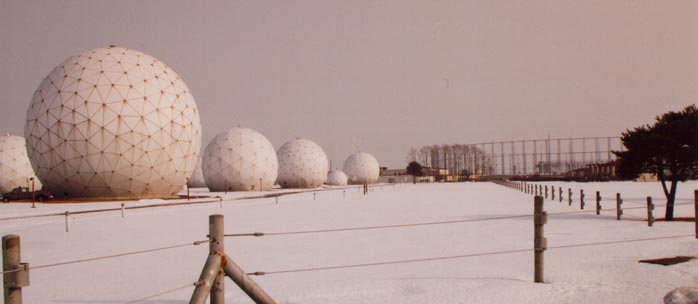
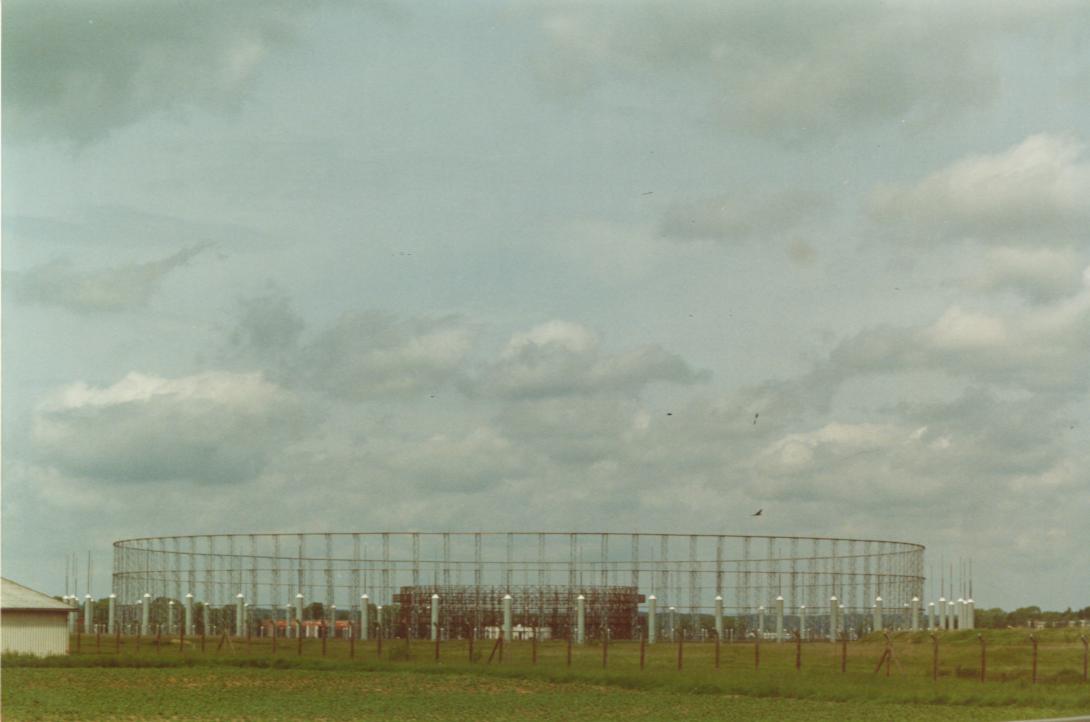
The AN/FLR-9 circularly disposed antenna array (CDAA), popularly known as elephant cages*, have a nominal range between 150 to 5000 kilometers.
The AN/FLR-9, operated by the Air Intelligence Agency, is part of the DOD World Wide High Frequency Direction Finding System. High-frequency radio communication signals travel to receivers over the horizon by bouncing off the ionosphere. The shell of ionised particles which surrounds the earth refracts the signals so that they return to earth rather than disappear out into space. The clarity of the signal received depends on atmospheric and topographical conditions.
HF-DF stations detect radio signals from aircraft or ships, and calculate the direction, or line of bearing, of the radio transmitter from the direction finding antenna. When the same signal is received by two or more antennae, the intersection of the lines of bearing mark the transmitter's location, using either precision single station location (SSL) capability, or in a network of DF stations using both multi-station azimuth triangulation and SSL. High Frequency Acquisition (AQ) and Direction Finding (DF) operations are performed with the Narrowband System (NBS) and Wideband Direction Finding (WBDF) Subsystem in support of normal and degraded communications modes, using both adaptive reception and super-resolution direction finding techniques.
The AN/FLR-9 circularly disposed antenna array (CDAA), popularly known as elephant cages*, have a nominal range between 150 to 5000 kilometers. * DD Kavanagh writes: "I was the ESD Field Officer, stationed at Fuchu, Japan, responsible for construction of the FLR-9s at Clark and at Misawa in 1964. My NCO, stationed at Misawa, was C/MSgt. Joseph E. Rabig. The work those days was very hush, hush. As the structure went up there was much speculation at Misawa about what the purpose was. Joe came up with the explanation that it was an 'Elephant Cage.' He maintained that was their purpose and justified the explanation by pointing out: 'They work pretty well, don't they. You don't see any elephants running around loose do you?' I guess the name stuck."
I was the Civil Engineer (Facilities Superintendent) for the 301st IS at Misawa AB from June 1988 to December 1996. The line about people saying that the FLR-9 was a missile catcher reflects an experience of mine in a Facilities Board meeting. I was backstopping for my Colonel in the meeting when a 2nd Lt. sitting next to me leaned over and whispered to me: "I was told that the silos around the outside of the FLR-9 are secret missile placements for Air Base Defense. I know it's gotta be classified, but is it true?" Looking back at him, I was dumbfounded that he would say such a thing; and doubly dumbfounded that he would think that if it were so, that I would breach security by talking about classified information in public. Recovering my composure, I gave my best poker face and replied, "I can neither confirm nor deny the presence of missles on Security Hill." "Oh, okay," he said. {wink-nod} "I understand."
I was an rf engineer on the Calibration and Monitoring (Cal and Mon) System of FLR-9 and assisted with the installations in Brindisi, Italy in Jan-Feb 1963 as well as Chicksands, UK in June-July 1963. The Cal and Mon System was designed by engineers at the then Sylvania Electronic Systems (Later GTE Systems) located in Mountain View, CA and Waltham, MA. The Cal and Mon System was designed to maintain the integrity of the phase and amplitude matching of the receiving system, in particular the then vacuum tube preamplifiers that had a propensity to drift as they aged. The preamps were later updated to all solid state and negated much of the need for the Cal and Mon System.
I can corroborate the story about the sleeve monopole antenna structures being mistaken for missiles in Brindisi. The natives there were very curious about them at the time of the installation.
What a delight for me to come across information about my "electronic spying" job there outside of Brindisi, Italy! For eighteen months between the summer of 1962 and January of 1964, I functioned as a "202," or Radio Intercept Analysis Specialist, then a "titless WAF," because all operations people (292s, 203s, and 202s) consisted of men. Our base security during those years consisted of an air policeman and an Italian interpreter manning a small guard shack along a kind of ring road extending out toward the main highway, which at that time offered a splendid view of that puzzling FLR/9. I arrived for duty during what I remember to be the final construction phase of the FLR/9. For a short period, in fact, I earned more money per week putting cables together than I earned for an entire month from the Air Force! When I had the occasion to visit the site in either 1987 or 1988, the view toward the entire base from the highway had been completely blocked. The easy-going mannerisms of the former Air Force AP had been replaced by a down-to-earth-tough US Marine, who spoke fluent Italian. When I attempted to get permission to go on base, the Marine treated me as though I, ironically, were a foreign spy! Interestingly enough, my tour there awakened an appetite for German language. After my discharge in 1965, I went on to obtain a master's degree in German language and literature. I'd like to give a "shout" to my former roommates, Jimmy C. Griffin and Samuel L. Solomon. Hi! Then, too, whatever happened to you, Bill Guy?
Your page is a bit incomplete, I would like to add that there was also a FLR-9 facility just south of
Homestead AFB Florida, the remains are quite visible on Google Earth at 25.372471,-80.423269
This particular location was operated by the Naval Security Group up until 1992 when hurricane Andrew severely damaged the antennas. I was one of the few Air Force personnel allowed in the place and each time I drove thru the antenna array I was in awe of the immensity of it.
Contrary to BW's claim, the antenna at Homestead, FL (a former Naval Security Group RDF and signal intercept site) was a Navy AN/FRD-10 -- at least it was when I was stationed there, as a Naval Security Group electronic maintenance person, from 1969 to 1971.
Here are a few photos of the antenna, photographed by me during my time at Homestead:
https://www.navycthistory.com/homestead_KJH_1.html
I was a CTM2 performing new installs at Homestead in 1992 when Andrew blew thru. To set the record straight, the storm did not damage the antenna system. It completely blew it out to sea, we suspect. Nothing was left. Not a poll, not an element and not a single wire. The security force of 13 men lived on canned goods for 3 days. My group from Washington DC on Nebraska Ave were the first back on site. The most strange site I've ever witnessed. The dry goods storage building had 2 walls gone. Two walls were still intact with dry goods still on them. The refer storage building went the way of the array, not a sign of it. That is what they ate for 3 days. All vending machines were emptied. The security force told us the storm blew the delivery doors open and hurricane winds were blowing thru the building. Paper flying and chairs rolling up and down the halls like in Poltergist. We were staying in Miami in condos and we went 4 days with no power or ability to contact Washington. Once phone lines were restored we were recalled and not long afterward the decision not to reopen the site was made. Most devastated city I've ever seen.
I spent 13 1/2 years on active duty with the Air Force, serving in the USAFSS, ATC, SPECIAL OPS, SAC and USAF Recruiting Service. Of those years about 7 years of them were in USAFSS mostly as a Non-Morse Intercept operator.
(2) Morse Intercept Operators would monitor particular mission assigned frequencies for communication signals that were morse code only. Capturing that information mostly on hard copy via a type writer (old technology). One Morse Intercept operator station was typically made up of 2 radio receivers and any auxiliary equipment necessary to compliment that objective/mission
(3) Radio Direction Finding operators were responsible for helping to triangulate any communication signal as requested by an (Non-Morse, Morse or Radio Telephone-voice) operator. These positions varied with several types of receivers and transmitters with large O'scopes. In a typical RDF (ground) station had 4 to 5 operators in a unit/station.
(4) Radio Telephone Operators were responsible for intercepting voice signals on assigned frequencies and convert that foreign language into english. Capturing that information was by ear but would most often be backed up with magnetic tape and the operator would transcribe key information while intercepting the voice(s).
P.S. The other position that was intricate to the mission and is not described above is the Traffic Analyst....they did not "man" a position and therefore no special equipment was typically used. They would analyze and interpret intercepted data/information so they would be roaming throughout the operations building looking at intercepted data/info.
Not a big deal but this photo correctly identifies a morse intercept isle, but it's not inside an AN/FLR-9 facility.
Actually I was surprised to see that photo. That photo was taken inside the Operations Building of the 6987th USAFSS on Shu Linkou Air Station, Taiwan. Shu Linkou or Linkou as we called it was located about 20 KM west north west of Taipei, up on a plateau about 5 KM from the Formosa Strait. There were no HF-DF arrays of any type on Shu Linkou AS or on Taiwan during the time the US maintained a military presence there. There was a CDAA built near Linkou by the Taiwanese, but that was well after we had left Taiwan in 1977.
6987th USAFSS hosted USN-21 Naval Security Group Activity,(NSGA) Taipei, and an Army Security Agency ASA detachment, that I don't recall the designation for. I was a morse intercept operator with NSG from Feb '71 to July '72. NSG had 10 morse intercept posits exactly like the ones shown in the photo of the Air Force morse intercept bay. ASA also had 10 positions as I recall. Each service branch was separated into their own areas and I only had the occasion to go through the Air Force isles once or twice, but they had at least 20 morse intercept positions.
In the Navy NSG space we had an HF-DF console operator that would tip off targets to Misawa, Clark and either Guam or Okinawa. Each morse intercept position had 3 equipment bays. The left bay held two Collins R-390A receivers. The center equipment bay held an electronic teletypewriter. All of our morse copy went on 6 ply ashless paper interleaved with carbon paper. The right equipment bay held a punched paper tape contraption that also recorded all our traffic and a two way intercom that connected us to the HF-DF console operator.
The used carbon paper and chad from the paper tape punch was recycled. It was customary on the last watch of a morse intercept operator's 15 month tour, to be stripped down to skivvies, and rubbed down with the used carbon paper, and then have chad mixed with molasses dumped on them. Sort of a tar and feathering send off.
6987th USAFSS Dawg Flight maintains a website.
There are several declassified photos of the ops spaces on this page. This one shows a better view of the morse intercept posits.
There may be some confusion and disagreement about the presence of a USAFSS CDAA on Taiwan. The last paragraph of this article should lay that to rest.
I also served at NSGD San Miguel RPI as a morse intercept operator.
JV
Just a followup to the information from JV:
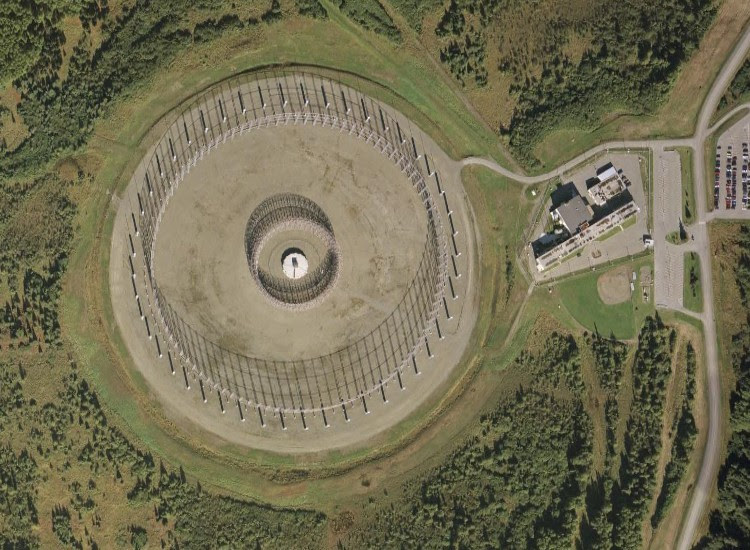
He is absolutely correct that none of the positions in those pictures were inside the AN/FLR 9 building. Most sites referred to the "operations" building as the building connected to the the FLR-9 but resided outside the FLR-9 acreage. FLR-9 didn't have an operations building it did have a small building that contained electronic and electrical equipment that processed signals and then sent them via cable to the operations building.
So for clarity JV is correct that none of these isles/positions were in the building inside the FLR-9. However that building was not referred to as the "operations" building. That building was outside the FLR-9 circular array.
In the picture below, the "operations" building is the large structure at the 6 o'clock position.
And one more from a bird's eye view. The ops bldg is at the 3 o'clock position:
I worked at the site at Gablingen, Germany (part of Field Station Augsburg) from 1983 through 1985. I actually worked in the SATCOM building across the street from the Operations Building for the antenna system. Our mission was to send any information that was intercepted across the Atlantic Ocean to Ft. Detrick in Maryland to the NSA that operated out of that location. The AN/FLR-9 at Gablingen is still operating and is being used by the German Government to monitor communications from Russia, just like it did when I was stationed there! It was recently mentioned in a news article on NBC News because of all the problems with Ukraine. The SATCOM site is still visible from Google Earth but the equipment is gone, only the building (white roof across the street from the ops building) and circular pavement where the antenna was mounted remain. As far as I can find Gablingen is one of only two remaining intact Iron Horse sites left in the world (The other being in Elmendorf, Alaska) and is the only one still operating. The site was built on top of an old Nazi training airbase and has extensive tunnels under it that were built by the Nazis during WW2. This was also the same airbase that Rudolph Hess took off from when he flew to Scotland in a failed attempt to negotiate a surrender of Germany behind Hitler's back.
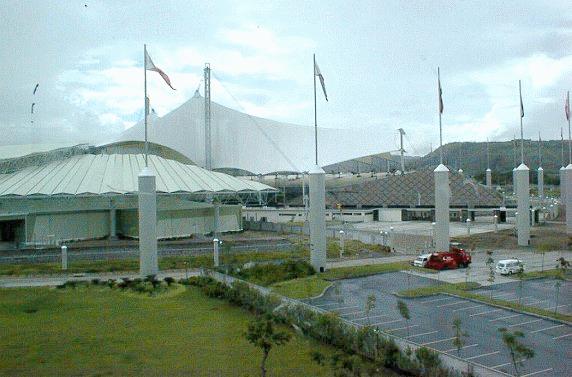
I understand that the antenna in the Philippines is still standing but was covered with canvas and converted into a stadium (!).
Here is a current photo of the FSA Augsburg site:
Raymond Sicotte writes:
David Michael Wade writes:
BW writes:
KH writes:
RR writes:
NB ex-USAFSS R29272AT/R20772AT writes:
(1) Non-Morse Intercept Operator would monitor particular mission assigned frequencies for communications signals that were NOT morse code. Capturing that information on magnetic tape and paper copy, One Non-Morse station was made up of 4 sets of radio receivers, recorders, demodulators and printers. (for a standard TEBO position - AN/GSQ 76)
I thought you might find these images interesting as they specifically relate to the above positions that made up 90% of the operations side of the USAFSS "FLR-9" mission. The pictures have all been declassified.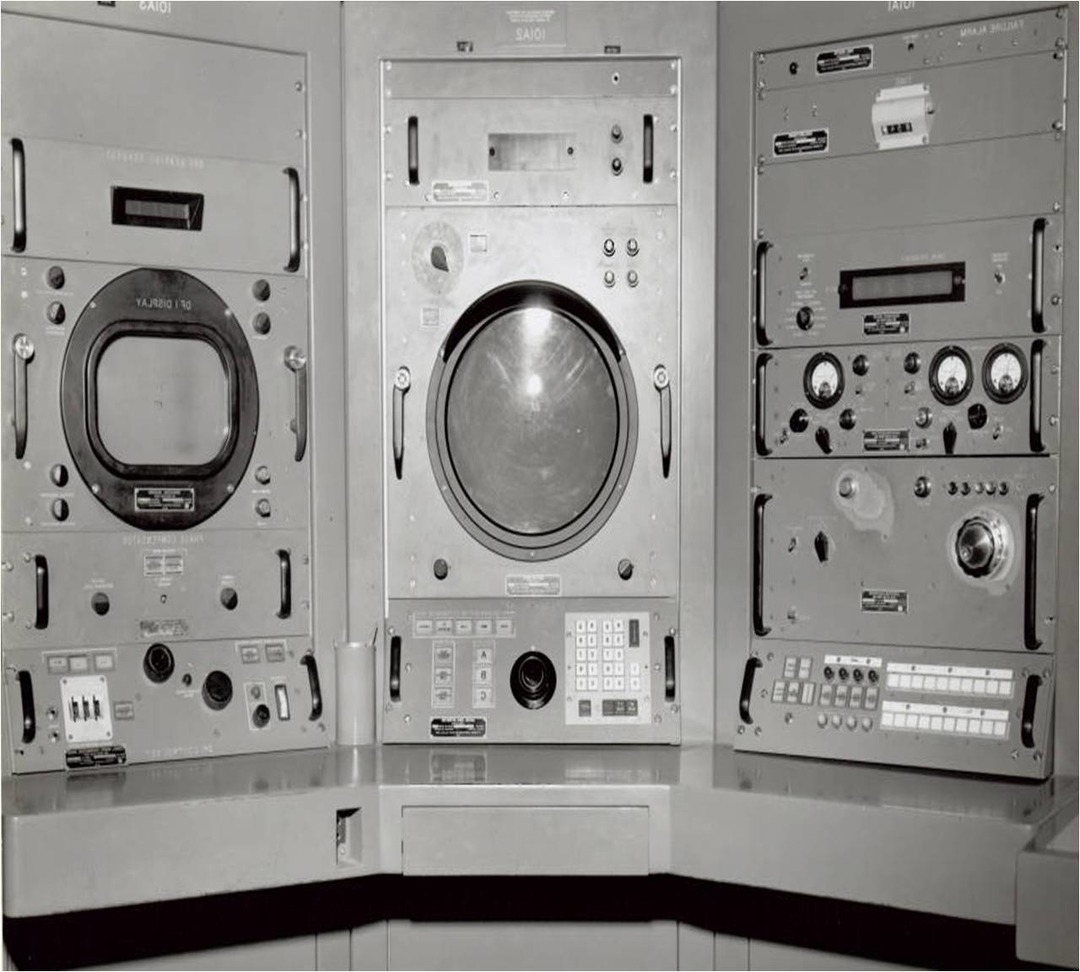
RDF Station inside operations building of AN-FLR-9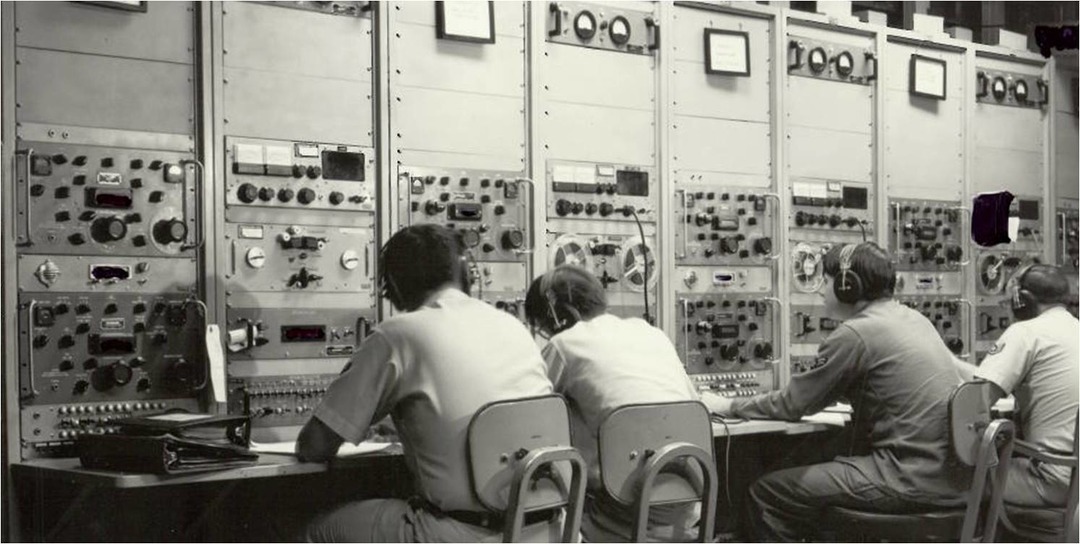
Inside operations building of AN-FLR-9 Radio Telephone position linguist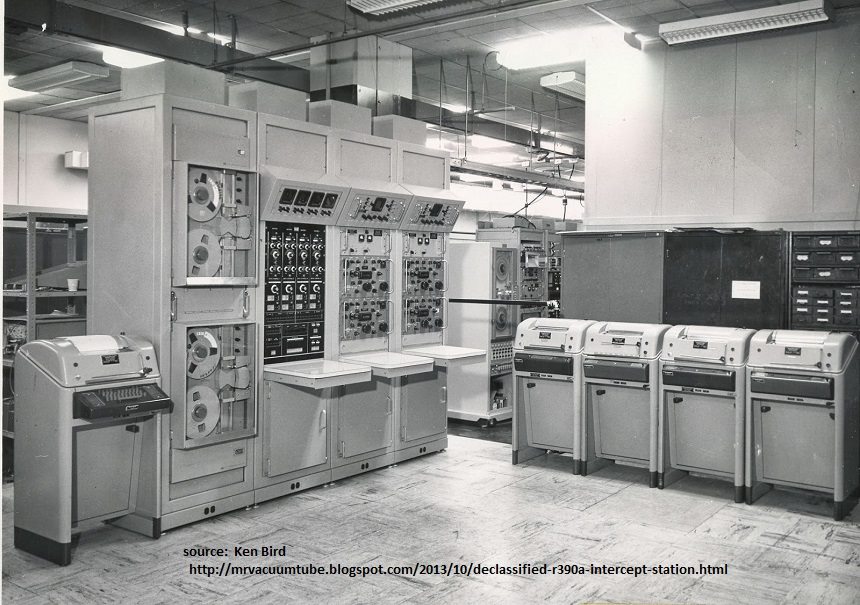
Non-Morse Intercept operator station inside operations building of AN-FLR-9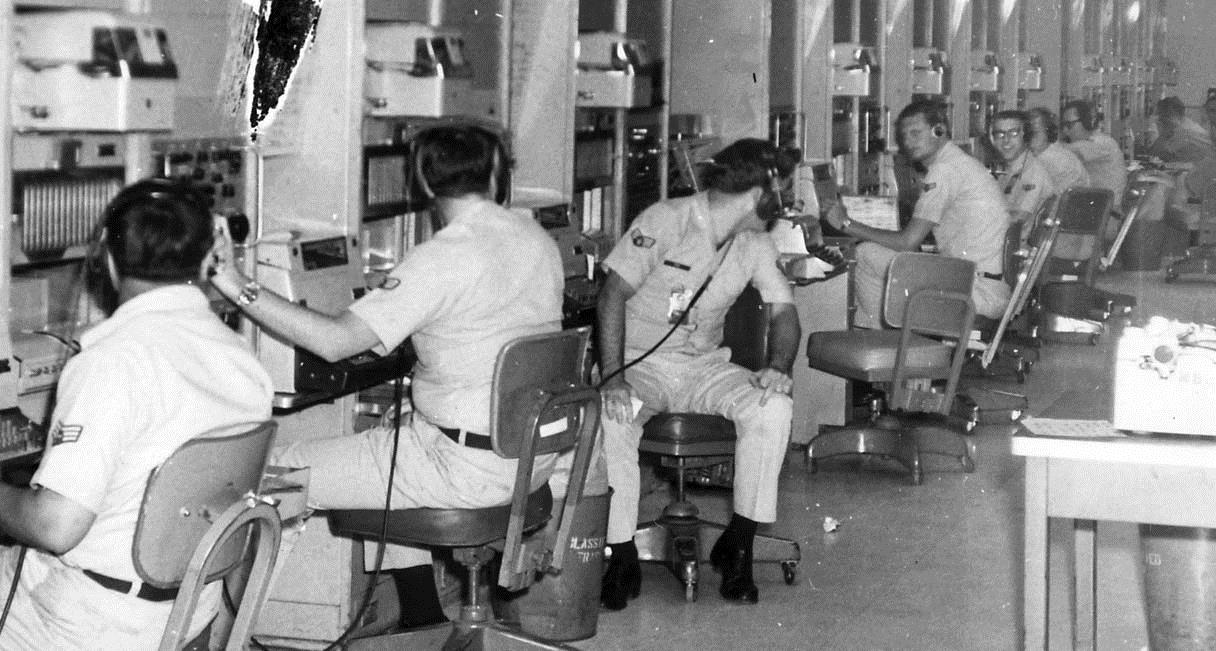
Morse intercept operator isle inside ops building of AN-FLR-9 [but see next message disputing this caption]
JV writes:
CT(R)3 USNR 1969-73
NB writes: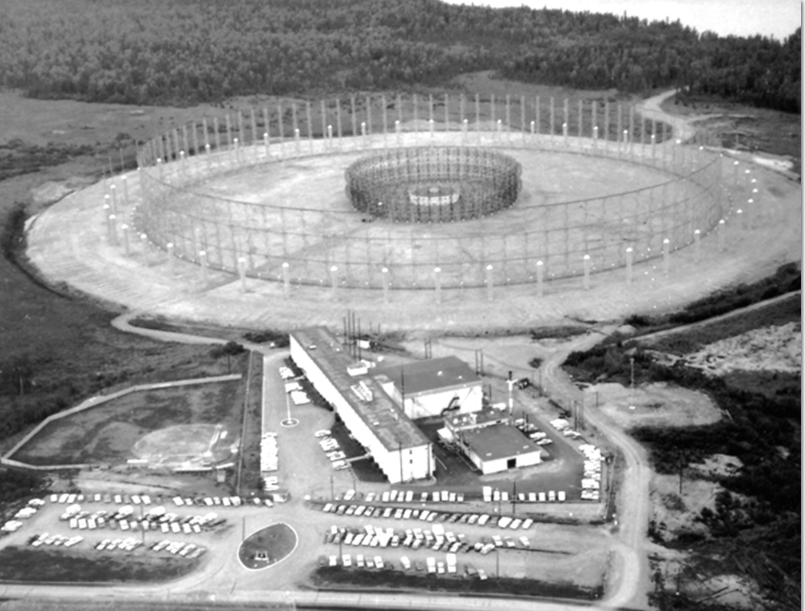
DR writes (04/2022):